
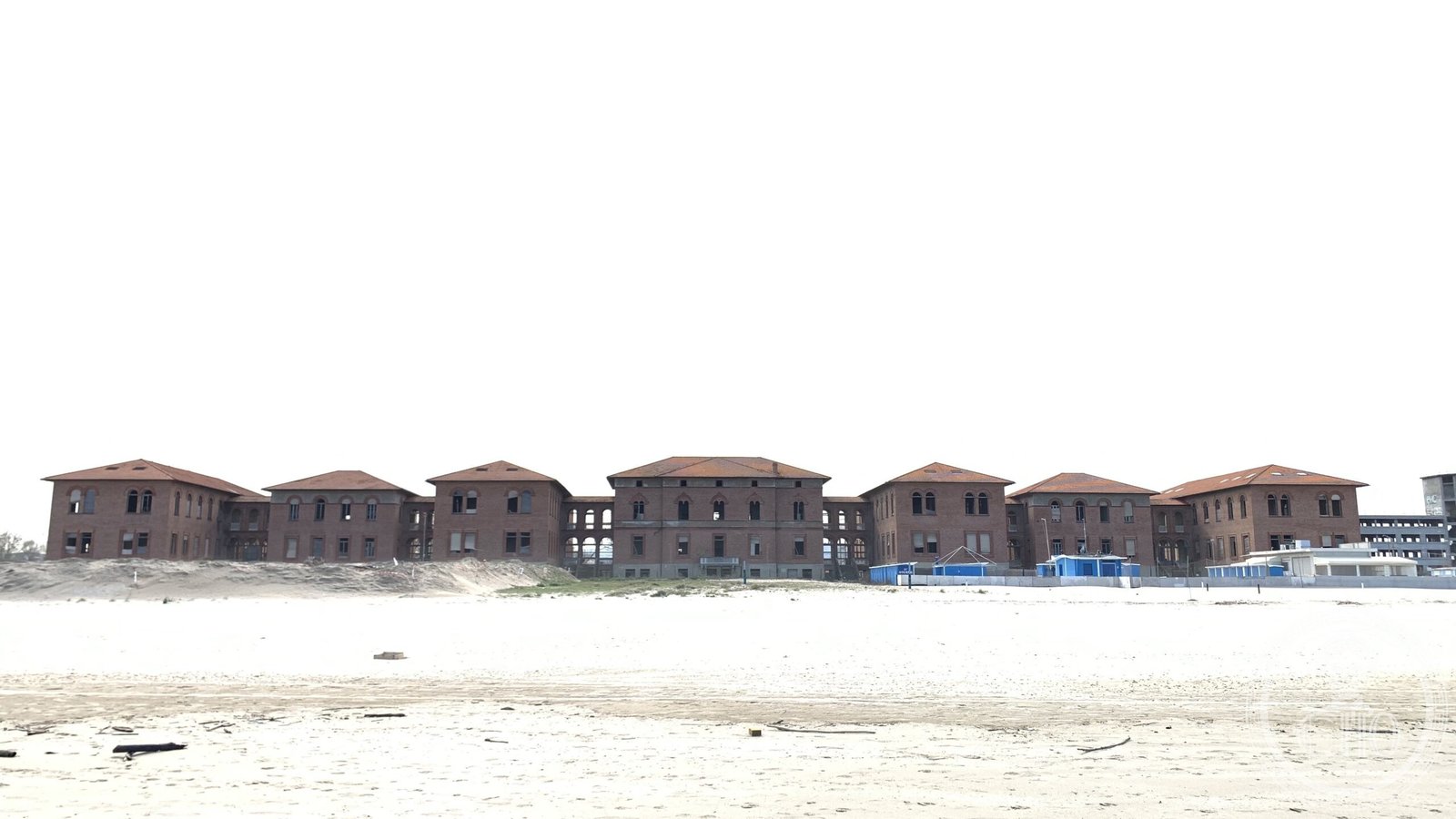
A children’s seaside colony for 1,200, built by Fascist Bologna in barely a year and still standing on the shore between Rimini and Riccione.
At a glance
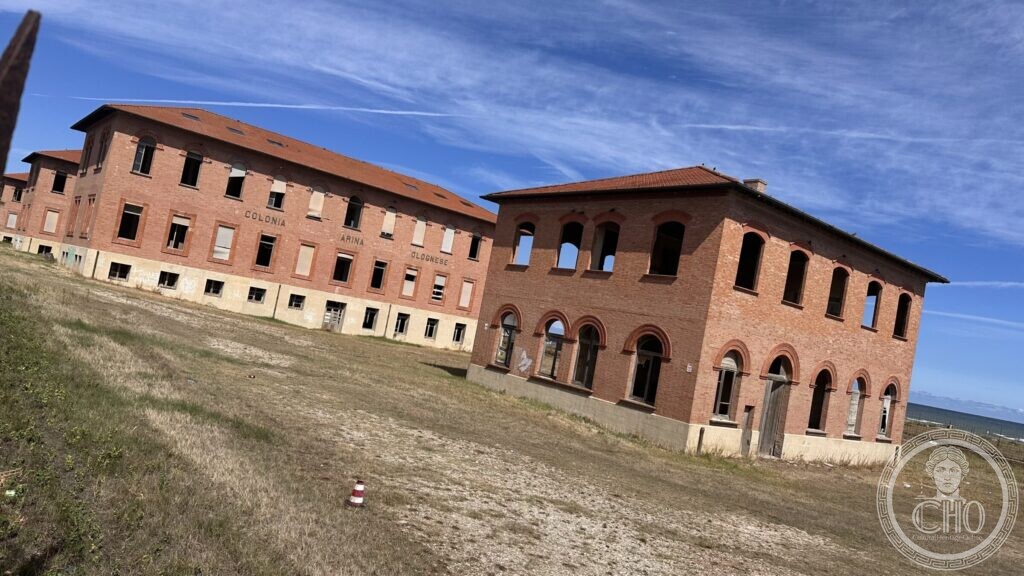
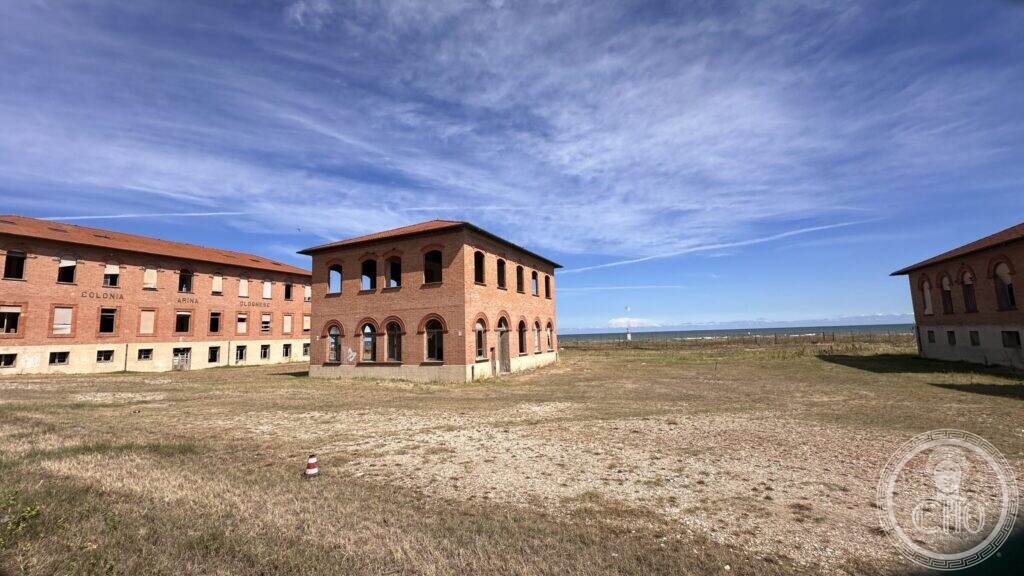
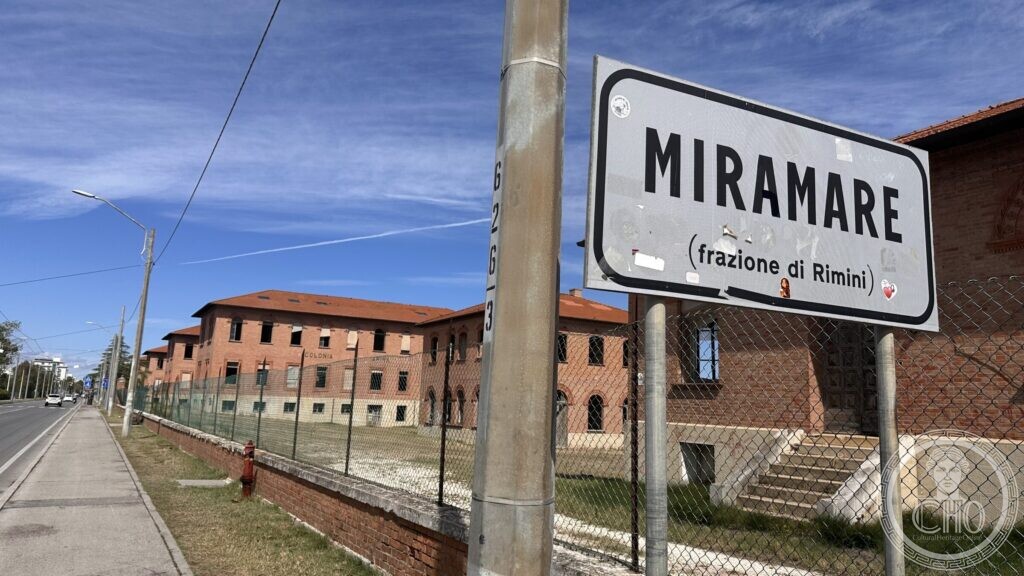
The Colonia Bolognese rises straight from the sand at Miramare, halfway along the coast between Rimini and Riccione. The engineer Ildebrando Tabarroni designed it between 1931 and 1932 for the Fascist federation of Bologna, whose federal secretary Mario Ghinelli promoted it and gave it the martial name Colonia marina della Decima Legio. It was built to send up to 1,200 children of the Bologna province to the sea each summer. Tabarroni laid it out as four large brick buildings set perpendicular to the sea and joined by a long corridor, rather than a single block, in the warm masonry that reads as Bolognese the moment you see it.
Key facts
- Built: 1931–1932, inaugurated 1 August 1932
- Engineer: Ildebrando Tabarroni
- Promoter: the Fascist federation of Bologna (federal secretary Mario Ghinelli)
- Original name: Colonia marina della Decima Legio
- Capacity: up to 1,200 children from the province of Bologna
- Layout: four linked brick buildings, perpendicular to the sea; eclectic style
- Coordinates: 44.025457, 12.629430 — Google Maps
History
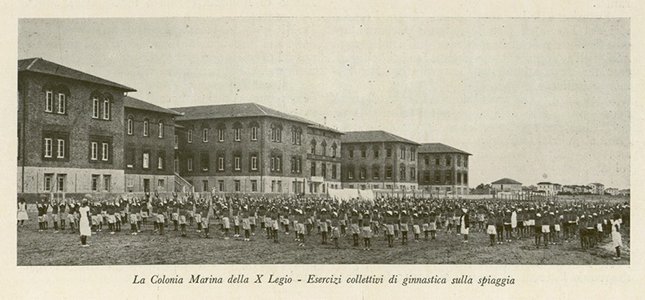
The seaside colony was one of the social instruments of the Fascist regime. Each summer tens of thousands of working-class and rural children were sent to the Adriatic for supervised “cures” of sun, sea air and routine. Bologna, the nearest large city inland, wanted its own outpost on the coast, and it built one fast: ground was broken in 1931 and the doors opened on 1 August 1932.
Tabarroni did not invent his model from nothing. The plan of connected buildings looked openly to the Provincial Maritime Hospice on the same shore — the Murri colony, the work of Giulio Marcovigi. Where several of the coast’s great 1930s colonies reached for the hard geometry of Rationalism, the Bolognese kept to brick and repeated bays. Contemporaries already thought the scheme old-fashioned, and its detailing is eclectic rather than modern: monumental in scale, conservative in its materials.
Like almost every colony on this shoreline, it outlived the regime that built it and passed through decades of changing use. It survives today as one of the most substantial of the Adriatic colonie marine, a reminder of a season when the beach between Rimini and Riccione was lined with institutions, not only hotels.
What you see
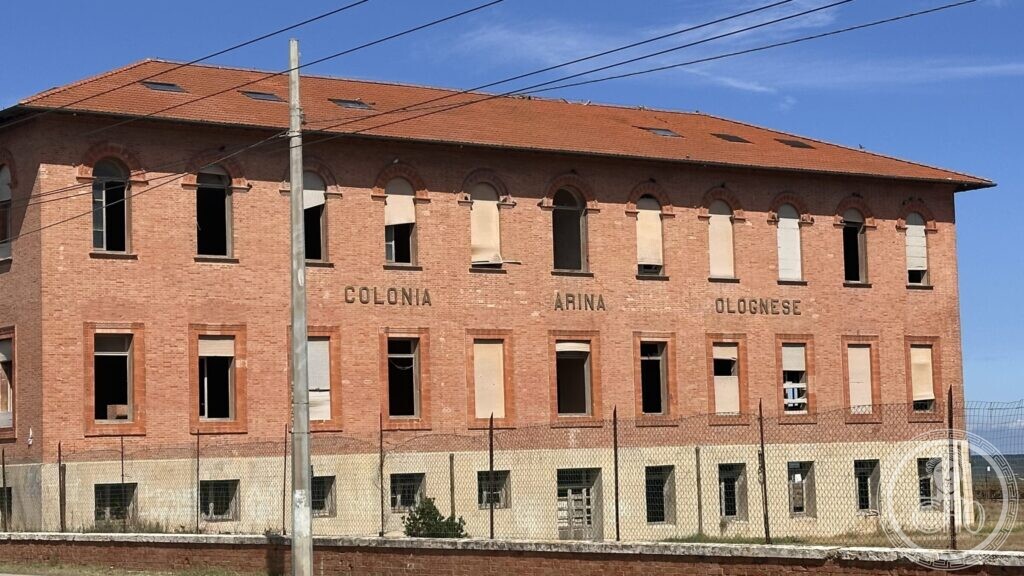
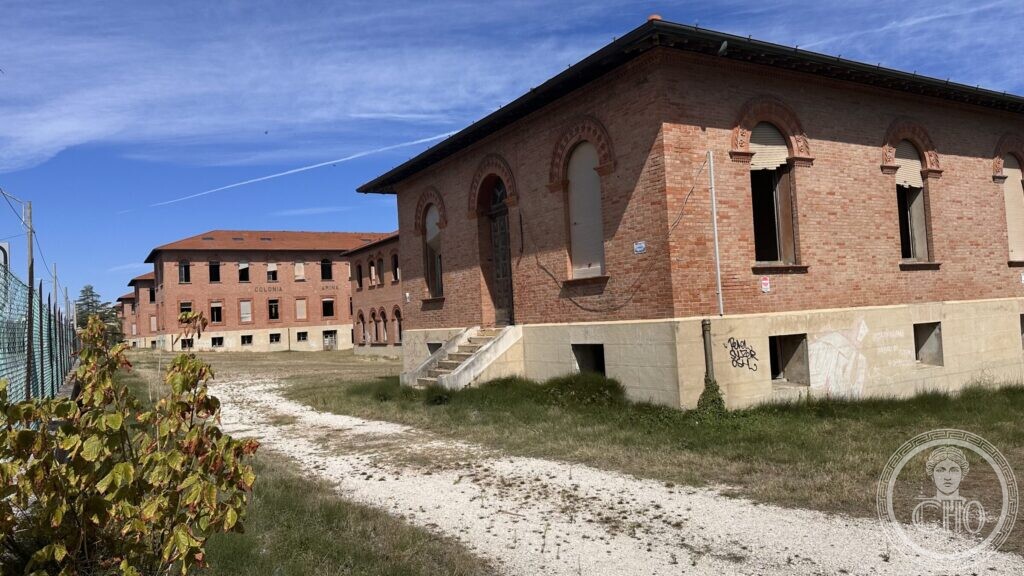
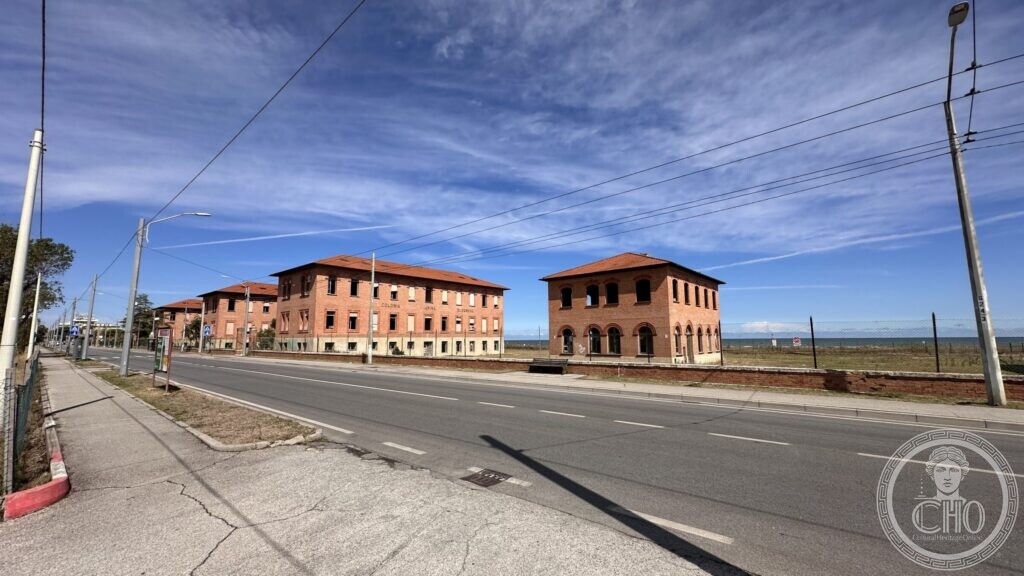
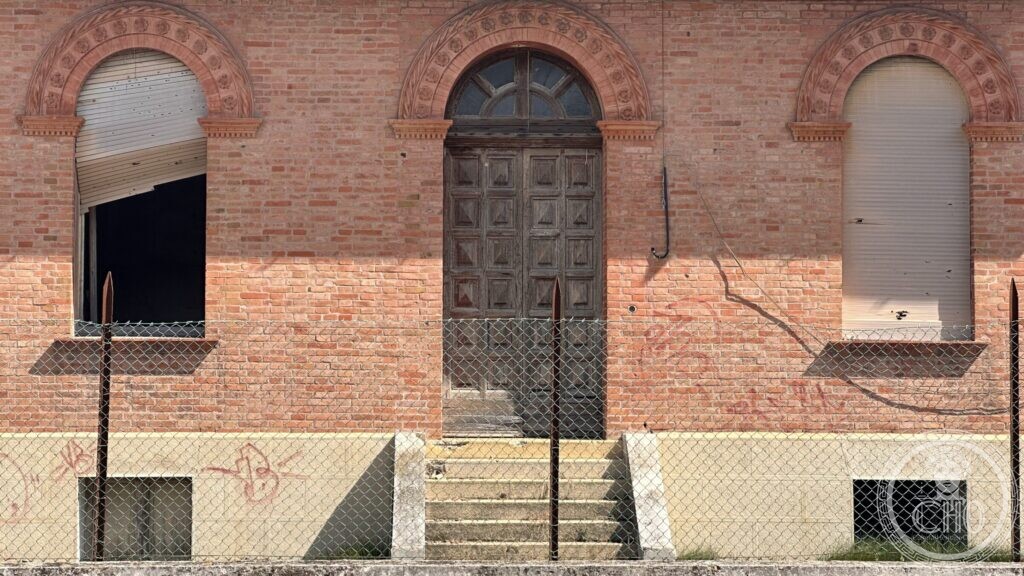
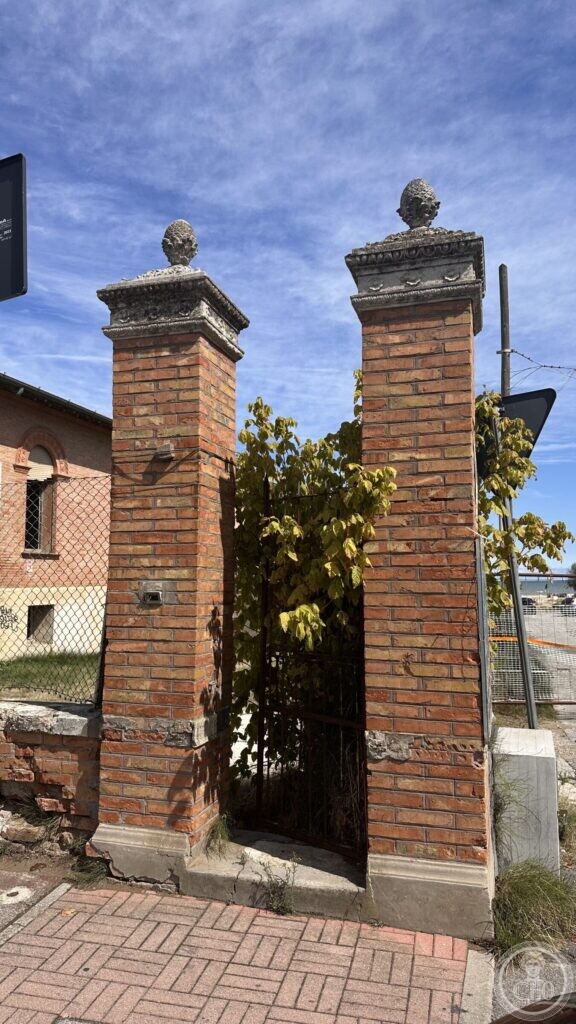
From the beach the colony reads as a long, low spread of red-brick pavilions, set back behind the bathing concessions and pulled into a single rhythm by their repeated windows. The brick is the signature: not the white render of the Rationalist colonies further along the coast, but the warm masonry of the Emilian plain, carried to the sea.
The pavilion plan was practical as much as stylistic. Dormitories, refectories and infirmaries could be separated, ventilated and supervised, while the whole composition still presented a civic front to the shore. Seen end-on, the building keeps the scale of an institution rather than a villa — which is exactly what it was.
Practical information
- The colony is a large historic complex, not a routine visitor attraction; treat it as an exterior to be seen from the public beach and seafront.
- Best appreciated from the Miramare shoreline, where the pavilion front is fully visible.
- Do not enter closed or fenced areas; conservation status varies across the colonie.
Getting there
Miramare is the southern seafront district of Rimini, on the way to Riccione. The local railway stop Rimini Miramare sits on the Bologna–Ancona line, and Federico Fellini International Airport is right beside it. From central Rimini the coast road and the seafront promenade both lead south to the colony in a few minutes by bus or bike.
Nearby
- Ex Colonia Murri, Rimini — the older maritime hospice that inspired the pavilion plan
- Grand Hotel Rimini — the Liberty landmark of the city’s seafront
- The Rationalist colonie of Riccione: ex Colonia Reggiana and Colonia Dalmine
Photo gallery
The colony today
Sources
- Comune di Rimini — le colonie marine come motore di sviluppo urbano e turistico
- Biblioteca Salaborsa, Bologna — cronologia di Bologna, 1932 (La Colonia Marina del Fascio bolognese)
- e-review.it — La colonia Bolognese a Miramare di Rimini nel secondo dopoguerra
Find it on the map
See this place and what’s around it →Record researched and written by Stefano Vigolo for Cultural Heritage Online, 2026.
Historical events at this place (1)
📷 Become a Cultural Heritage Online photographer
Share your photos of places: they stay published under your name as the author. The more they're seen, the more you get noticed — and soon a contest will reward the most appreciated photos.
Log in or sign up free to add a photoIs this page about you?
This page is read by travellers and heritage enthusiasts who find it on Google. Tell us how you are connected to this place and we will take it from there.