
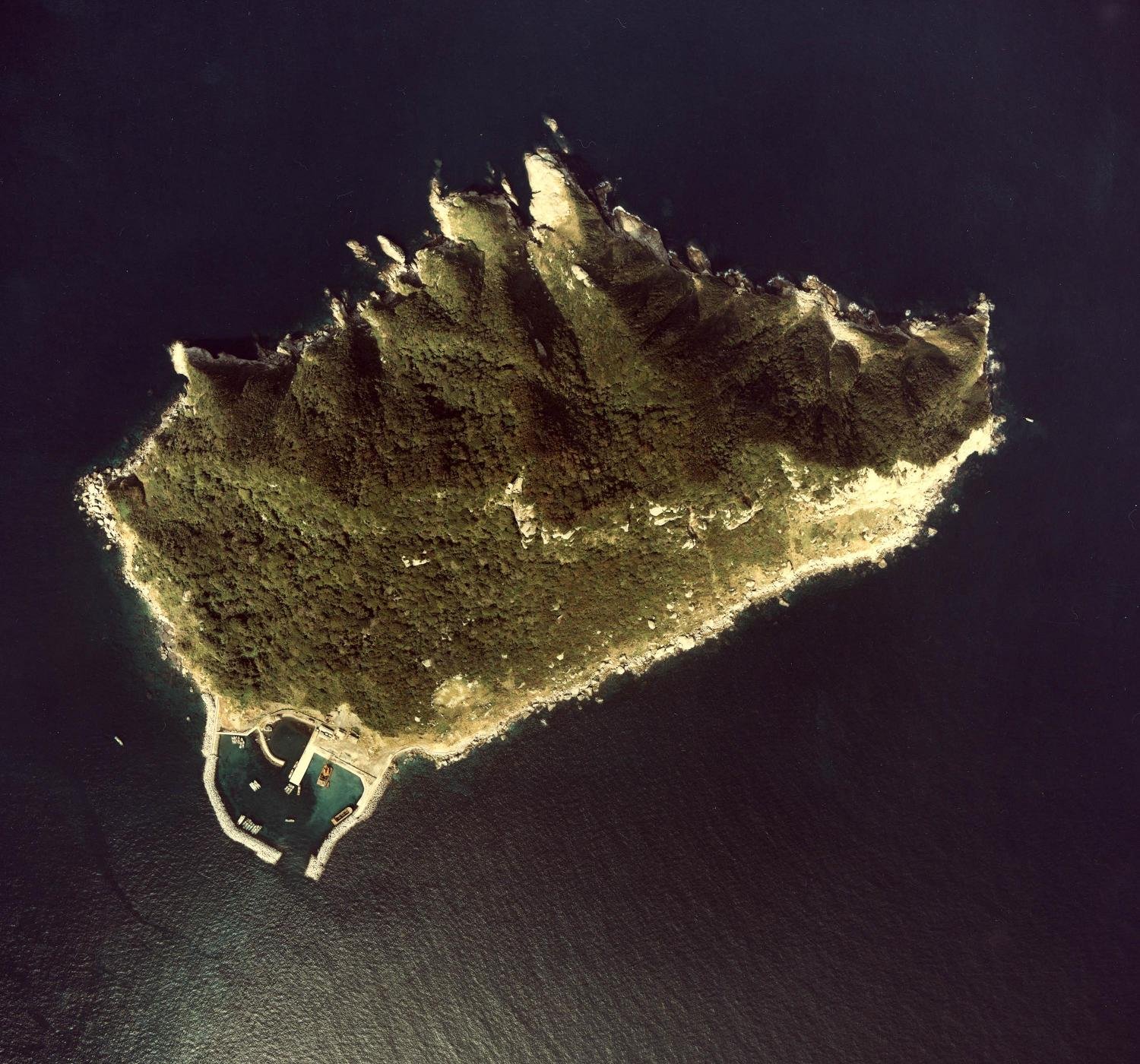
A tiny uninhabited island 60 km off northern Kyushu, Okinoshima is one of the most restricted and sacred Shinto sites on Earth — an unparalleled time-capsule of ancient East Asian maritime trade, where 80,000 ritual offerings have rested undisturbed for over 1,500 years.
At a glance
Okinoshima sits in the Genkai Sea between Japan and the Korean Peninsula. The entire island is venerated as the physical body of the goddess Okitsu-miya, one of the three Munakata deities. Since the 4th century CE, priests have performed rituals here to protect ships crossing to Korea and China. The objects left as offerings represent an extraordinary cross-section of the ancient world: Chinese bronze mirrors, Roman glass, Byzantine coins, Korean gilt-bronze horse trappings, Persian glassware, and Japanese lacquerwork — accumulated over five centuries and never disturbed. UNESCO World Heritage Site since 2017.
Key facts
- UNESCO inscription: 2017 — Sacred Island of Okinoshima and Associated Sites in the Munakata Region
- Location: Genkai Sea, 60 km north of Munakata city, Fukuoka Prefecture, Kyushu, Japan
- Island area: approximately 0.97 km²
- Ritual use period: 4th–9th century CE (over 500 years of continuous offering deposits)
- Offerings: approximately 80,000 objects, all designated National Treasures of Japan
- Access: women permanently prohibited; only 200 men may land once a year (May 27)
- The silence rule: nothing seen or touched on the island — including a single leaf — may be removed or spoken of outside it
- Guardian deity: Okitsu-miya (Tagorihime no Mikoto), one of the three Munakata goddesses
History and sacred significance
Ritual use of the island began in the late Kofun period (c. 4th century CE), as Japan developed sustained overseas relations with the Korean kingdoms and Chinese continent. Okinoshima lies directly on the ancient maritime route, and the Munakata clan — hereditary priests — performed ceremonies here to invoke the goddesses’ protection for each sea crossing. Offerings deposited during rituals were never removed: they became permanently part of the island’s sacred ground, a practice continued unbroken for over five centuries.
The 80,000 objects reflect the global reach of 5th–9th century East Asian trade networks. Among them are gold earrings of Korean manufacture, Tang Dynasty Chinese bronze mirrors, glass beads of Persian origin, and bronze figurines with Byzantine provenance. Okinoshima functioned as a node in a vast exchange web connecting the Japanese archipelago to Eurasia centuries before the modern era. Archaeological excavation in the 1950s–60s recovered and documented the collection; since then, no further removal has been authorised. The island continues in active Shinto ritual use today.
What you encounter
Okinoshima is a forested, rocky island dominated by massive granite boulders beneath a primeval forest canopy. The primary shrine, Okitsu-miya, stands near the island’s centre — a small, austere Shinto structure maintained by the Munakata Taisha. The boulders are integral to the sacred landscape: offerings were deposited in crevices between rocks, beneath trees, and in pools, exactly where they were placed centuries ago. Nothing has ever been developed. There are no visitor facilities, no roads, and no permanent inhabitants — only the priest assigned for the annual May festival.
The UNESCO inscription encompasses four associated sites: Okinoshima itself, Nakatsu-miya shrine on the reef island of Oshima (11 km offshore), Hetsu-miya (the main Munakata Taisha on the mainland at Munakata city), and the Shimpokan museum housing the National Treasures. Together they form the complete sacred geography of the Munakata tradition.
Practical information
- Public access: landing on Okinoshima is impossible for general visitors — closed except to 200 approved men on 27 May each year
- What to visit: Munakata Taisha Hetsu-miya (main shrine, mainland), Nakatsu-miya on Oshima island (ferry), Shimpokan museum (National Treasures on display)
- Shimpokan Museum: at Munakata Taisha, Munakata city; selected National Treasures displayed; admission charged
- Oshima ferry: departs Kaminoshima port, Munakata city; approximately 25 minutes crossing
- Hours: Munakata Taisha main shrine open daily; museum hours vary — check official website
Getting there
Munakata city is accessible from Fukuoka (Hakata station) via the JR Kagoshima Main Line to Munakatashirakama station (approximately 50 minutes). From there, Munakata Taisha Hetsu-miya is a short taxi or bus ride. Oshima ferries depart from Kaminoshima port. There is no public access to Okinoshima island itself.
Nearby
- Munakata Taisha Hetsu-miya — the main Munakata Grand Shrine on the mainland, one of Japan’s oldest and most venerated Shinto institutions
- Oshima island — inhabited island 11 km offshore with Nakatsu-miya shrine, part of the UNESCO site, reachable by ferry from Munakata city
- Dazaifu Tenmangu — major Shinto pilgrimage shrine 60 km south, dedicated to the scholar-deity Tenjin
- Fukuoka — Kyushu’s largest city, 50 km south, with Kofun-period burial mounds and extensive early medieval cultural heritage
Sources
- UNESCO World Heritage List — Sacred Island of Okinoshima and Associated Sites in the Munakata Region (2017): whc.unesco.org/en/list/1535
- Munakata Taisha official website: munakata-taisha.or.jp
- Wikipedia — Sacred Island of Okinoshima: en.wikipedia.org
Find it on the map
See this place and what’s around it →📷 Become a Cultural Heritage Online photographer
Share your photos of places: they stay published under your name as the author. The more they're seen, the more you get noticed — and soon a contest will reward the most appreciated photos.
Log in or sign up free to add a photo