
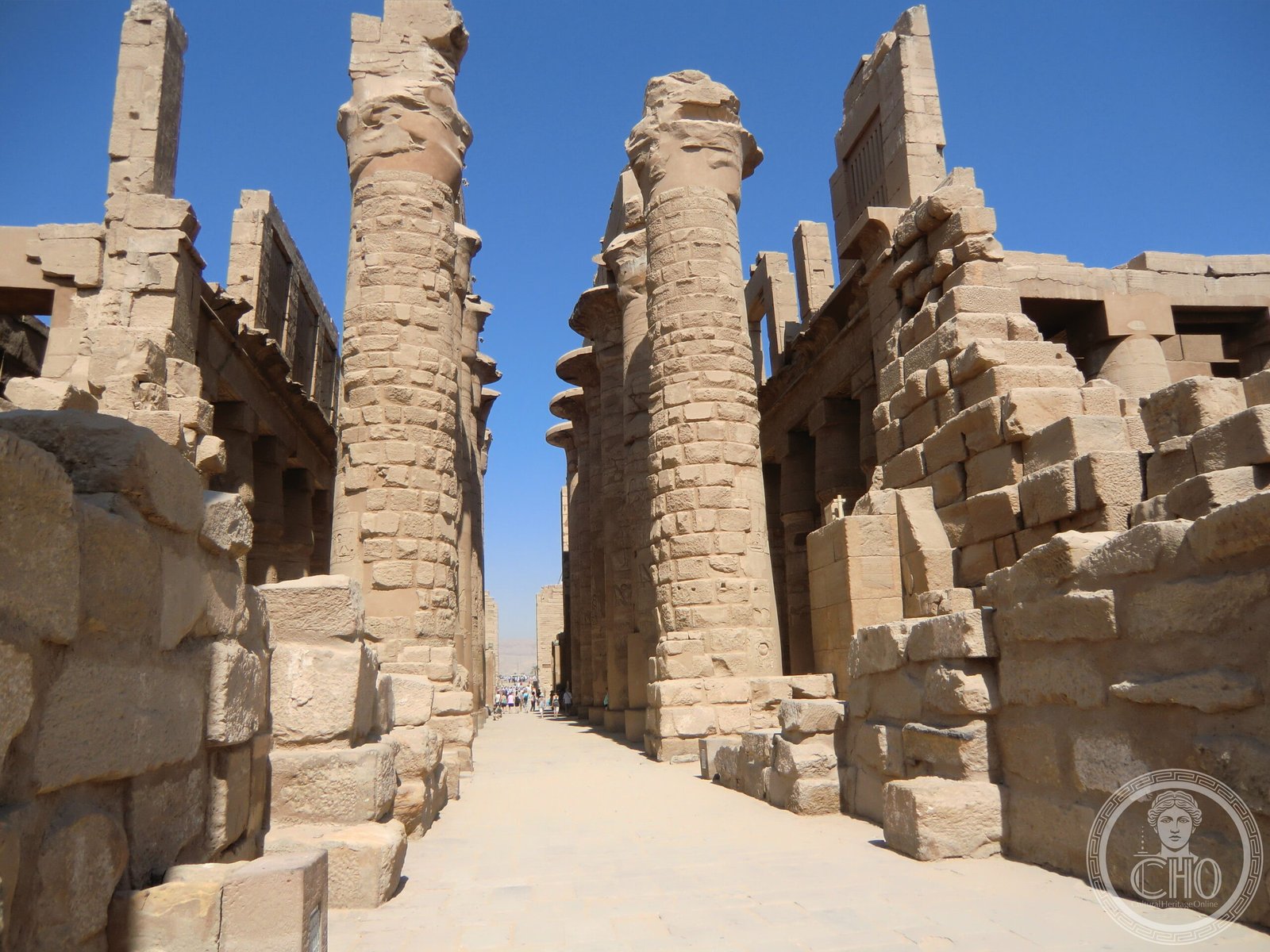
One of Egypt’s grandest religious monuments, Karnak comprises a sprawling assembly of temples, pylons, and chapels devoted to the Theban Triad, with construction spanning nearly 2,000 years.
At a glance
Karnak is a monumental temple complex of staggering scale and complexity. Built over two millennia, it reflects the ambitions of successive pharaohs and the centrality of Amun worship in ancient Egyptian religion. The site stands 2.5 kilometres north of modern Luxor.
History
Construction began during Senusret I’s reign (1971–1926 BC) in the Middle Kingdom and continued through the New Kingdom—when most visible structures were built—and into the Ptolemaic period (305–30 BC). The complex was known as Ipet-isut, “The Most Selected of Places,” and served as the primary sanctuary of Amun, chief god of the Theban Triad. By the New Kingdom, Karnak had become the religious and political heart of Thebes, rivalling even the temples of the Nile Delta.
What you see
The complex presents a labyrinth of temples, towering pylons, columned chapels, and sacred lakes. Successive dynasties left their mark through additions and renovations, creating layers of architectural styles spanning centuries. Massive stone gateways, hieroglyphic inscriptions, and colossal statuary dominate the landscape, many now partially ruined yet still imposing.
Cultural significance
Karnak represents the zenith of ancient Egyptian temple architecture and religious devotion. As the earthly seat of Amun, it drew pilgrims, priests, and royalty for nearly 2,000 years. The site embodies the theological evolution and political power of successive Egyptian dynasties, making it essential to understanding pharaonic Egypt. In 1979, Karnak was designated a UNESCO World Heritage Site as part of Thebes.
Key facts
- Country: Egypt
- City: Luxor
- Coordinates: 25.7183°N, 32.6583°E
- Construction span: c. 1971 BC to 30 BC
- UNESCO World Heritage Site: Yes (1979, as part of Thebes)
- Primary deity: Amun, head of the Theban Triad
Practical information & getting there
Karnak lies 2.5 kilometres north of Luxor and is readily accessible from the city. Consult local tourism information and current travel advisories before visiting.
Sources & resources
Find it on the map
See this place and what’s around it →Historical events at this place (2)
📷 Become a Cultural Heritage Online photographer
Share your photos of places: they stay published under your name as the author. The more they're seen, the more you get noticed — and soon a contest will reward the most appreciated photos.
Log in or sign up free to add a photo