
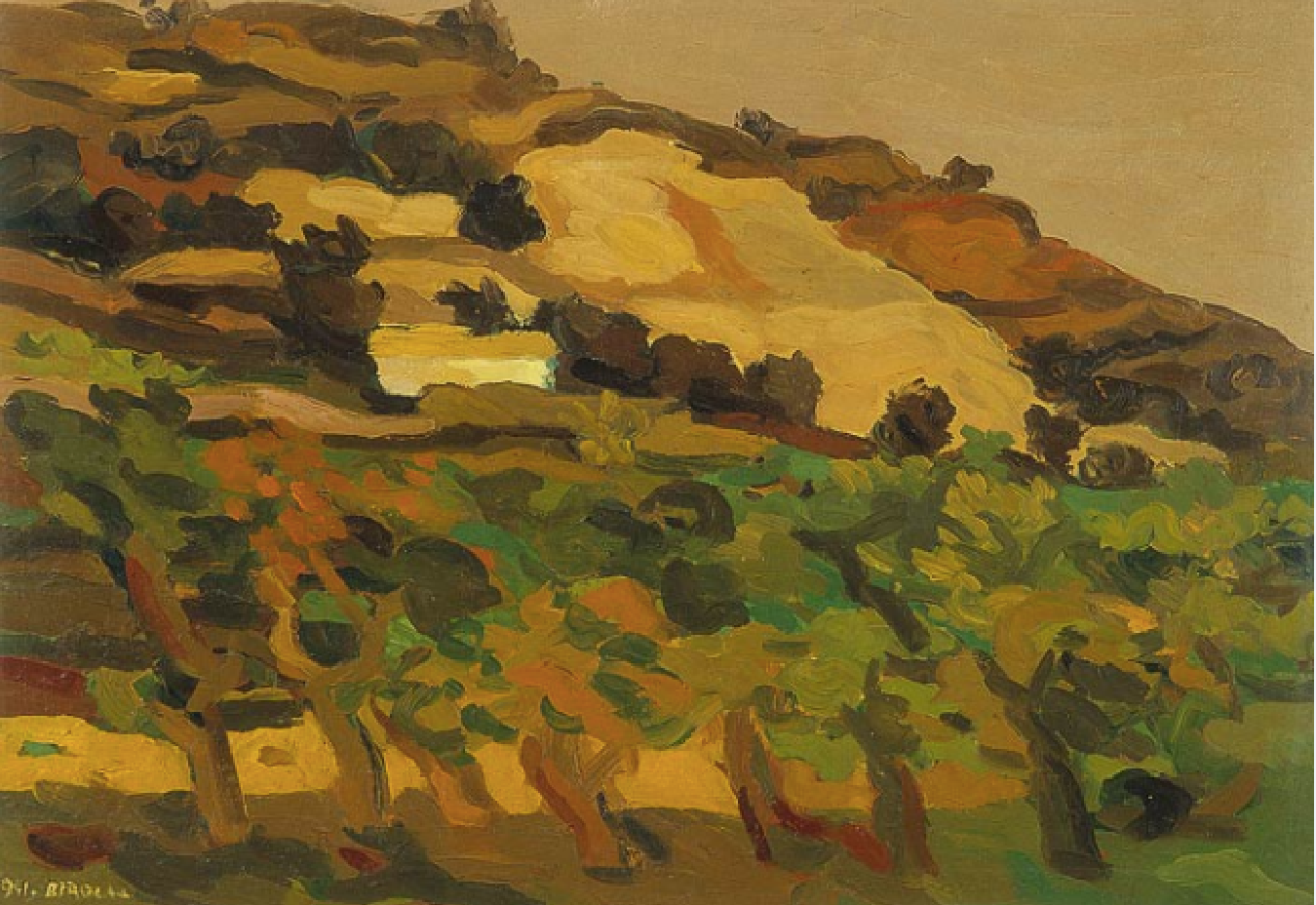
La cava sotto il monte is a painting by Italian artist Renato Birolli, created in 1941. The work depicts a quarry beneath a mountain, rendered in the modernist idiom that characterized Birolli’s artistic practice during the interwar years.
Birolli was born in Verona in 1905 and moved to Milan in 1923, where he became active in avant-garde circles alongside artists including Renato Guttuso, Giacomo Manzù and Aligi Sassu. In 1937, he joined the Corrente di Vita movement, an artistic group engaged with contemporary social themes. That same year, Birolli was arrested by the Fascist government for his opposition to the regime. During the Second World War, he turned away from painting to support Communist causes and later the partisan resistance.
The landscape subject of La cava sotto il monte reflects the documentary impulse within Italian modernism of the period, capturing both the geological and human dimensions of the industrial Italian landscape.
About Renato Birolli
Renato Birolli (1905–1959) was an Italian painter active in twentieth-century modernism. Following the war, he relocated to Paris in 1947, where his style evolved under the influence of Henri Matisse and Pablo Picasso, moving towards post-Cubist and abstract lyrical forms. He died in Milan in 1959.
Details
- Artist: Renato Birolli
- Year: 1941
- Movement: Corrente di Vita
- Medium: Oil on canvas
Frequently asked questions
Who was Renato Birolli?
Renato Birolli (1905–1959) was an Italian modernist painter born in Verona. He formed part of avant-garde circles in Milan from 1923 and was a member of the Corrente di Vita movement from 1937. He was arrested in 1937 for opposing the Fascist regime and devoted himself to Communist causes and partisan resistance during the war.
What was the Corrente di Vita?
The Corrente di Vita was an Italian artistic movement of which Birolli became a member in 1937. It engaged with contemporary social and political themes as part of the broader modernist landscape of interwar Italy.
What happened to Birolli after the Second World War?
In 1947, Birolli moved to Paris, where his painting style changed significantly under the influence of Henri Matisse and Pablo Picasso, evolving towards post-Cubist and abstract lyrical approaches. He remained in Italy and France until his death in Milan in 1959.