
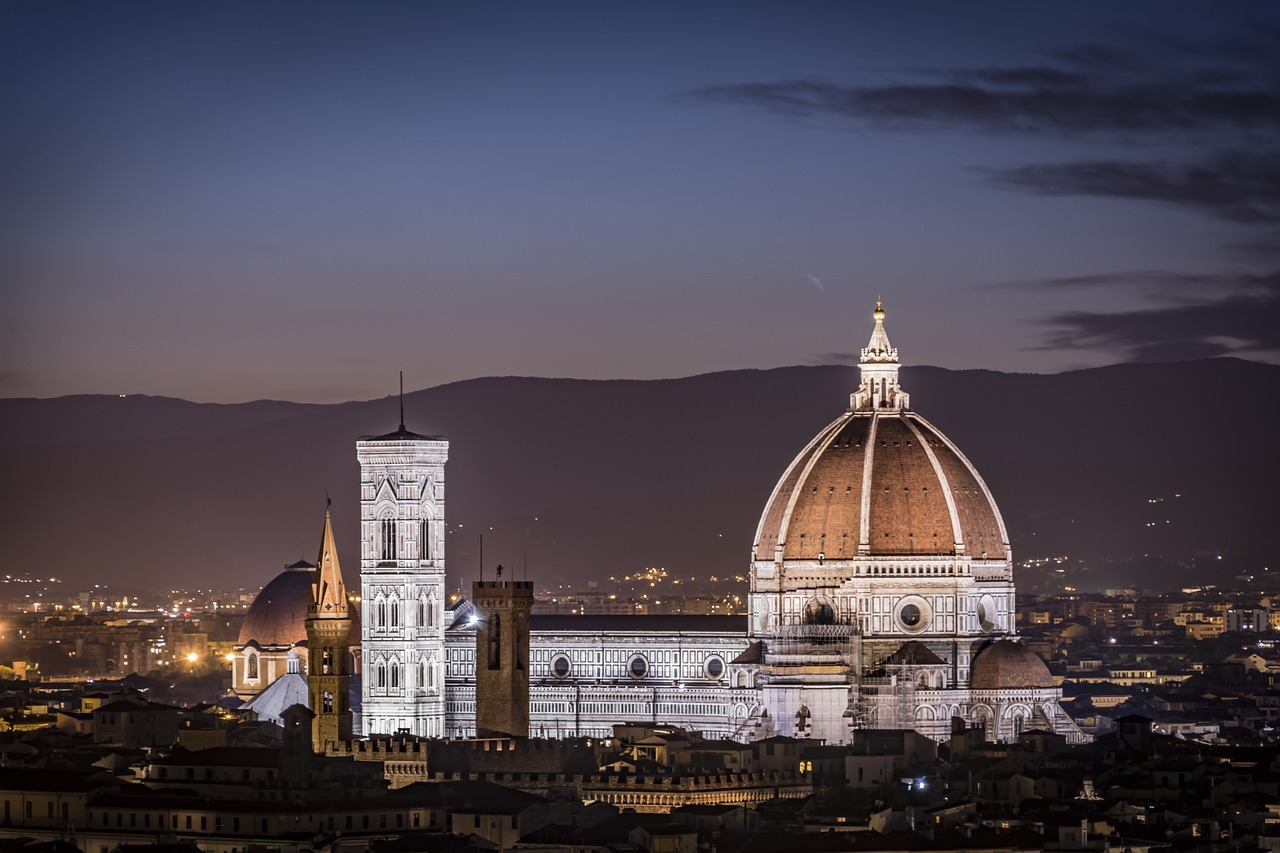
The Cathedral of Santa Maria del Fiore, commonly known as the Duomo of Florence, stands as one of the most iconic examples of Renaissance architecture in the world. Situated in the heart of the Tuscan city, this extraordinary building functions both as a place of worship and as a symbol of the power and grandeur of Renaissance Florence.
Construction and Development
The cathedral’s history began in 1296 when Arnolfo di Cambio was commissioned to design a new cathedral. Following Arnolfo’s death in 1302, the project passed through the hands of various architects, including Giotto and Andrea Pisano. In 1418, a competition was held for the dome’s construction, and Filippo Brunelleschi emerged as the winning designer. Construction of the dome began in 1420 and concluded in 1436, marking a turning point in architectural and construction techniques of the period. The cathedral’s facade remained incomplete until the 19th century, when it was finally finished in 1887, following Arnolfo di Cambio’s original design.
Architectural Features
The Duomo exemplifies Italian Gothic architecture with its distinctive facade of white, green, and pink marble and its commanding dome. Brunelleschi’s dome is an extraordinary structure, standing 116 meters high and measuring 45 meters wide, constructed using an aerial scaffold system that rose gradually as work progressed. This pioneering engineering feat demonstrated Brunelleschi’s genius and established the cathedral as a landmark in world architecture. Inside, visitors can admire remarkable artworks, including frescoes of the Last Judgment by Giorgio Vasari and Federico Zuccari, as well as Lorenzo Ghiberti’s famous stained glass window of the Last Judgment.
Cultural Significance
The Duomo represents not merely an architectural masterpiece but also an important symbol of Florence’s and Italy’s history and culture. During the Renaissance, Florence was the center of vigorous cultural and artistic renewal, and the cathedral embodied the city’s power and wealth. The technical and stylistic innovations introduced by Brunelleschi in the dome’s construction had lasting impact on European architecture and helped define Renaissance aesthetics. Today, the cathedral continues to attract visitors worldwide. Its historical and cultural importance was recognized by UNESCO, which in 1982 designated Florence’s historic center, including the Duomo, as a World Heritage site.
On the heritage map: Florence Cathedral – Cathedral of Santa Maria del Fiore
Frequently asked questions
When was the Duomo’s dome completed?
Construction of Brunelleschi’s dome began in 1420 and was completed in 1436.
What are the dome’s dimensions?
The dome stands 116 meters high and measures 45 meters wide.
When was the cathedral facade finished?
The facade remained incomplete until 1887, when it was finally finished following Arnolfo di Cambio’s original design.


