
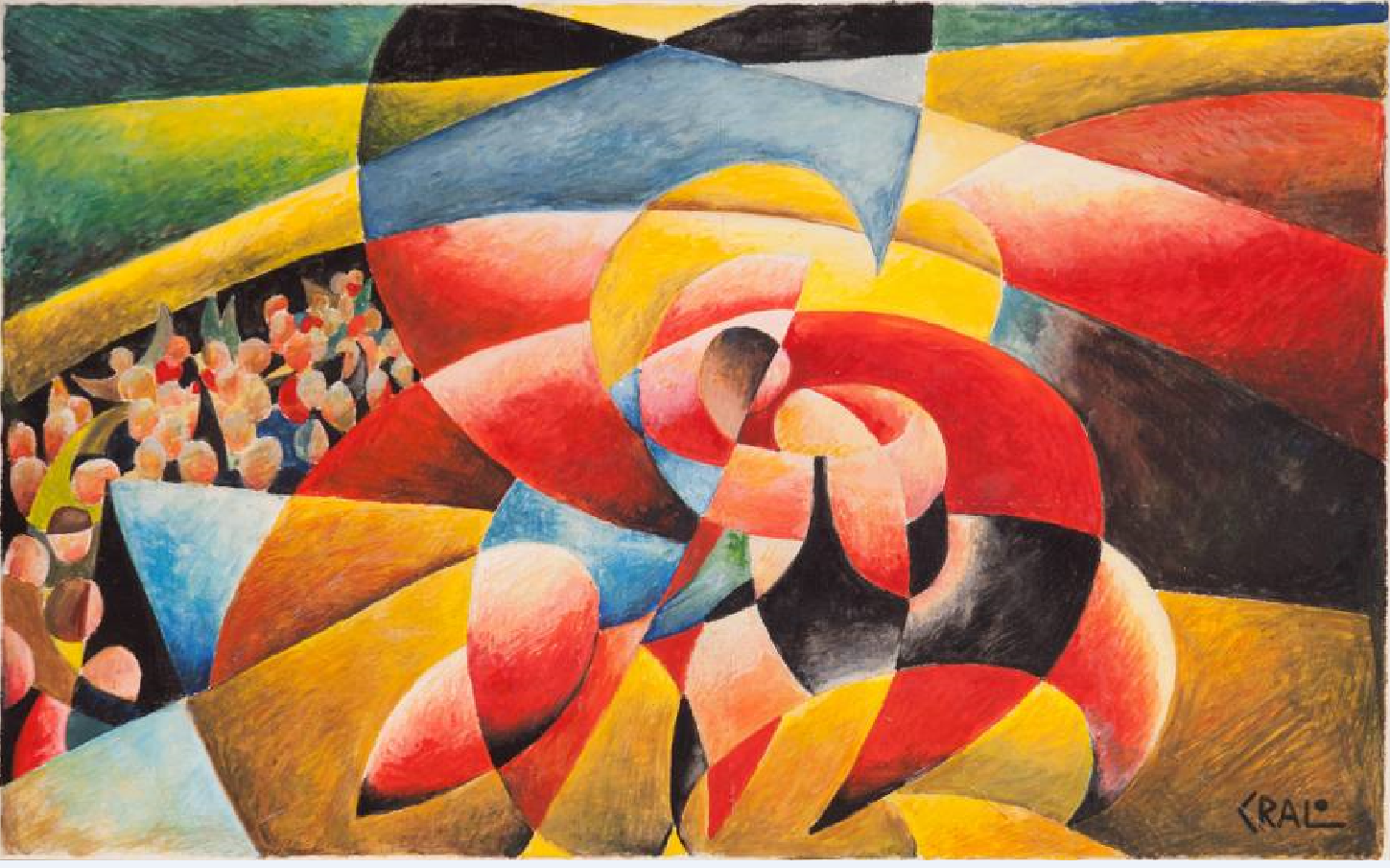
Lottatori is a painting created by Tullio Crali in 1927. The work dates from the period before Crali’s formal adoption of Futurism in 1929, yet already demonstrates the artistic preoccupations that would define his career: the representation of speed, mechanisation and dynamic movement.
Crali was a Dalmatian Italian painter and self-taught artist whose realistic approach to painting would become increasingly centred on themes of aerial perspective and mechanical forms. Throughout his practice, he explored the intersection of speed and visual representation, drawing inspiration from aviation and technological innovation. His later works would expand to encompass aerial mechanisation and the mechanics of aerial warfare, though painted always from a primarily realistic standpoint.
About Tullio Crali
A self-taught painter, Crali became associated with the Futurist movement in 1929, though his artistic interests in speed and mechanical subjects developed somewhat independently. Over a long career spanning multiple decades, he worked across various styles while maintaining a distinctive focus on the visual dynamics of modern technology and motion.
Details
- Artist: Tullio Crali
- Year: 1927
- Medium and dimensions: Not documented
- Movement: Pre-Futurist period (formal Futurist association from 1929)
Frequently asked questions
Who was Tullio Crali?
Tullio Crali was a Dalmatian Italian artist and self-taught painter associated with Futurism from 1929 onwards. He is known for realistic paintings exploring speed, aerial mechanisation and mechanical forms throughout his career.
What does Lottatori represent?
Lottatori, created in 1927, reflects Crali’s early interest in dynamic movement and mechanisation. The work predates his formal involvement with Futurism but demonstrates the artistic concerns that would characterise his mature practice.
What artistic movement influenced this work?
Though created before Crali’s official adoption of Futurism in 1929, Lottatori already shows the influence of modernist interests in speed, technology and dynamic visual representation that define Futurist aesthetics.


