
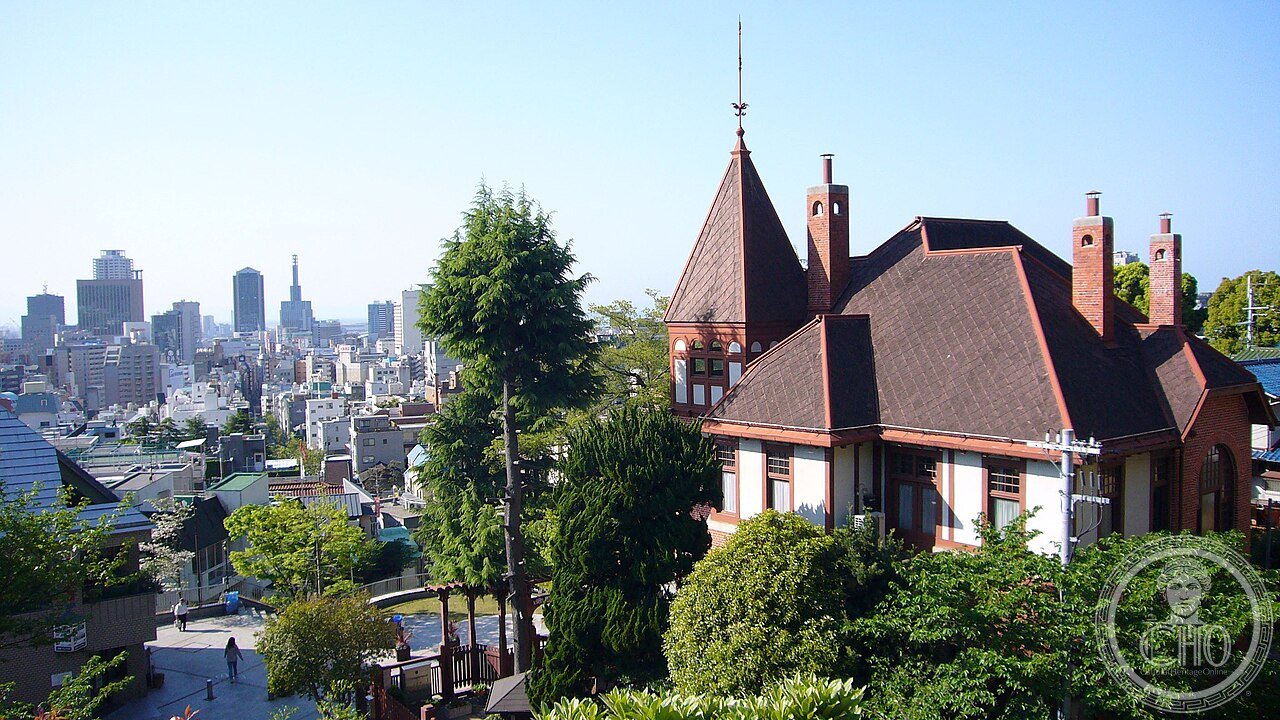
Weathercock House, Kobe (Kitano Ijinkan)
The rooster-vaned German trader’s villa above the port – flagship of Kitano’s foreign houses, Meiji Japan’s cosmopolitan hillside preserved.
At a glance
- Type
- Historic residence (Kazamidori no Yakata)
- Period
- 1909
- Style
- German half-timber / Jugendstil notes
- Location
- Kitano-cho, Kobe, Japan
- Coordinates
- 34.7058, 135.1900
- Architect
- Georg de Lalande for trader Gottfried Thomas
Overview
The Weathercock House – Kazamidori no Yakata – crowns Kitano’s slope with red brick, half-timbered gables, and the rooster vane that names it: German trader Gottfried Thomas’ 1909 villa by Georg de Lalande, the finest of the ijinkan, the foreign residences of treaty-port Kobe’s merchant hill. The district preserves Meiji Japan’s international neighbourhood entire.
History
Kobe opened in 1868; Kitano housed the traders above their hongs. The Thomas family’s war internments emptied the house twice; city preservation from the 1970s – and an NHK drama’s fame – made Kitano Japan’s romance of the West, couples touring parlors from Dutch to Danish. The 1995 earthquake’s repairs returned the rooster to its turret.
Architecture and Design
De Lalande – imperial Germany’s busiest architect in East Asia – mixed Rhenish timberwork with Art Nouveau interiors: the dining room’s panelling and the children’s room’s frieze survive furnished. The house museums of the lane (Moegi, Rhine) extend the period suite.
Cultural significance
Kitano’s ijinkan narrate Japan’s engagement with the West at domestic scale – tea in Meissen above a Japanese port – and give Kobe its identity of openness the city rebuilt after 1995 around.
Visiting today
The house opens daily (combination tickets tour the district); jazz festivals and the slope’s cafes carry Kitano’s mood. Harborland and Chinatown descend below.
Getting there
Shin-Kobe shinkansen station is ten minutes’ walk; the City Loop bus climbs from Sannomiya.
Sources and resources
Find it on the map
See this place and what’s around it →📷 Diventa un fotografo di Cultural Heritage Online
Condividi le tue foto dei luoghi: restano pubblicate con la tua firma come autore. Più vengono viste, più ti fai conoscere — e presto un concorso premierà le foto più apprezzate.
Accedi o registrati gratis per aggiungere una fotoDo you manage this place?
This page is read by travellers and heritage enthusiasts who find it on Google. Keep it accurate — and make it work for you. Free for non-profit heritage institutions.