

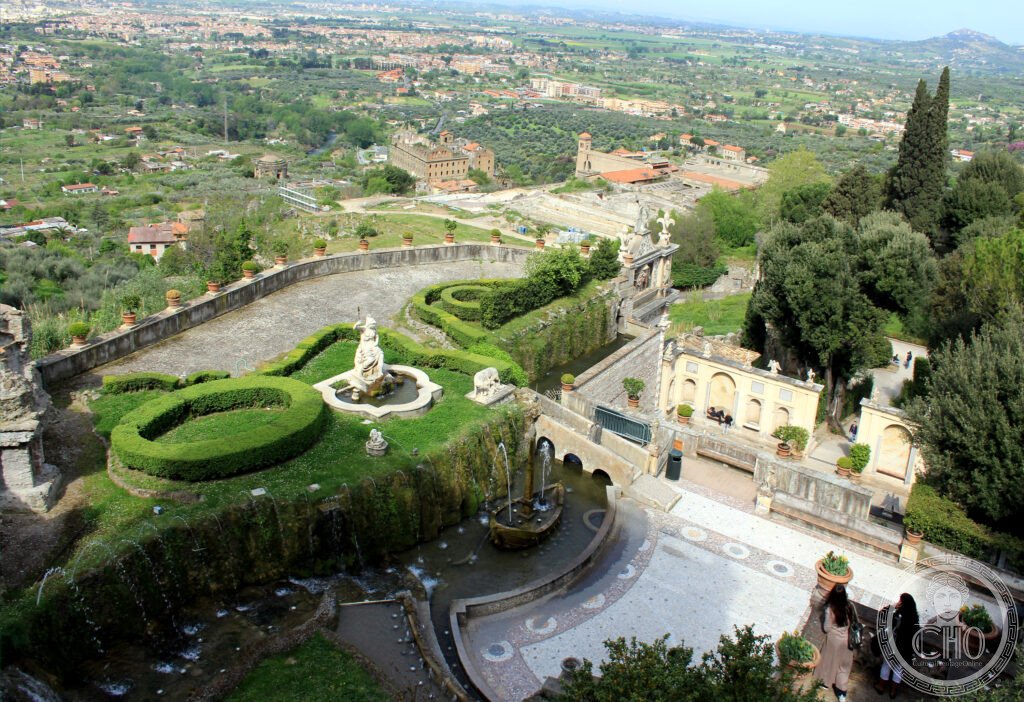
A Renaissance garden built on a steep hillside outside Rome, laid out for Cardinal Ippolito II d’Este and fed entirely by gravity from a diverted river. Its terraces, hundreds of fountains and a water-powered organ set the pattern for European garden design and later inspired composers including Liszt.
At a glance
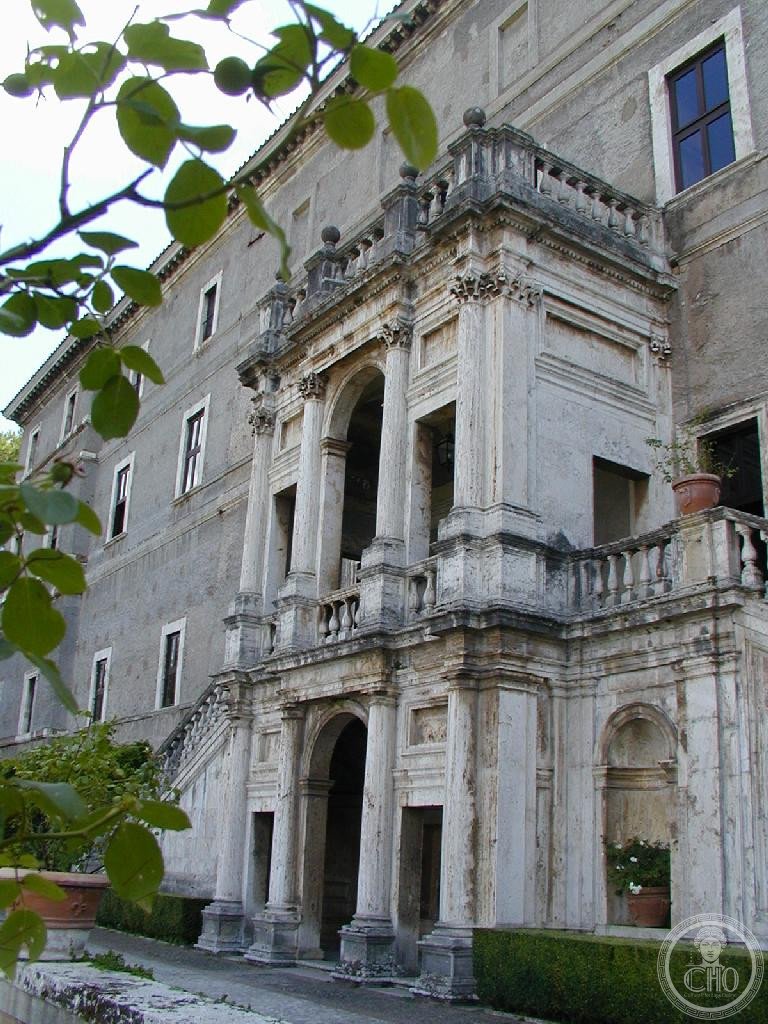
Villa d’Este stands at Tivoli, above Rome, and consists of a former Benedictine convent converted into a residence with a steeply terraced garden below it. The garden is built around water drawn from the river Aniene and channelled by gravity to feed several hundred fountains, without the use of pumps.
It is inscribed on the UNESCO World Heritage List, reference 1025, since 2001, and is widely regarded as one of the most influential garden designs in European history, credited with shaping the Italian garden tradition that later informed sites such as Versailles.
Key facts
- Location: Piazza Trento 1, Tivoli, near Rome
- Patron: Cardinal Ippolito II d’Este (1509–1572)
- Architect: Pirro Ligorio (1510–1583)
- Built: 1550–1572
- Garden area: around 4.5 hectares, with roughly 500 fountains
- Recognition: UNESCO World Heritage Site since 2001 (reference 1025)
History
Ippolito II d’Este was given the governorship of Tivoli in 1550, after failing to be elected pope at the conclave of 1549–50. He began building the villa almost immediately, incorporating the ruins of the Benedictine convent of Santa Maria Maggiore, whose monks were relocated elsewhere in the town. Pirro Ligorio, an antiquarian architect who had also excavated at Hadrian’s Villa, designed the terraced garden on the slope beneath the convent, drawing on classical models such as the Hanging Gardens of Babylon and the ancient Roman Horti of Sallust.
Construction lasted around twenty years. After Ippolito II’s death in 1572 the villa passed to the Este family and later to the Papal States, and it fell into decline during the seventeenth century. In the following century its gardens were drawn by Jean-Honoré Fragonard, and engravings made from his sketches by Hubert Robert circulated in France, influencing garden design there. The Neptune Fountain was rebuilt in 1927. The villa was inscribed on the UNESCO World Heritage List in 2001.
What you see
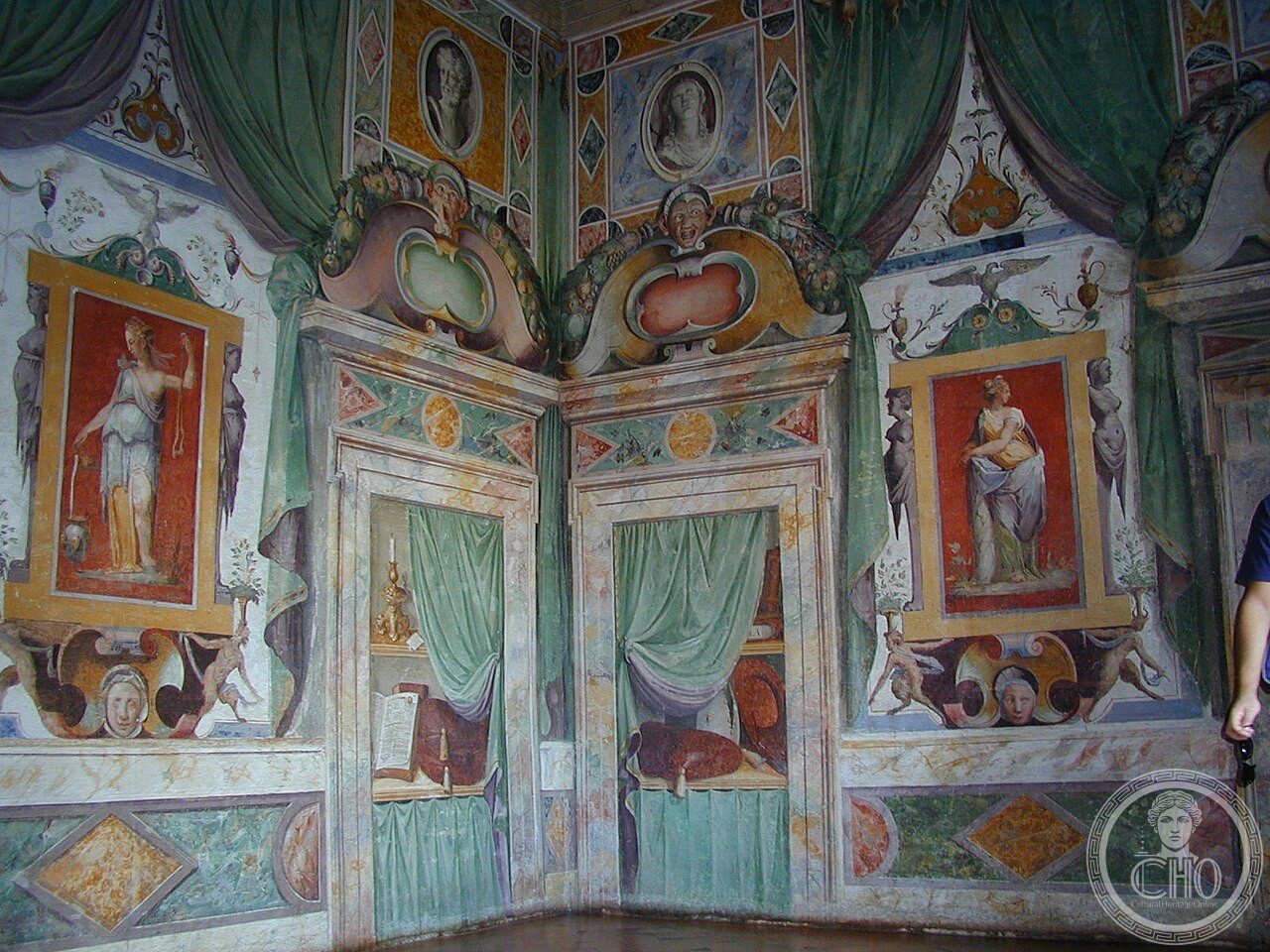
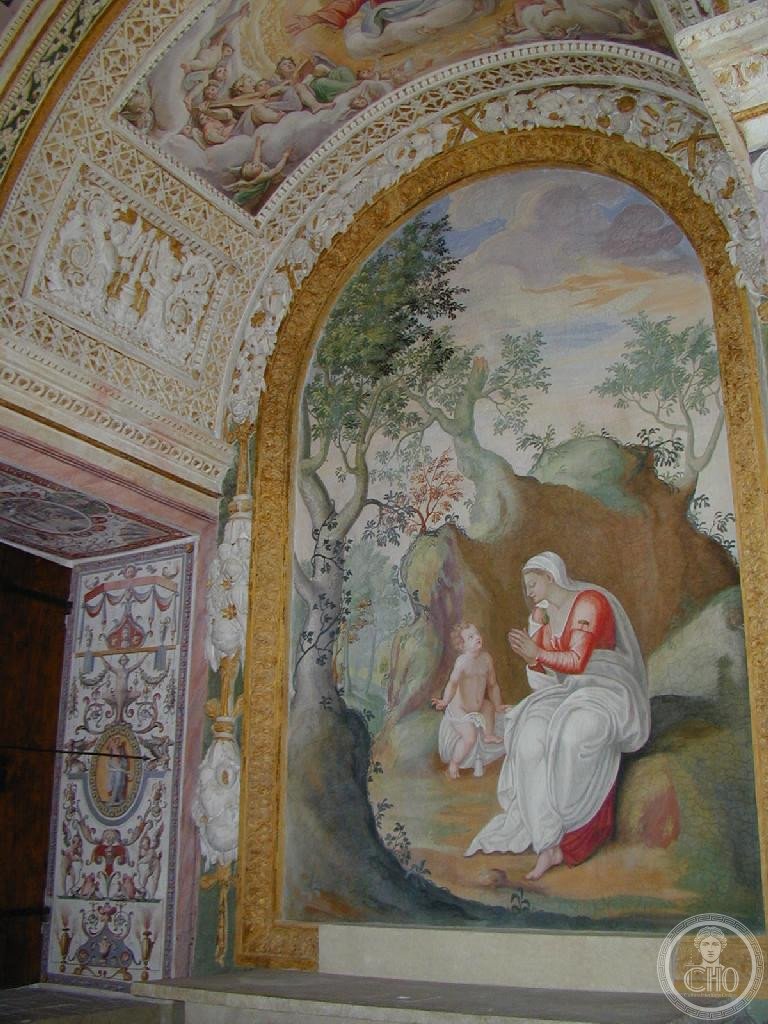
The visit begins in the villa itself, the former convent building, whose frescoed rooms include the Hall of the Liberal Arts, the Hall of Glory and the Hall of Hercules, decorated by Livio Agresti under Ligorio’s direction. From there the route leads into the garden.
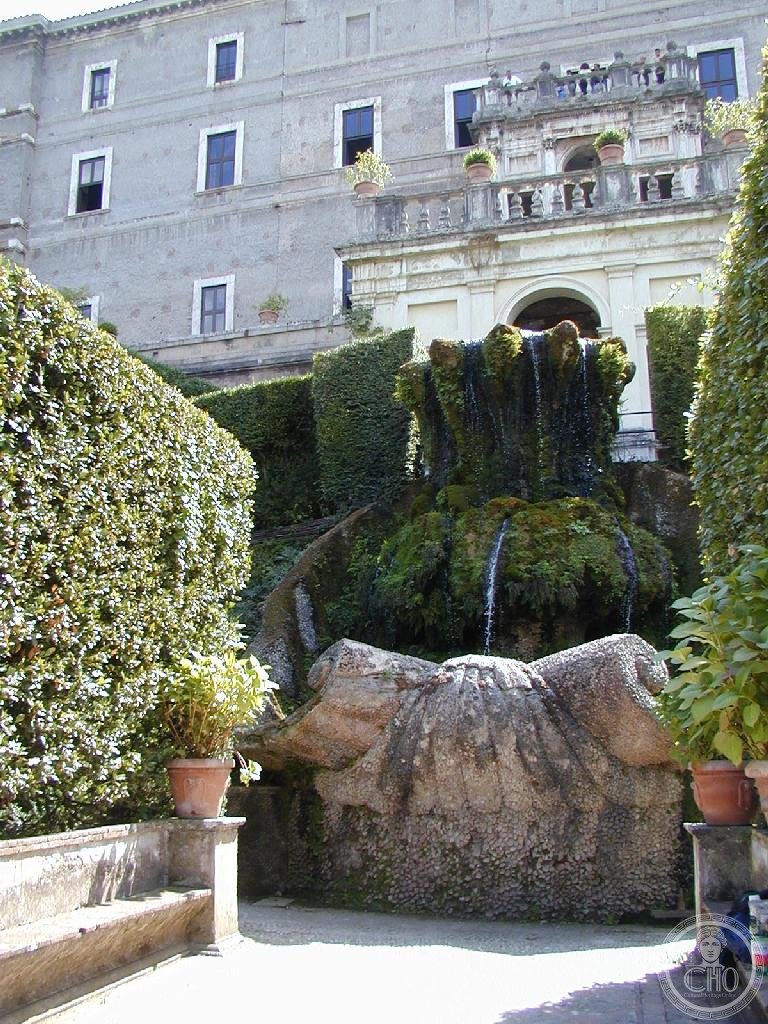
The Fontana dell’Ovato is a curved travertine fountain built around a central nymphaeum. The Viale delle Cento Fontane is a long horizontal terrace lined with three rows of water jets: a upper row of masks in the form of eagle heads, drawn from Este heraldry; a middle row of miniature obelisks, echoing the ancient Egyptian obelisks brought to Rome; and a lower row shaped as ships, referring to Ippolito II’s claims to naval and commercial power. The stone channels here are coated with moss that takes on a bright yellow-green colour where the surface stays continually wet. The Fontana di Nettuno is the largest fountain in the garden, with cascades, jets and a central column, visible from the villa’s terrace. The garden also contains a hydraulic organ, installed in 1567, which recreates the working principle of the ancient Roman hydraulis: falling water compresses air at constant pressure and feeds it into organ pipes, producing sound without bellows. It once played a short automated repertoire through the day. The composer Franz Liszt stayed at the villa on several occasions, and in 1877 wrote a piano piece inspired by its fountains.
Practical information
- Typical visit length: around 1.5 to 2 hours
- Access: entrance from Piazza Trento; opening times vary by season, so check the official site before travelling
- Good to know: the paths are steep and involve stairs between terraces
Getting there
Villa d’Este is in the centre of Tivoli, a town near Rome, and is reached on foot from the town’s main square. Tivoli is connected to Rome by regional transport links; visitors should check current timetables through official transport or tourism channels.
Nearby
- Hadrian’s Villa — a Roman imperial villa near Tivoli, excavated in part by Pirro Ligorio, whose finds informed the design of Villa d’Este
- Tivoli town centre — the historic centre surrounding Piazza Trento, within walking distance of the villa
Sources
- UNESCO World Heritage List
Gallery
Find it on the map
See this place and what’s around it →📷 Become a Cultural Heritage Online photographer
Share your photos of places: they stay published under your name as the author. The more they're seen, the more you get noticed — and soon a contest will reward the most appreciated photos.
Log in or sign up free to add a photoIs this page about you?
This page is read by travellers and heritage enthusiasts who find it on Google. Tell us how you are connected to this place and we will take it from there.