Villa d’Este, Tivoli

Villa d'Este Tivoli Fontana dell'Organo Cardinal Ippolito II d'Este 1550 Renaissance water garden terraces Lazio UNESCO 2001
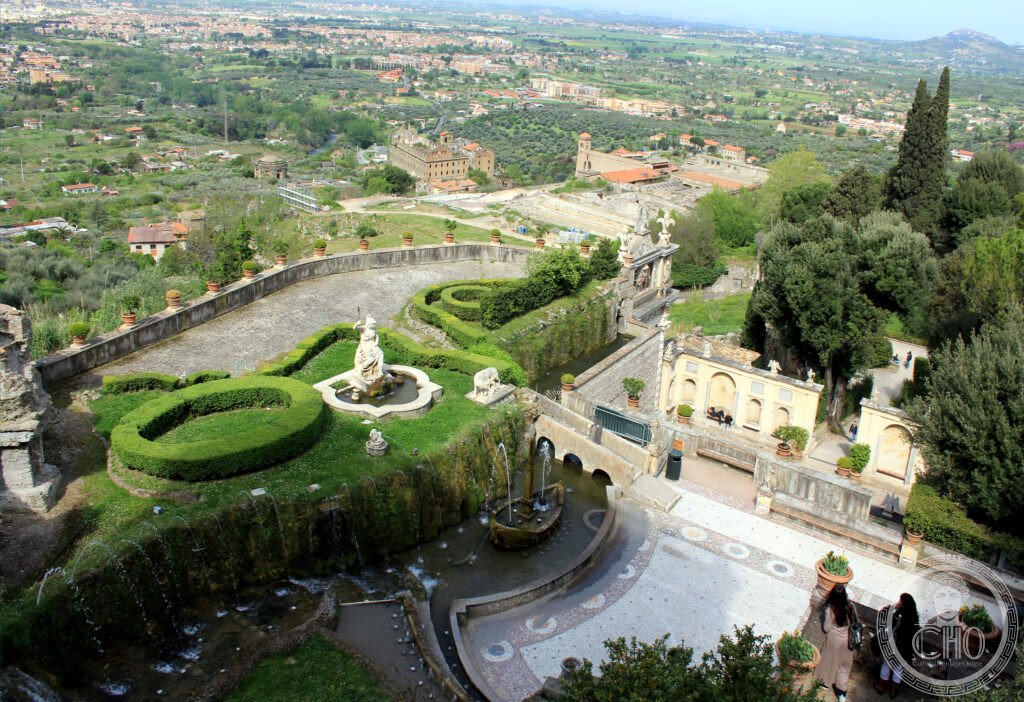
Villa d’Este gardens looking down the main axis from the upper terrace toward the town of Tivoli and the Roman Campagna (the view: the central alley (the Viale delle Cento Fontane — the Avenue of a Hundred Fountains — is the horizontal cross-axis, not the main axis; the main axis runs vertically from the casino at the top to the Fish Ponds (Peschiere) at the base; from the upper terrace the descending sequence of fountains, cascades, and pools is visible in a single view; the farthest visible element is the Fontana di Nettuno (Neptune Fountain; built 1927 CE as part of the comprehensive 20th-century restoration under Attilio Rossi); the water supply: the Rivellese aqueduct (2.7 km of underground channel from the Aniene River above Tivoli) supplies 300 liters/second of water to the entire garden (the flow is gravity-fed — no pumps in the 16th-century system; the hydraulic pressure is generated entirely by elevation difference between the Aniene intake at 280m above sea level and the lowest garden element at 235m above sea level; the pressure at the Fontana dell’Organo: approximately 2.5 bar)), Via Quintilio Varo, Tivoli, Province of Rome, Lazio, Italy. UNESCO World Heritage Site 2001 (reference 1025). Photo via Wikimedia Commons.
Tivoli, Province of Rome, Lazio, Italy · Cardinal Ippolito II d’Este patron 1550 CE; Pirro Ligorio architect; 500 fountains, 220 basins, 60 waterfalls; Fontana dell’Organo water organ (1571 CE); Franz Liszt residence 1865–1886 CE; UNESCO WHS 2001 (reference 1025)

Villa d’Este, Tivoli

The Villa d’Este (UNESCO 2001) is the greatest surviving Renaissance garden of water — a 16th-century hydraulic machine of 500 fountains, 60 waterfalls, 220 basins, and a water-powered pipe organ, designed by Pirro Ligorio for Cardinal Ippolito II d’Este as a literal re-creation of the ancient Roman pleasure garden described by Pliny and the villa from which it takes its name (Hadrian’s Villa is 1 km away), and which Franz Liszt used as a retreat for 22 years to compose his late piano cycle “Les jeux d’eaux à la Villa d’Este.”

At a glance

Villa d’Este Tivoli (the most precisely VilladEsteTivoli single Tivoli Lazio Italy 41.9629 N 12.7953 E UNESCO WHS 2001 reference 1025: the patron (Cardinal Ippolito II d’Este (1509–1572 CE; son of Alfonso I d’Este and Lucrezia Borgia; the richest Cardinal in 16th-century Italy; appointed Governor of Tivoli in 1550 CE by Pope Julius III; he transformed the medieval Benedictine convent on the hilltop site above Tivoli into a villa and garden between 1550 and 1572 CE); the architect (Pirro Ligorio (c.1513–1583 CE); the leading archaeologist-architect of the 16th century (his survey drawings of ancient Rome are the most complete 16th-century record of Roman monuments); the villa design is an archaeological project — Ligorio used his knowledge of ancient Roman villa design (Pliny’s letters about his Laurentum and Tuscum villas; the surviving texts of Vitruvius) to recreate what he believed a Roman pleasure garden to have been; the result: the terraced hillside garden (4 terraces; the slope from top to bottom is approximately 30m); the main axis (north-south; from the casino at the top to the fish ponds at the bottom); the cross-axis (the Viale delle Cento Fontane)); the water system (the Aniene River diverted 2.7 km underground from a point above Tivoli; the flow (300 liters/second) enters the garden at the top-left and is distributed to all 500 fountains, 220 basins, and 60 waterfalls by a gravity-fed system of lead and terracotta pipes with no pumping mechanism; the specific innovation: the Fontana dell’Organo (the Organ Fountain; 1571 CE; the hydraulic organ (organo idraulico) produces music by forcing air (generated by falling water) through organ pipes; the mechanism is the same as the ancient Greek hydraulis described by Ctesibius of Alexandria (c.250 BCE) and the Roman engineer Vitruvius; Ligorio reconstructed a working hydraulic organ — the first in the 1,500 years since the last ancient example); the Ovato Fountain (the oval fountain with the statue of the Tivoli Sibyl and the Aniene River god; the artificial mountain with the cascade cascading over the statues; the most elaborate single fountain in the garden)).

Key facts

  • Franz Liszt and “Les jeux d’eaux à la Villa d’Este” (1877 CE) — why the Villa d’Este changed the course of Western piano music: Franz Liszt (1811–1886 CE) lived at the Villa d’Este between 1865 and 1886 CE in the apartment assigned to him by Cardinal Gustav von Hohenlohe (who managed the villa for the Holy See after its 1849 CE confiscation during the Roman Republic uprising); Liszt’s 22 years in the villa produced his late piano works (the 3rd volume of the “Années de Pèlerinage” (Years of Pilgrimage); the Tivoli piece (“Les jeux d’eaux à la Villa d’Este” — The Games of the Waters at the Villa d’Este; composed 1877 CE; published as the 4th piece of the Troisième Année) is the direct musical equivalent of the falling water sounds in the Organ Fountain; Liszt explicitly described the piece as his response to the sound of the garden); the specific musical innovation: Liszt used broken-chord figures in the right hand against sustained harmonics in the left hand to simulate the sound of continuously falling water — this technique (independently from Liszt) was adopted by Debussy (in the Estampes, 1903 CE; specifically “Jardins sous la pluie” — Gardens in the Rain), by Ravel (“Jeux d’eau,” 1901 CE; Ravel explicitly cited the Liszt piece as the model), and by Fauré (in the 5th Nocturne, 1884 CE); the entire tradition of Impressionist piano writing derives from Liszt’s Tivoli piece
  • GPS: 41.9629° N, 12.7953° E

History

From the Cardinal’s commission to Liszt to UNESCO (the most precisely VilladEsteTivoli single 1550 CE commission: Cardinal Ippolito II d’Este obtained the governorship of Tivoli in 1550 CE and immediately began converting the Benedictine monastery of Santa Maria Maggiore on the Tivoli hill into his villa; the construction timeline (1550–1572 CE): the overall design was laid out by Pirro Ligorio beginning 1560 CE; the fountains were built in phases from the 1560s to the 1580s (some were completed after Ippolito’s death by his heirs); the Fontana dell’Organo was completed 1571 CE; the Fontana di Roma (now called the Fontana dell’Ovato or the Tivoli Fountain) was completed 1569 CE; after Ippolito II’s death (1572 CE): the villa passed through successive Este and then Holy See ownership; the late 17th–early 18th century saw the addition of the Neptune Fountain basin and the modification of several existing fountains; the 18th–19th century: gradual abandonment and deterioration (the Este family’s financial decline from the 1600s; the last private restoration was 1710 CE by the Cardinal of York, Henry Stuart (1725–1807 CE), the “last Stuart pretender”); 1849 CE confiscation during the Roman Republic (the villa was nationalized; Cardinal von Hohenlohe negotiated its return to Vatican management and invited Liszt as resident); 1918 CE the Italian state acquired the villa definitively; 1920s–1930s comprehensive restoration under Attilio Rossi; 2001 CE UNESCO inscription reference 1025.

What you see

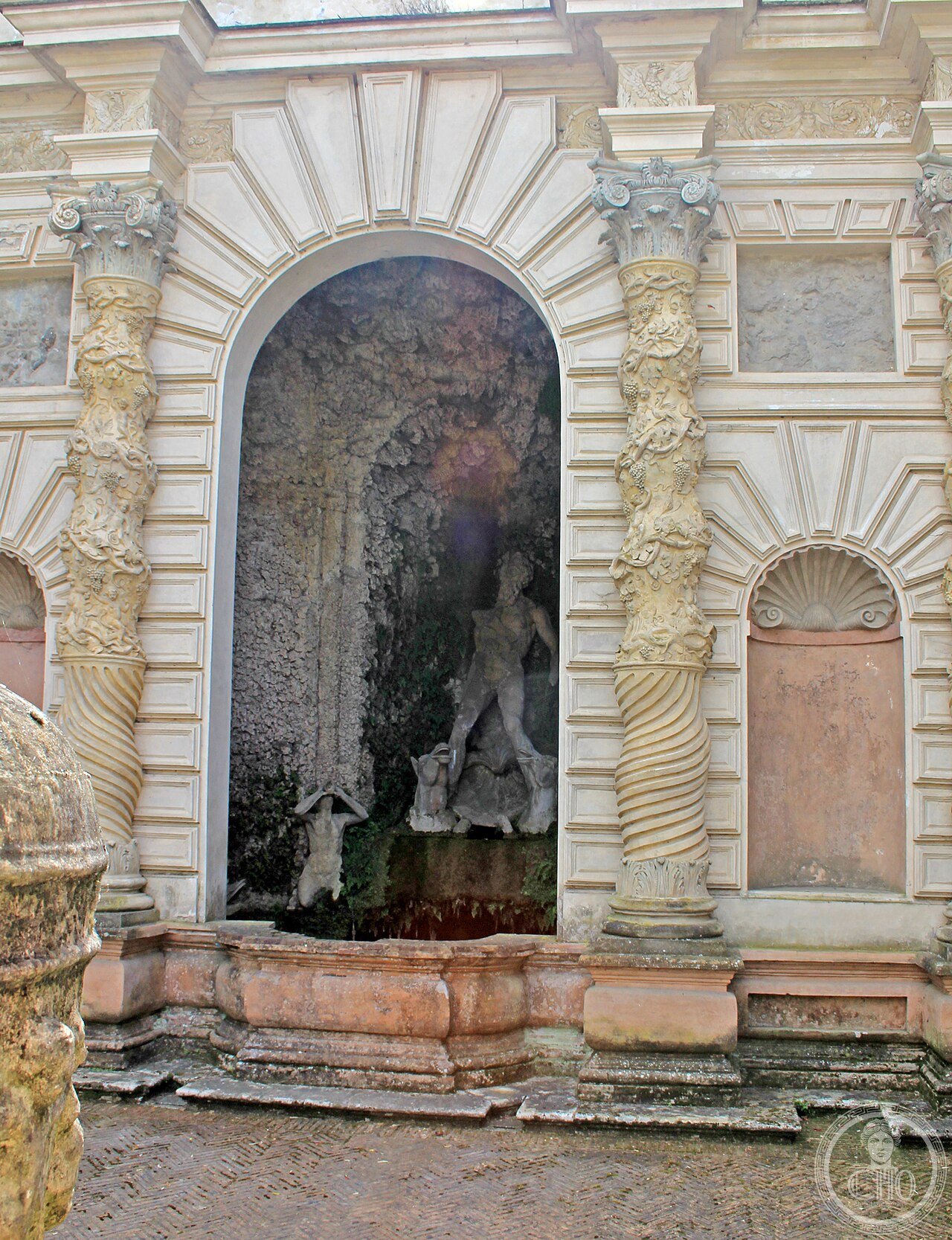
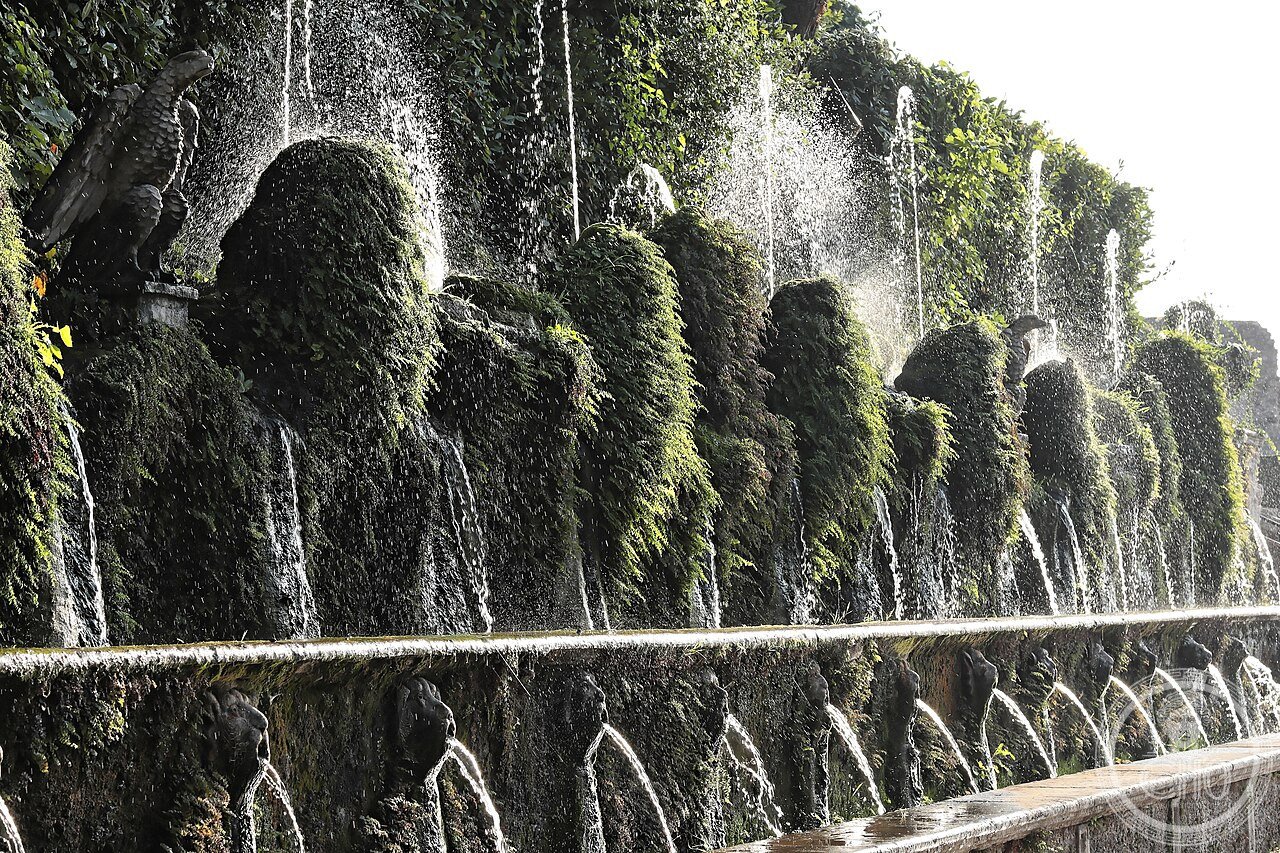
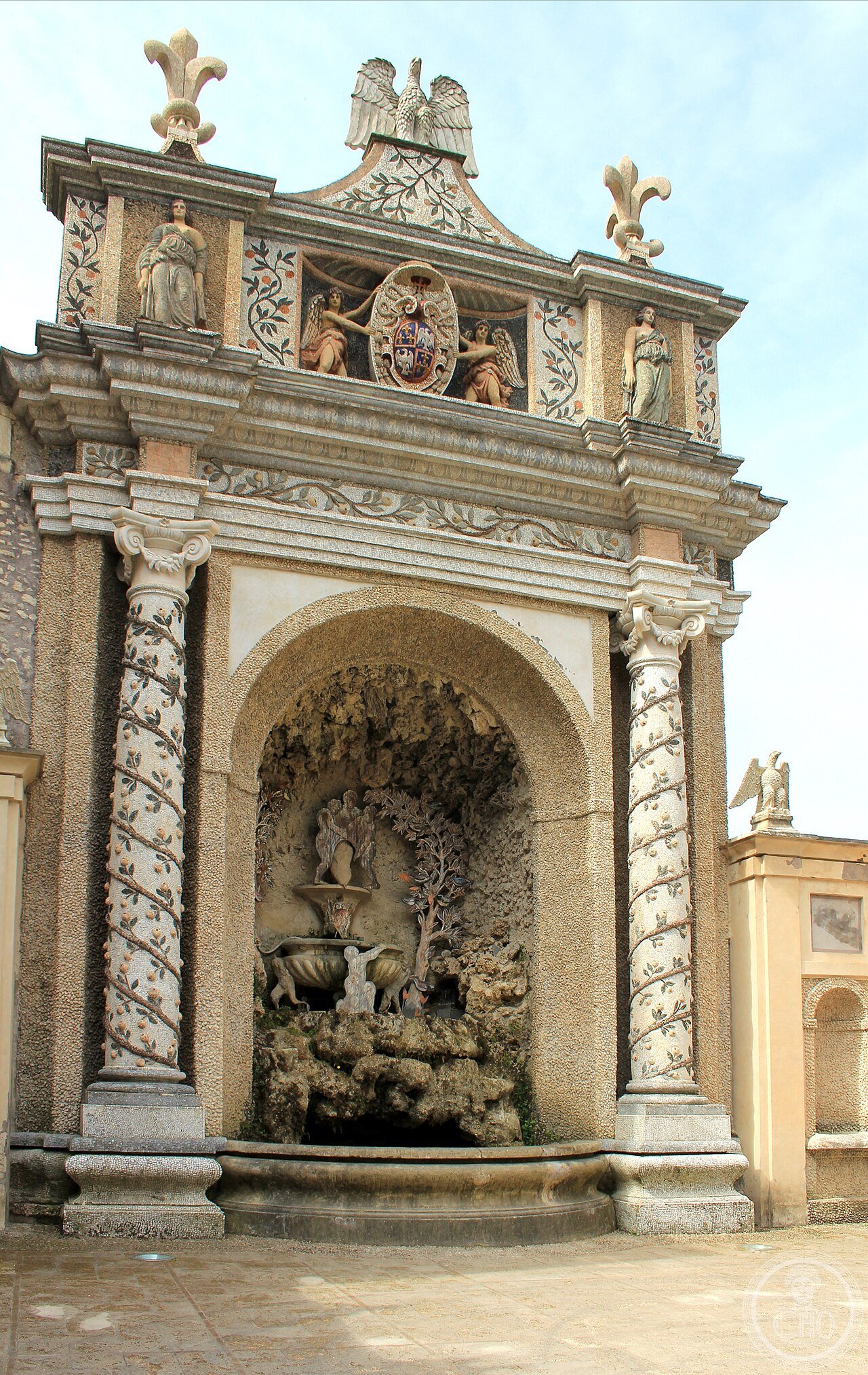
The casino, the four terraces, and the major fountains (the most precisely VilladEsteTivoli single visit (2.5 hours): 1) the casino (the main building; enter from the north (the Piazza Trento ticket office)); the interior: the frescos of the Sala della Gloria (the painted perspective views of the garden as designed (not as built; the fresco date from 1565 CE before the garden was completed — the fresco shows Pirro Ligorio’s ideal vision, with a fountain sequence that was only partially realized); 2) the first (upper) terrace: the Loggia of the Three Arches overlooks the garden (the view downward to the Neptune Fountain and the fish ponds is the canonical garden view); 3) the second terrace: the Viale delle Cento Fontane (the Avenue of a Hundred Fountains; the central cross-axis of the garden; 130m long; three rows of small fountains arranged vertically along the retaining wall of the upper terrace; the centermost row has 22 fountain jets shaped as boats, obelisks, and eagles (Este heraldic symbols); the other rows are continuous sheet-jets; the sound in the avenue is a continuous white-noise rush); 4) the Fontana dell’Organo (the east end of the Viale delle Cento Fontane; the water organ; rebuilt 1927 CE from the original 1571 CE design; the organ plays a short piece automatically every 2 hours from 10 AM to 6 PM — the actual hydraulic organ music (the Bach Tocata played on water pressure, approximately 4 minutes) is the most remarkable acoustic experience in any Italian garden); 5) the fourth (lowest) terrace: the Peschiere (the Fish Ponds; three rectangular basins in a row; each 25m × 60m; the basins are the hydraulic reservoir from which all garden water is recycled to the fountain supply system).

Practical information

  • Getting to Tivoli from Rome and combining with Hadrian’s Villa: transport: COTRAL bus from Rome Ponte Mammolo metro (Line B; 30 min from Termini by metro; then 1h bus to Tivoli; total: 1h30min; every 30 min; €4); or train from Roma Tiburtina to Tivoli (1h; €3; regional Trenitalia); the 1-day Tivoli circuit (from Rome): 9:00 depart Ponte Mammolo → arrive Tivoli 10:00; Villa d’Este (9:00–18:30; last entry 1h before closing; €14 adults; free first Sunday of month; the morning visit is less crowded and the fountains are more active (the water pressure in the system is highest in the morning because the overnight storage in the Peschiere tanks is full)); 13:00 lunch at a Tivoli restaurant; 14:00 COTRAL bus Tivoli → Villa Adriana (10 min; the bus stops at the Villa Adriana gate); Villa Adriana 14:30–18:00 (€12; the most extensive surviving ancient Roman villa complex (Hadrian’s Villa; 120 CE; 120 hectares; 30 individual architectural structures including the Teatro Marittimo (a circular island villa within a circular moat — the personal retreat within the retreat; accessible only by a drawbridge), the Canopus (the Egyptian-themed pool with the Serapis temple at one end), and the Piazza d’Oro (the banqueting complex)); shuttle bus from Villa Adriana back to Tivoli station; train or bus to Rome

Getting there

COTRAL bus from Rome Ponte Mammolo (Line B metro, 1h30 total, €4), or train Roma Tiburtina→Tivoli (1h, €3). Villa d’Este open 9:00-18:30, €14 (free first Sunday). Organ plays every 2h from 10 AM. GPS: 41.9629, 12.7953.

Nearby

  • Villa Adriana — 5 km (UNESCO WHS 1999; Hadrian’s Villa 120 CE; 120 ha; Teatro Marittimo island; Canopus Egyptian pool; the most extensive surviving Roman imperial villa; €12; COTRAL bus from Tivoli 10 min)
  • Roma — 30 km west (COTRAL bus 1h or train 1h; the Colosseum, Roman Forum, Pantheon, Sistine Chapel — UNESCO WHS 1980; the full Roman circuit requires 3–4 days minimum)

Sources

  • Wikipedia, Villa d’Este, Tivoli; Pirro Ligorio; Ippolito II d’Este; Franz Liszt, accessed June 2026
  • UNESCO, Villa d’Este, Tivoli, WHS reference 1025, inscribed 2001
  • MacDougall, Elisabeth Blair, and Naomi Miller. Fons Sapientiae: Garden Fountains in Illustrated Books, Sixteenth–Eighteenth Centuries. Washington: Dumbarton Oaks, 1977

Hero image: Villa d’Este, Tivoli, Lazio, Italy, Wikimedia Commons. Editorial text © Cultural Heritage Online, 2026.

📷 Diventa un fotografo di Cultural Heritage Online

Condividi le tue foto dei luoghi: restano pubblicate con la tua firma come autore. Più vengono viste, più ti fai conoscere — e presto un concorso premierà le foto più apprezzate.

Accedi o registrati gratis per aggiungere una foto
📋 Copy & share on social
Scroll to Top