
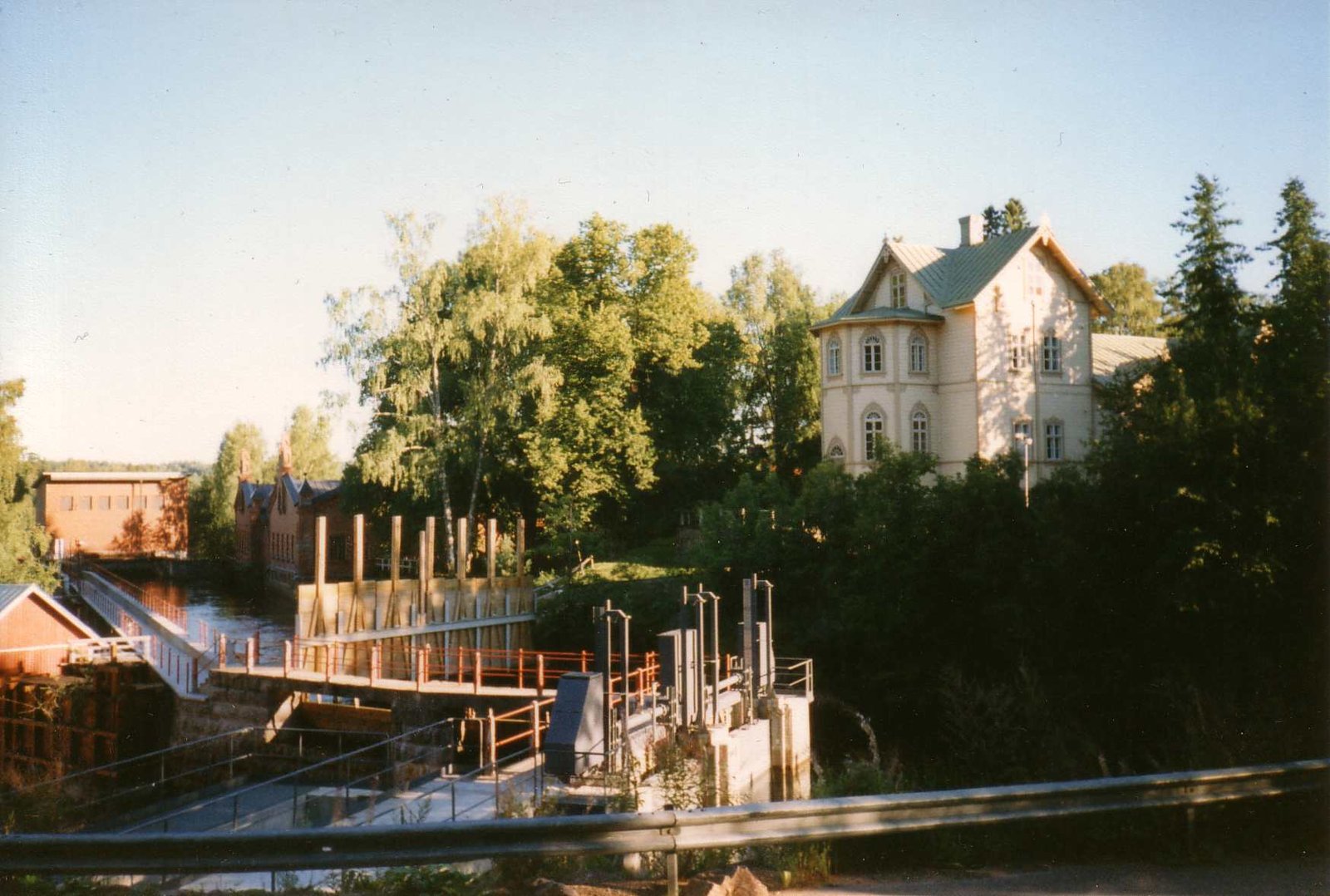
A perfectly frozen 19th-century industrial village on the Kymijoki River — mill, workers’ cottages, church, school, and store preserved exactly as they were left in 1964, when the last workers walked out and never came back.
At a glance
Verla is one of the world’s most remarkably intact examples of a 19th-century industrial paternalist village. When the mill closed in 1964 — rendered obsolete by modern paper technology — the tools, machinery, furniture, and personal belongings of the workers were left in place. The site was inscribed as a UNESCO World Heritage Site in 1996, not for monumental architecture or artistic achievement, but for the completeness of its social record: a single employer providing housing, worship, schooling, and daily commerce in exchange for total dependence. Nothing else of this type survives in such complete condition anywhere in Europe.
Key facts
- UNESCO inscription: 1996 (criterion iv — outstanding example of a type of building illustrating a significant stage in human history)
- Operating period: 1872–1964 CE (92 years); earlier mill on same site destroyed by fire 1876
- Location: Jaala (now part of Kouvola municipality), Kymenlaakso, southeastern Finland
- River: Kymijoki — the waterway that powered southeastern Finland’s paper industry
- Product: Groundwood paper (mechanical wood pulp) and cardboard — used primarily for wrapping paper and packaging
- Peak workforce: Approximately 100 workers and their families
- Buildings preserved: Mill building (red brick, neo-Gothic details), 17 workers’ cottages, manager’s villa, church, school, store — all original
- Ownership: UPM-Kymmene (Finnish paper industry conglomerate), operated as open-air museum
- Admission: Guided tours only, available May–October; original machinery demonstrated
History
The first mill at Verla was built in 1872 by Hugo Neuman, exploiting the hydraulic power of the Kymijoki River falls and the abundant forests of southeastern Finland. The original wooden structure burned to the ground in 1876 — a fate common to early wood-pulp mills where sawdust was ever-present. The rebuilt mill, completed in brick in 1882 by its new owners, became the definitive structure that stands today.
The Kymijoki valley was at the heart of Finland’s paper industry boom in the late 19th century, driven by European demand for cheap paper products. Verla’s owners adopted the then-common paternalist model: rather than paying high wages to attract workers from a distance, the company built a complete self-sufficient village on site. Workers received low wages but were provided with housing, a shop selling company-approved goods at controlled prices, religious services, and schooling for their children. This model of total social dependency — sometimes called a company village or in Finnish a ruukkikylä (works village) — was replicated across industrializing Europe and North America in the 19th century, but almost no examples survive intact.
By the early 20th century, mechanical groundwood paper had been superseded by chemical pulp methods that produced superior paper. Verla continued to operate on its original technology, serving niche markets, until 1964 — when the owners finally decided the ageing equipment was no longer worth maintaining. The closure was sudden. Workers left their tools on the benches and their furniture in the cottages. The company locked the gate. By accident, an irreplaceable historical document of industrial social history was preserved.
What you see
The mill building itself is the visual centerpiece: a large red-brick structure with neo-Gothic decorative elements — arched windows, corbelled cornices, decorative brick patterning — that was a common aesthetic for prestige industrial buildings in the 1880s, intended to signal permanence and reliability to clients and investors. The building sits directly on the river’s edge, with the millpond and original wooden sluice gates preserved in front.
Inside, the original wood-grinding machines, paper-making vats, and drying equipment remain in place, still functional for demonstration purposes. The grinding stones, driven by the hydraulic turbines in the basement, can be activated for visitors. The smell of damp wood and machinery oil is part of the experience.
Around the mill, the 17 workers’ cottages are arranged in the characteristic hierarchy of a paternalist village: the manager’s villa stands apart on higher ground with a formal garden; the skilled craftsmen’s houses are solid timber structures with small kitchen gardens; the general workers’ accommodation is more modest but still domestic in scale. Interiors of several cottages remain furnished as they were left, with cooking utensils, family photographs, and work clothes.
The church, school, and store complete the picture. The store’s shelves still carry original packaging from the 1960s.
Practical information
- Opening hours: May–October; guided tours run several times daily in summer
- Admission: Guided tours only — the site cannot be visited independently
- Duration: Allow 1.5–2 hours for a full guided tour
- Language: Tours available in Finnish and English; some tours in Swedish and German in peak season
- Accessibility: Parts of the mill interior have original industrial flooring — not fully accessible for mobility aids; outdoor areas accessible
- Photography: Permitted throughout
- Café: On-site café open during tour season
Getting there
Verla is located approximately 130 km east of Helsinki and 30 km north of Kouvola. The site is accessible primarily by car — take Road 46 from Kouvola towards Jaala; the mill is signed from the main road. There is no regular public transport to the site. The nearest railway station is Kouvola (Helsinki–St Petersburg main line), from which a taxi or rental car is necessary.
Nearby
- Kouvola: Regional centre 30 km south, with transport connections and accommodation
- Repovesi National Park: 40 km northwest — dramatic lake and forest scenery; one of Finland’s best hiking parks
- Langinkoski Imperial Fishing Lodge: 60 km south near Kotka — summer retreat of Tsar Alexander III of Russia, preserved as a museum on the Kymijoki River
- Kotka Maritime Centre Vellamo: 65 km south — museum of Finnish maritime and river history
Sources
- UNESCO World Heritage Centre — Verla Groundwood and Board Mill (List No. 754)
- Wikipedia — Verla Groundwood and Board Mill
Find it on the map
See this place and what’s around it →📷 Become a Cultural Heritage Online photographer
Share your photos of places: they stay published under your name as the author. The more they're seen, the more you get noticed — and soon a contest will reward the most appreciated photos.
Log in or sign up free to add a photo