
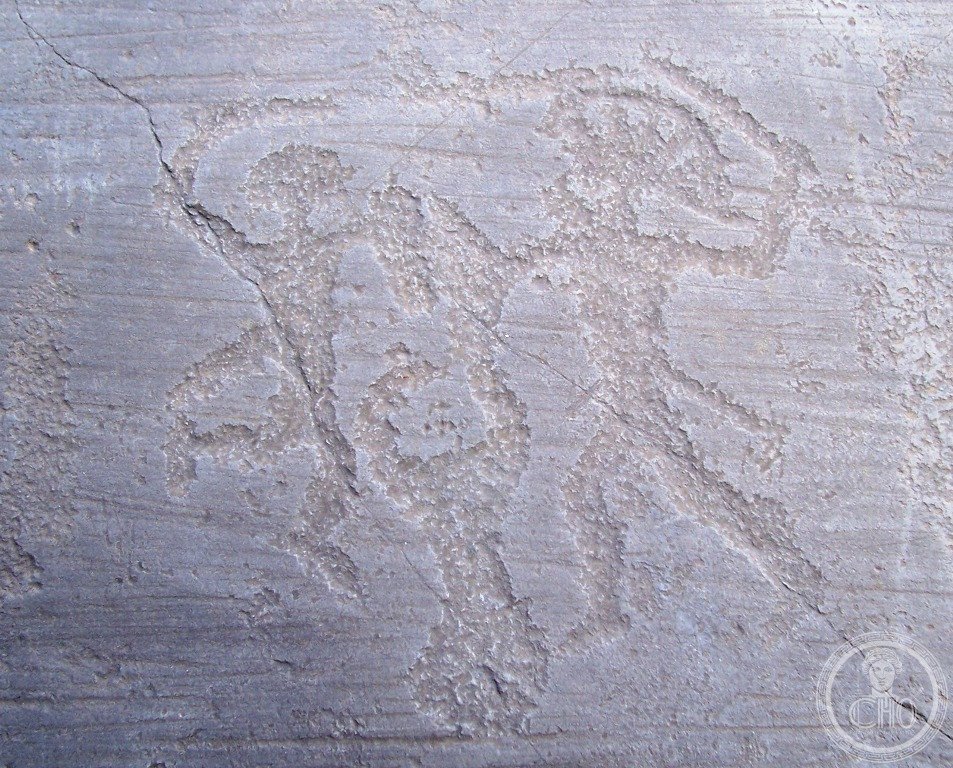
Across a 70-km Alpine valley, more than 300,000 figures were pecked into Permian sandstone over some twelve thousand years, from Mesolithic hunters to Roman-era carvers. It is the largest known concentration of prehistoric rock art anywhere, and the source of the spoked Camunian rose that Lombardy adopted as its own emblem.
At a glance
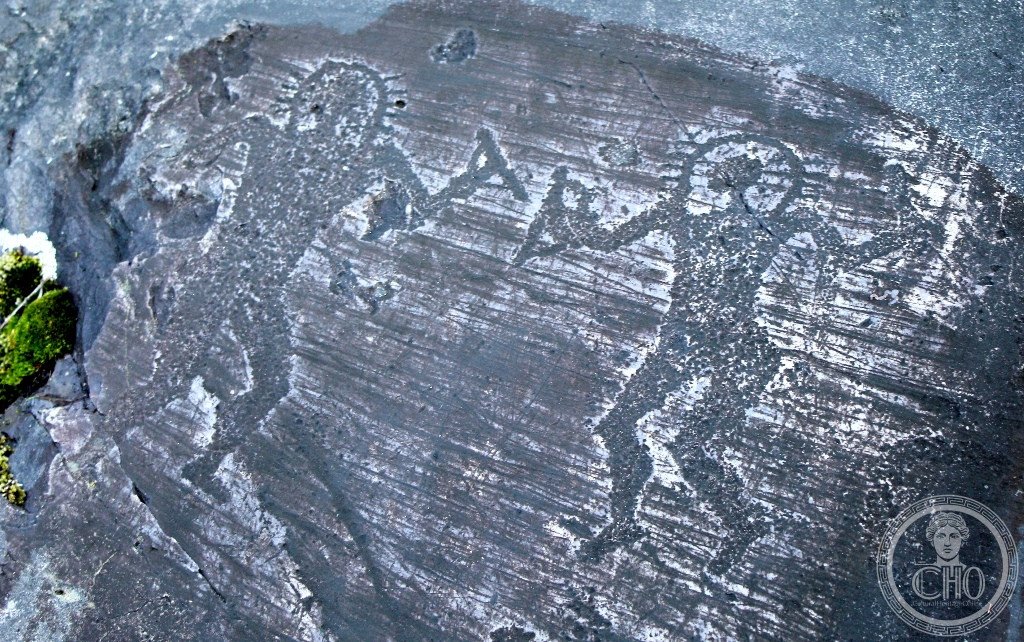
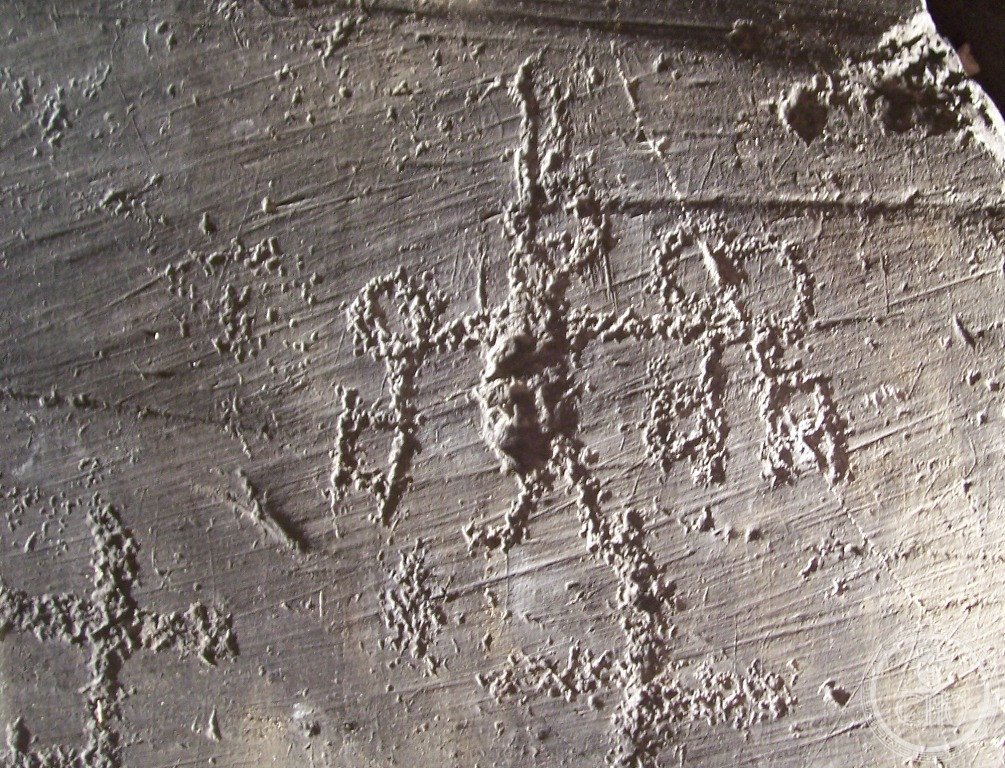
The rock carvings of Valle Camonica spread across roughly 2,400 rocks in 26 municipalities, running the length of the valley from Pisogne in the south to Edolo in the north. They were made by percussion, striking a stone tool against the sandstone to remove its dark weathered patina and expose the paler rock beneath, so that the figures stand out by contrast against the darker surface around them.
The carvings span an extraordinarily long period, from simple geometric marks of the Mesolithic through a Bronze Age peak, when the great majority of surviving figures were made, into the Iron Age culture of the Camunni and finally into the Roman era, when the tradition faded within a couple of generations of conquest.
Key facts
- Location: Capo di Ponte, Valle Camonica, province of Brescia, Lombardy
- Material: Permian sandstone outcrops, locally called massi
- Scale: more than 300,000 figures across some 2,400 rocks over a 70-km valley
- Time span: roughly 8000 BCE to the early Roman period
- Emblem: the Camunian rose, a spoked circular symbol found on about 900 rocks, adopted as the official symbol of the Lombardy region in 1975
- Recognition: inscribed by UNESCO in 1979, the first World Heritage Site listed in Italy
History
The carvings were first identified in 1909 by Gualtiero Laeng, a local natural history enthusiast, at Cemmo near Capo di Ponte, and were published academically for the first time in 1914 by the geologist Giovanni Battista Cacciamali. Systematic survey began only in 1956, led by the archaeologist Emanuel Anati, who later founded the Centro Camuno di Studi Preistorici in Capo di Ponte. The site was inscribed by UNESCO in 1979, the first World Heritage Site in Italy, at the inaugural meeting of the World Heritage Committee.
The people who made most of the later carvings, the Camunni, appear in Roman written sources: Pliny the Elder names them as an Alpine people conquered by the Romans under the general Publius Silius Nerva in 16 BCE, and they are listed among the defeated Alpine peoples on the Trophée des Alpes monument above Monaco. After conquest the valley was absorbed into the territory of Roman Brescia, and the carving tradition continued for only a generation or two before dying out as the Camunni were drawn into the imperial economy.
What you see
The Parco Nazionale delle Incisioni Rupestri di Naquane holds the densest concentration of carvings, centred on Rock 1, a sandstone surface 21 metres high and 75 metres long carrying over a thousand individual figures. A path runs along its base with panels identifying the main groups: hunting scenes with deer, dogs and archers in the lower left, praying figures with raised arms in the centre right, and, in the upper right, a ploughing scene showing a man guiding an ox-drawn plough with a sower behind him, one of the earliest known depictions of ploughing in European art.
A short walk away, the Parco Archeologico dei Massi di Cemmo holds two large engraved stelae, standing around 2.5 metres high and dated to the Bronze Age. Carved with weapons, animals and the Camunian rose, they are among the oldest large-scale figurative stone monuments in Europe.
Practical information
- Best viewing conditions: the carvings show up best when sunlight strikes the rock at a low angle, so early morning and late afternoon give better contrast than midday; wet weather tends to flatten the contrast between carved and patinated stone.
- What to bring: binoculars help with the upper sections of the largest rocks.
- Sites to combine: the Naquane park and the Cemmo stelae can be visited together, a short walk apart.
- Opening times and admission: these vary by season, so check the park’s official channels before travelling.
Getting there
Capo di Ponte is reached by train from Brescia on the Brescia–Edolo line through the Valle Camonica, with the station roughly 400 metres from the Naquane park entrance. Travellers from Milan change at Brescia, which itself has a fast rail connection to Milano Centrale.
Nearby
- Parco Archeologico dei Massi di Cemmo — about 2 km from Naquane, home to two large Bronze Age engraved stelae.
- Centro Camuno di Studi Preistorici — the research institute founded in Capo di Ponte following Emanuel Anati’s surveys.
Sources
- UNESCO
- Pliny the Elder, Natural History
- Centro Camuno di Studi Preistorici
Gallery
Find it on the map
See this place and what’s around it →📷 Become a Cultural Heritage Online photographer
Share your photos of places: they stay published under your name as the author. The more they're seen, the more you get noticed — and soon a contest will reward the most appreciated photos.
Log in or sign up free to add a photoIs this page about you?
This page is read by travellers and heritage enthusiasts who find it on Google. Tell us how you are connected to this place and we will take it from there.