
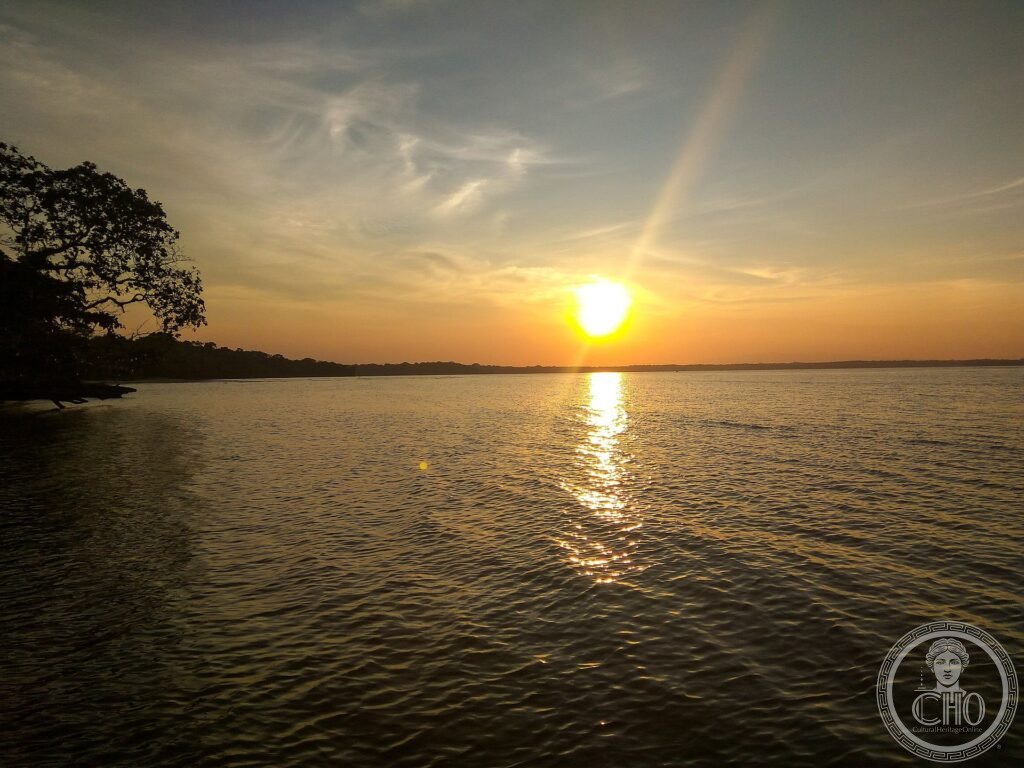
At the western tip of Java, facing the volcano Krakatoa, a peninsula of rainforest and swamp holds one of the rarest animals in the world: the Javan rhinoceros, reduced to a few dozen individuals. Ujung Kulon is its last refuge on Earth, among deserted beaches and untouched forest.
At a glance
Ujung Kulon National Park, at the westernmost tip of Java facing the volcanic islands of Krakatau, protects the largest remaining lowland rainforest on the island, with peninsulas, beaches, swamps and offshore reefs. It is above all the last refuge on Earth of the critically endangered Javan rhinoceros, of which only a few dozen survive, all of them here. Recognised for this and for the volcanic and natural features of the Krakatau group included with it, it was inscribed by UNESCO in 1991.
Key facts
- UNESCO: World Heritage since 1991 (Ujung Kulon National Park)
- Javan rhino: the last refuge of one of the world’s rarest mammals
- Lowland rainforest: the largest remaining on Java
- Krakatau: the famous volcanic islands are part of the site
- Peninsula and isles: beaches, swamps and offshore reefs
- Westernmost Java: at the tip of the island by the Sunda Strait
History
The remote Ujung Kulon peninsula was largely depopulated after the catastrophic 1883 eruption of nearby Krakatau, whose tsunami swept the coast; the forest reclaimed the land and became a haven for wildlife. As the Javan rhinoceros vanished elsewhere under hunting and habitat loss, Ujung Kulon became its final stronghold.
Protected as a reserve and national park, and including the Krakatau islands with their ongoing volcanic activity, the area was inscribed by UNESCO in 1991. Intensive efforts now protect the tiny rhino population, which remains acutely vulnerable to disease, natural disaster and its own small numbers.
What you see
Reached mainly by boat, the park offers walks through dense lowland rainforest and along wild beaches, grazing lawns where rhinos and banteng cattle feed (though the rhino is rarely seen), mangroves and coral reefs, with the smoking cone of Anak Krakatau visible offshore. Wildlife includes deer, primates and abundant birds.
The sense of a last wild refuge, watched over by a restless volcano, gives Ujung Kulon its atmosphere.
Practical information
- Park: reached by boat, often on multi-day tours from Tamanjaya
- Best time: the drier months (April–September)
- Time needed: two or more days
- Note: the Javan rhino is strictly protected and almost never seen
Getting there
Ujung Kulon is at the western tip of Java, Indonesia, in Banten province, reached by road to Tamanjaya and then by boat, several hours from Jakarta. GPS: 6.75° S, 105.33° E.
Nearby
- Krakatau (Anak Krakatau) — the active volcano islands offshore
- Carita and Anyer — the beach resorts on the Sunda Strait
- Banten — the historic old town to the north
Sources
- UNESCO World Heritage Centre — “Ujung Kulon National Park” (ref. 608)
- Indonesian Ministry of Environment and Forestry — official body
- Encyclopaedia Britannica — Ujung Kulon; Javan rhinoceros
Find it on the map
See this place and what’s around it →📷 Become a Cultural Heritage Online photographer
Share your photos of places: they stay published under your name as the author. The more they're seen, the more you get noticed — and soon a contest will reward the most appreciated photos.
Log in or sign up free to add a photo