
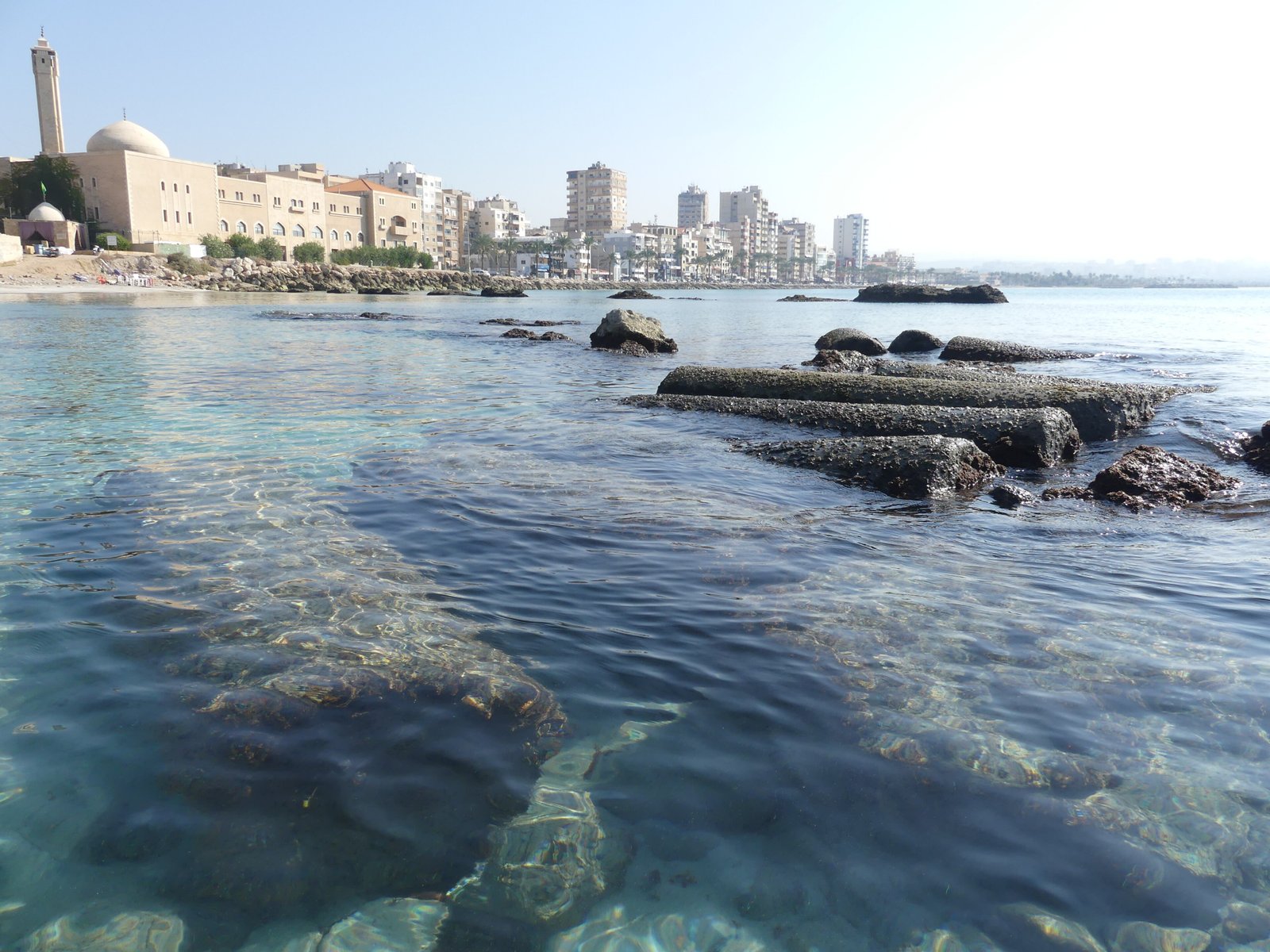
Tyre was once the greatest maritime power of the ancient world — an island city so formidable that it took Alexander the Great seven months and a 800-metre causeway to conquer it. That causeway is still there. Tyre is now a peninsula.
At a Glance
Modern Tyre (Arabic: Sur) is a city of roughly 60,000 on Lebanon’s southern coast, sitting on a peninsula that was an island until 332 BC. Beneath and beside the modern city lie some of the most extensive Phoenician, Hellenistic, and Roman ruins in the Levant, including a colonnaded street, a vast necropolis, and the second-largest hippodrome known from the ancient world. UNESCO inscribed Tyre as a World Heritage Site in 1984.
History
Tyre’s founding is traditionally placed around 2750 BC. By the 9th century BC it had grown into the dominant Phoenician city-state, its fleet reaching from the Canary Islands to the Persian Gulf. Tradition dates the founding of Carthage in 814 BC to Tyrian colonists under the princess Elissa (Dido). The city’s wealth rested on trade, skilled glassblowing, and above all on Tyrian purple — a dye extracted from the glandular mucus of Murex sea snails that required thousands of snails per gram and could only be afforded by kings and emperors. The purple-stained waste heaps of ancient dye-works are still visible at the Al-Bass site.
Alexander’s Causeway
When Alexander the Great arrived in 332 BC, Tyre sat on an island 800 metres offshore, its walls rising directly from the sea. Conventional siege was impossible. Alexander ordered the construction of a mole — a stone-and-rubble causeway — across the strait. Tyre’s defenders set fire to siege towers and deployed ships against the workers. The siege lasted seven months. When the causeway finally breached the walls, Alexander massacred or enslaved the population. Over the subsequent millennia, sediment accumulated against the mole, widening it into the full isthmus on which modern Sur stands. Alexander’s military engineering project permanently altered the geography of the Lebanese coast.
What You See
Two main archaeological zones are open to visitors. The Al-Bass site (mainland) preserves a triumphal arch, a Roman paved road still bearing chariot ruts, a vast necropolis of sarcophagi, and the hippodrome — 480 metres long, capable of seating 20,000 spectators, the second largest in the ancient world after the Circus Maximus in Rome. The Al-Mina site (on the peninsula) reveals a Hellenistic and Roman urban grid with marble colonnades, public baths, and mosaics, standing just metres from the sea. The ancient Egyptian harbour, now partially submerged, is visible from the shore on clear days.
Cultural Significance
Tyre gave the ancient world its alphabet (shared with Byblos and the broader Phoenician world), its most coveted luxury dye, and its most famous colony. Herodotus visited and reported magnificent temples; the Hebrew Bible names its craftsmen as builders of Solomon’s Temple. The Apostle Paul stopped here on his journey to Jerusalem (Acts 21:3–6). The city’s arc from island fortress to Roman provincial capital to Crusader stronghold to modern Lebanese city makes it one of the most continuously layered urban sites in the world.
Conservation and Challenges
Tyre’s archaeological zones face ongoing pressure from urban development, illegal construction, and the effects of regional conflict. Parts of the Al-Bass site were damaged during the 2006 conflict. UNESCO and Lebanon’s Directorate General of Antiquities collaborate on conservation, but the site remains on UNESCO’s list of World Heritage in Danger due to development encroachment.
Practical Information
Tyre is 83 km south of Beirut, roughly 90 minutes by car or shared taxi from the Cola transport hub. The Al-Bass and Al-Mina archaeological sites are open daily with a combined entrance ticket. The modern city of Sur has hotels, restaurants serving fresh seafood, and a small but attractive harbour. Visit in spring or autumn for the most comfortable temperatures.
Sources & Resources
- UNESCO World Heritage Centre — Tyre
- Wikipedia: Tyre, Lebanon
- Nina Jidejian, Tyre Through the Ages (1969)
- Arrian, Anabasis Alexandri, Book II — primary source on the siege
Find it on the map
See this place and what’s around it →📷 Become a Cultural Heritage Online photographer
Share your photos of places: they stay published under your name as the author. The more they're seen, the more you get noticed — and soon a contest will reward the most appreciated photos.
Log in or sign up free to add a photo