
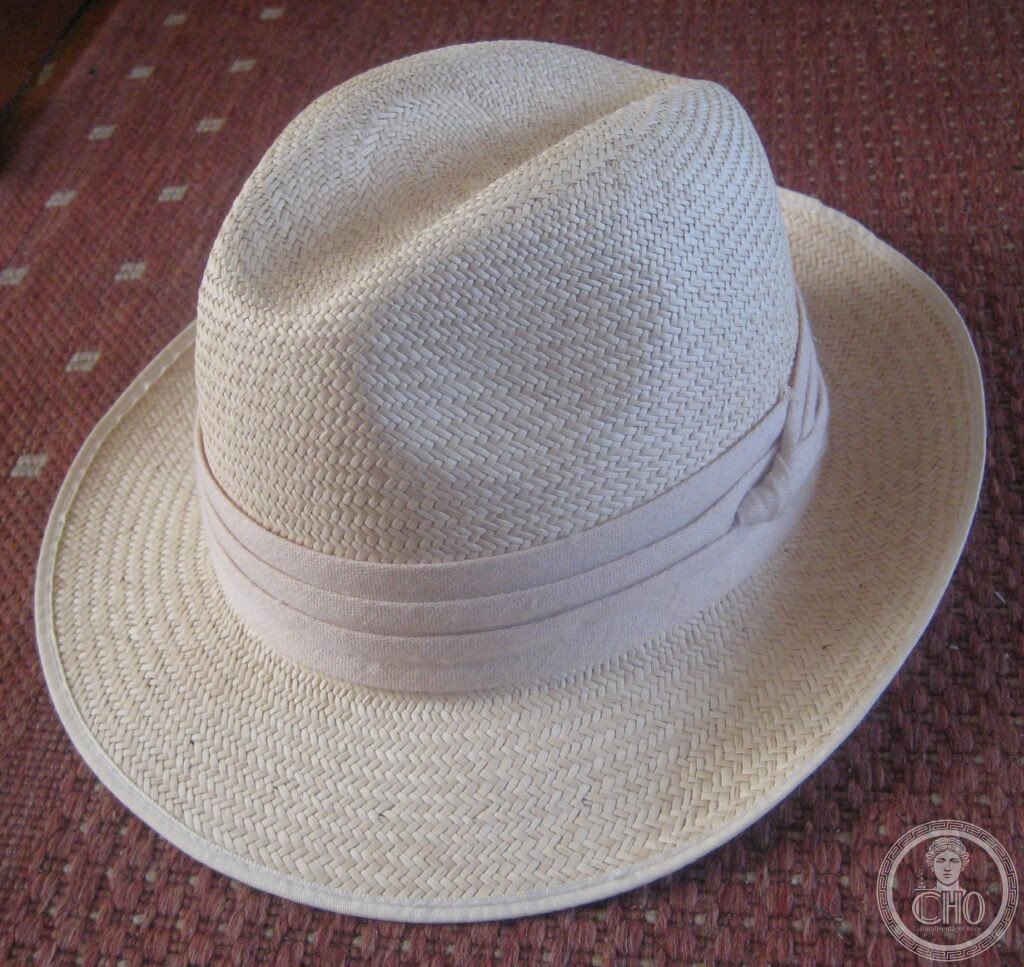
In the coastal town of Montecristi, master weavers transform leaves of the toquilla palm into fine, breathable hats prized for their lightness and supple weave—a craft that has defined Ecuadorian identity for generations.
In UNESCO’s words
The toquilla straw hat is woven from fibres from a palm tree characteristic of the Ecuadorian coast. Coastal farmers cultivate the toquillales and harvest the stems before separating the fibre from the green outer skin. This is boiled to remove chlorophyll and dried for subsequent bleaching with sulfur over a wood fire. Weavers take this raw material and begin weaving the crown and the brim of the hat. Weaving a hat can take from one day to eight months, depending on the quality and finesse. In Pile, a costal community, weavers produce extra fine hats that require specific climatic conditions and involve an exact number of points in each row of weaving. The process is completed by washing, bleaching, moulding, ironing and pressing. The weavers are mostly peasant families and transmission of weaving techniques occurs within the home from an early age through observation and imitation. The skills and knowledge enfold a complex and dynamic social fabric including traditional techniques of cultivation and processing, forms of social organization, and use of the hat as part of everyday clothing and in festive contexts. It is a distinctive mark of the communities perpetrating this tradition and part of their cultural heritage.
Official description, UNESCO Intangible Cultural Heritage List — Traditional weaving of the Ecuadorian toquilla straw hat
At a glance
The toquilla straw hat is woven from fibres harvested from a palm tree characteristic of the Ecuadorian coast. Farmers cultivate the plants and process the stems by separating the fibre, boiling it to remove chlorophyll, drying it, and bleaching it with sulfur over a wood fire. Weavers then take this prepared material and weave the crown and brim. The finished hat undergoes washing, bleaching, moulding, ironing and pressing. Depending on quality and finesse, weaving can take from one day to eight months.
Origins & history
The toquilla straw hat tradition is rooted in the cultivation and processing practices of coastal farming communities. Transmission of weaving techniques has occurred within peasant families from an early age through observation and imitation, creating a living craft that combines traditional methods of cultivation, fibre processing, and weaving knowledge passed down across generations.
The practice
Weavers, mostly from peasant families, begin by weaving the crown and brim from prepared toquilla fibres. In Pile, a coastal community, weavers produce extra fine hats that require specific climatic conditions and involve an exact number of points in each row of weaving. The completed hat is then washed, bleached, moulded, ironed and pressed. The tradition involves complex knowledge of cultivation techniques, fibre processing, and the specific skills needed to create hats of varying quality and fineness.
Cultural significance
The toquilla straw hat is a distinctive mark of the coastal communities that perpetrate this tradition and part of their cultural heritage. The craft embodies a complex social fabric that includes traditional techniques, forms of social organization, and the hat's use in both everyday clothing and festive contexts. Knowledge and skills in hat-making are transmitted within families, preserving this living cultural practice.
Key facts
- Country: Ecuador
- Inscribed: 2012
- UNESCO list: Representative List of the Intangible Cultural Heritage of Humanity
- UNESCO reference: 00729
- UNESCO vocabulary: Handicrafts; Hats; Technical skills
- Map: Pile — the locality named in UNESCO’s official description of this element
Where to experience it
Where to experience it In Pile and other coastal communities of Ecuador, visitors encounter weavers at work in their homes, where families continue to practise this craft across generations. The toquilla hat remains integral to everyday life and festive occasions in these communities, and the tradition persists through direct observation and teaching within households. The complex process—from cultivating toquillales palms to the final pressing—reflects the deep knowledge weavers hold about their materials and techniques, making these communities living repositories of Ecuador's cultural heritage.
Sources & resources
- UNESCO — official element page: Traditional weaving of the Ecuadorian toquilla straw hat
- UNESCO — open data record: Intangible Heritage List, reference 00729
- UNESCO — official photograph: Photograph of this element — César Manrique Regalado — Institut National du Patrimoine Culturel, 2010
- Reference — Wikipedia (secondary): Panama hat — consulted as a secondary reference, not as confirmation
- Cultural Heritage Online: Our archive and city guides

Find it on the map
See this place and what’s around it →📷 Become a Cultural Heritage Online photographer
Share your photos of places: they stay published under your name as the author. The more they're seen, the more you get noticed — and soon a contest will reward the most appreciated photos.
Log in or sign up free to add a photo