
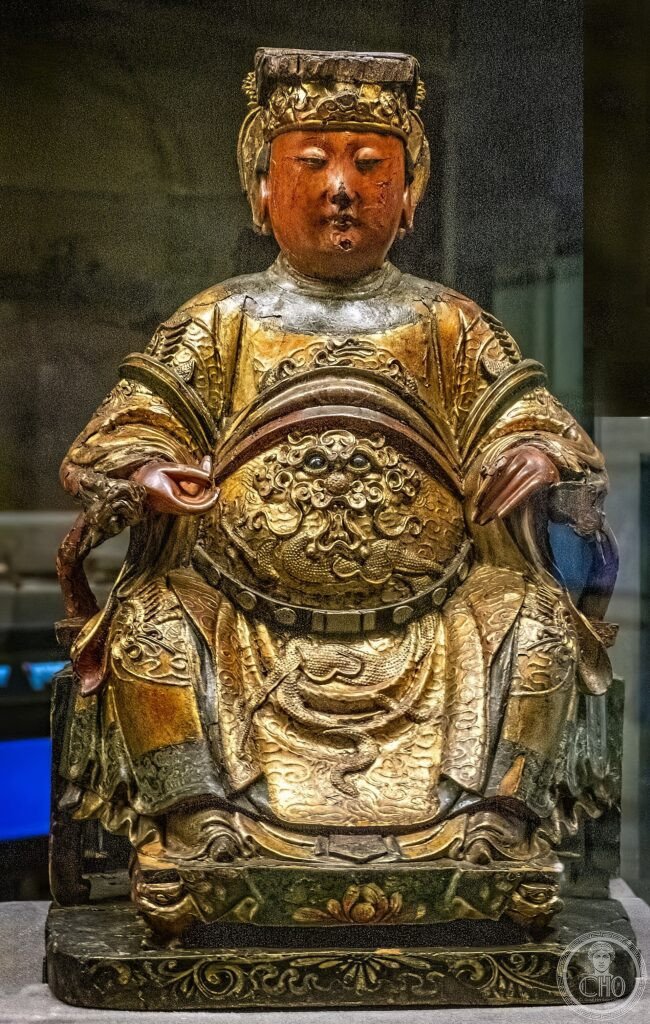
A living seafaring faith centered on Lin Moniang, a tenth-century shamaness deified as a protective goddess, sustained through ritual, pilgrimage, and festival across China’s coastal regions and diaspora communities.
In UNESCO’s words
As the most influential goddess of the sea in China, Mazu is at the centre of a host of beliefs and customs, including oral traditions, religious ceremonies and folk practices, throughout the country’s coastal areas. Mazu is believed to have lived in the tenth century on Meizhou Island, where she dedicated herself to helping her fellow townspeople, and died attempting to rescue the survivors of a shipwreck. Local residents built a temple in her honour and began to venerate her as a goddess. She is celebrated twice each year in formal temple fairs, when Meizhou residents, farmers and fisherfolk temporarily suspend their work to sacrifice marine animals, venerate statues of Mazu and enjoy a variety of dances and other performances. Smaller worship ceremonies take place throughout the year in the other 5,000 Mazu temples around the world and in private homes; these may involve floral tributes; candles, incense and firecrackers; and evening processions of residents bearing ‘Mazu lanterns’. Followers may implore the god for pregnancy, peace, the solution to a problem or general well-being. Deeply integrated into the lives of coastal Chinese and their descendants, belief in and commemoration of Mazu is an important cultural bond that promotes family harmony, social concord, and the social identity of these communities.
Official description, UNESCO Intangible Cultural Heritage List — Mazu belief and customs
At a glance
Mazu is the most influential goddess of the sea in China, at the heart of beliefs, customs, and folk practices throughout coastal areas. Worshippers—farmers, fisherfolk, and residents of coastal communities—seek her help through religious ceremonies, oral traditions, and private devotion. They may ask her for pregnancy, peace, solutions to problems, or general well-being. Mazu belief is deeply woven into coastal Chinese life and that of their descendants, serving as an important cultural bond that strengthens family harmony and social identity.
Origins & history
Mazu is believed to have lived in the tenth century on Meizhou Island, where she helped her fellow townspeople. She died while attempting to rescue survivors of a shipwreck. Local residents built a temple in her honour and began to venerate her as a goddess, establishing a practice that would eventually spread throughout coastal China and beyond, taking root in thousands of temples worldwide.
The practice
Worship of Mazu takes many forms. Twice yearly, temple fairs bring meizhou residents, farmers, and fisherfolk together to sacrifice marine animals, venerate statues of Mazu, and enjoy dances and performances. Throughout the year, smaller ceremonies occur in the 5,000 Mazu temples worldwide and in private homes. These may include floral tributes, candles, incense, firecrackers, and evening processions where residents carry Mazu lanterns through their communities.
Cultural significance
Mazu worship is deeply integrated into the lives of coastal Chinese and their descendants, functioning as an important cultural bond that promotes family harmony and social concord. The tradition strengthens the social identity of coastal communities and connects them across distances. As belief in and commemoration of Mazu remains central to these communities' lives, the practice continues to anchor their shared values and mutual support.
Key facts
- Country: China
- Inscribed: 2009
- UNESCO list: Representative List of the Intangible Cultural Heritage of Humanity
- UNESCO reference: 00227
- UNESCO vocabulary: Festivals; Procession; Religious practice
- Map: Meizhou Island — the locality named in UNESCO’s official description of this element
Where to experience it
Mazu worship centres on Meizhou Island, where the goddess is believed to have lived and where residents celebrate her twice yearly with temple fairs featuring sacrifices, statue veneration, and performances. Beyond the island, approximately 5,000 Mazu temples worldwide serve as focal points for worship, with followers gathering for ceremonies involving floral tributes, incense, candles, and evening processions bearing Mazu lanterns. These observances occur throughout coastal Chinese communities and among their descendants globally, where believers seek the goddess's blessing for pregnancy, peace, protection, and well-being. The tradition remains deeply woven into the cultural identity and family harmony of these coastal societies.
Sources & resources
- UNESCO — official element page: Mazu belief and customs
- UNESCO — open data record: Intangible Heritage List, reference 00227
- UNESCO — official video: UNESCO film on this element — embedded on this page
- UNESCO — official photograph: Photograph of this element — Gao Yacheng — First Mazu Temple of Meizhou, 2005
- Reference — Wikipedia (secondary): Mazu — consulted as a secondary reference, not as confirmation
- Cultural Heritage Online: Our archive and city guides

Find it on the map
See this place and what’s around it →📷 Become a Cultural Heritage Online photographer
Share your photos of places: they stay published under your name as the author. The more they're seen, the more you get noticed — and soon a contest will reward the most appreciated photos.
Log in or sign up free to add a photo