
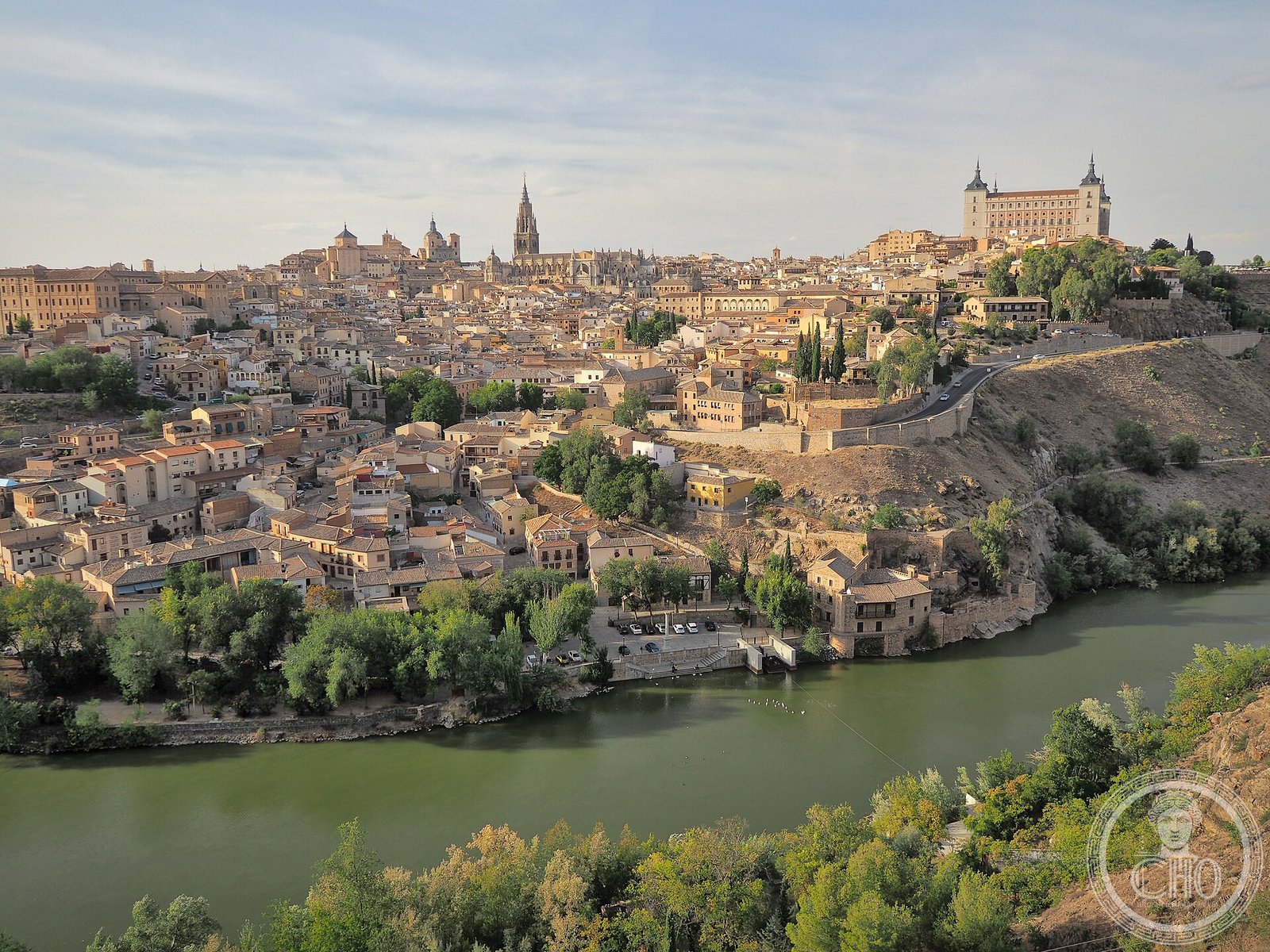
Capital of Castilla–La Mancha and seat of Spain’s archdiocese, Toledo rose from Roman settlement to Visigothic capital, thriving medieval crossroads of Christian, Muslim, and Jewish cultures. Its skyline of Gothic spires and fortress walls crowns a dramatic peninsula in the Tagus River.
At a glance
Toledo occupies a sharply bent peninsula on the right bank of the Tagus in central Spain. The historic city, UNESCO-protected since 1986, remains the spiritual heart of the region despite modern expansion into the flat south bank. Its winding medieval streets and monumental architecture reflect centuries of cultural layering.
History
Built on earlier Carpetanian foundations, Toledo grew into an important Roman city. Under the Visigoths it became the capital of their kingdom and seat of a powerful archdiocese—roles that secured its religious prominence through later centuries.
During the Islamic period, Toledo maintained a semi-independent stance within Umayyad rule and emerged as a major cultural centre where Islamic, Christian, and Jewish scholars exchanged ideas. After the caliphate’s collapse in the early 11th century, it became the capital of the Taifa of Toledo.
Following Christian conquest in 1085, Toledo retained its cosmopolitan character for two centuries, remaining receptive to Muslim and Jewish influences within the Crown of Castile. The early modern silk industry briefly sustained prosperity after Madrid claimed political primacy, but economic decline set in by the 1630s amid wider recession.
What you see
The city’s skyline is dominated by a Gothic cathedral of commanding presence. Fortress walls and narrow streets preserve medieval urban form. Toledo has maintained a centuries-long reputation for crafted bladed weapons—damascene steel work now marketed as souvenirs in the old quarter.
Cultural significance
Toledo stands as a rare medieval European city where Christian, Muslim, and Jewish communities coexisted and influenced each other intellectually. This tripartite heritage shaped both its material culture and theological scholarship. The city’s architecture and urban fabric document this pluralist past with unusual clarity—a quality recognised by UNESCO in its 1986 World Heritage listing.
Key facts
- Country: Spain
- Region: Castilla–La Mancha (autonomous community); Toledo province
- Coordinates: 39.8567° N, 4.0244° W
- Municipality population: 86,526 (January 2024)
- Municipality area: 232.1 km² (89.6 sq mi)
- UNESCO World Heritage Site: 1986
Practical information & getting there
Toledo lies in central Spain, approximately 70 km south of Madrid. The historic city occupies the medieval core on the north bank; modern residential areas extend across the Tagus to the south. Street parking in the old town is limited; visit in early morning or consider the lower town. Detailed opening hours and admission fees for the cathedral and museums should be confirmed locally before your visit.
Sources & resources
Find it on the map
See this place and what’s around it →📷 Become a Cultural Heritage Online photographer
Share your photos of places: they stay published under your name as the author. The more they're seen, the more you get noticed — and soon a contest will reward the most appreciated photos.
Log in or sign up free to add a photo