

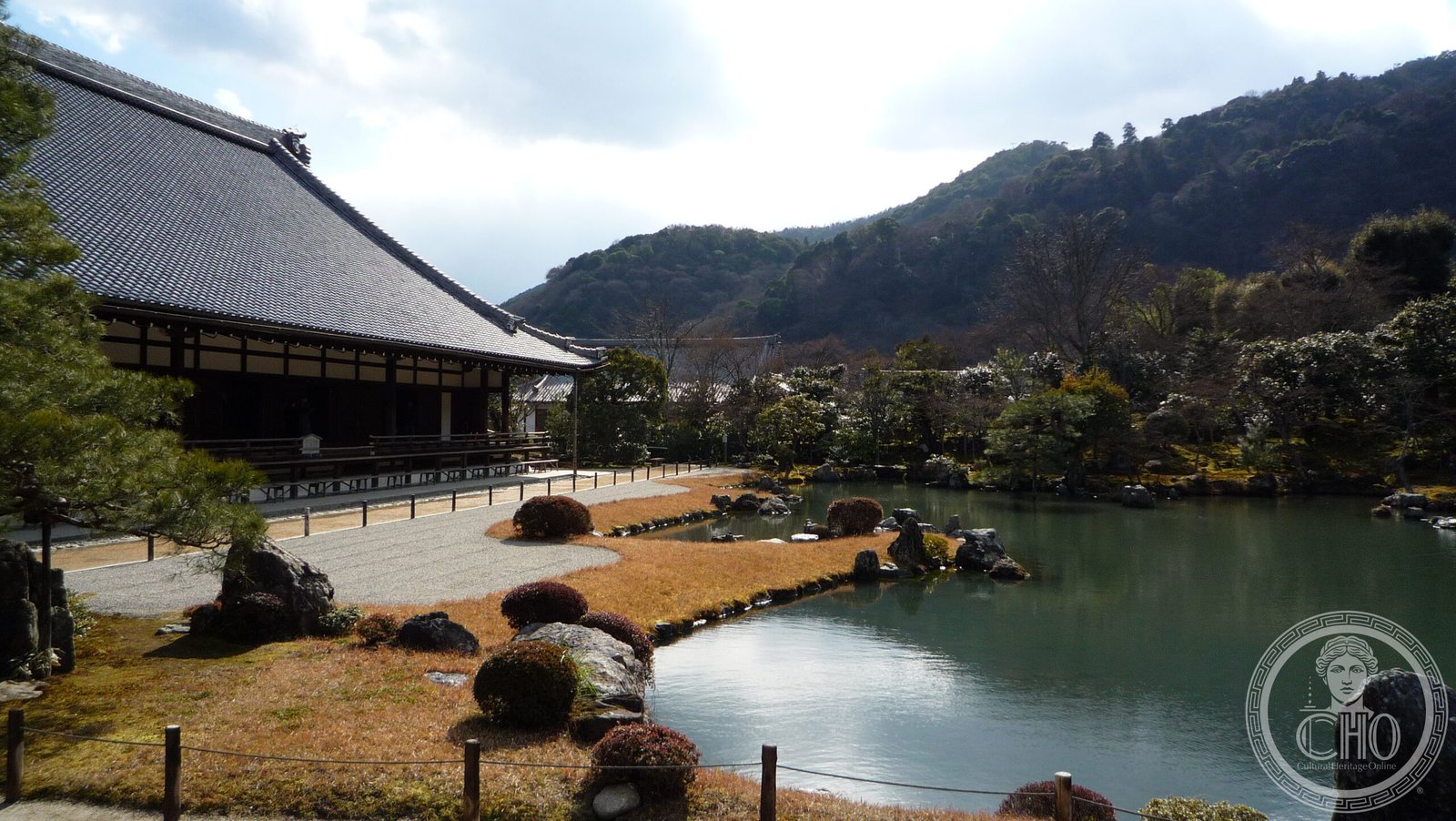
The foremost of Kyoto’s Five Mountains, this Rinzai Zen temple was founded by the shogun Ashikaga Takauji in 1339 and shaped the spiritual and artistic life of medieval Japan.
At a glance
Tenryū-ji stands as the head temple of its own branch within the Rinzai sect of Zen Buddhism. Built under the patronage of Ashikaga Takauji and associated with the imperial court through Emperor Go-Daigo, it rose to become Kyoto’s most prestigious temple among the city’s ranking monasteries. Construction took six years, from foundation to completion in 1345.
History
Ashikaga Takauji, the first shogun of the Muromachi period, commissioned Tenryū-ji in 1339 primarily as a temple to venerate Gautama Buddha. The project reflected the shogun’s political ambitions and spiritual devotion. Musō Soseki, a renowned Zen master, served as the temple’s founding chief priest, lending it immediate authority within Buddhist circles. The temple’s dual connection—to both the military Ashikaga house and the imperial Go-Daigo—elevated its status beyond ordinary monasteries. By the medieval period, Tenryū-ji had secured its place as the foremost among Kyoto’s Five Mountains, a ranking that persists today.
What you see
The temple complex embodies Rinzai Zen aesthetics and medieval Japanese architectural principles. Its design reflects the spiritual and artistic ideals cultivated under Musō Soseki’s guidance, integrating landscape, garden, and built form into a harmonious whole.
Cultural significance
Tenryū-ji shaped the cultural and spiritual landscape of medieval and early modern Japan. As the head temple of its branch, it maintained rigorous Zen training while fostering connections between the military elite and the Buddhist establishment. Its prestige influenced artistic production, intellectual life, and the broader influence of Zen Buddhism throughout Japan. In 1994, UNESCO recognized the temple as part of the Historic Monuments of Ancient Kyoto, affirming its world significance.
Key facts
- Country: Japan
- Location: Susukinobaba-chō, Ukyō Ward, Kyoto
- Founded: 1339
- Construction completed: 1345
- Founder: Ashikaga Takauji
- First chief priest: Musō Soseki
- Coordinates: 35.016°N, 135.6738°E
- UNESCO World Heritage Site: Yes (1994, as part of Historic Monuments of Ancient Kyoto)
Practical information & getting there
Tenryū-ji is accessible by public transport in Kyoto. For current opening hours, admission fees, and detailed visiting information, check the temple’s official website or contact the Kyoto tourism authority.
Sources & resources
Find it on the map
See this place and what’s around it →📷 Become a Cultural Heritage Online photographer
Share your photos of places: they stay published under your name as the author. The more they're seen, the more you get noticed — and soon a contest will reward the most appreciated photos.
Log in or sign up free to add a photoIs this page about you?
This page is read by travellers and heritage enthusiasts who find it on Google. Tell us how you are connected to this place and we will take it from there.