

Overview & Significance
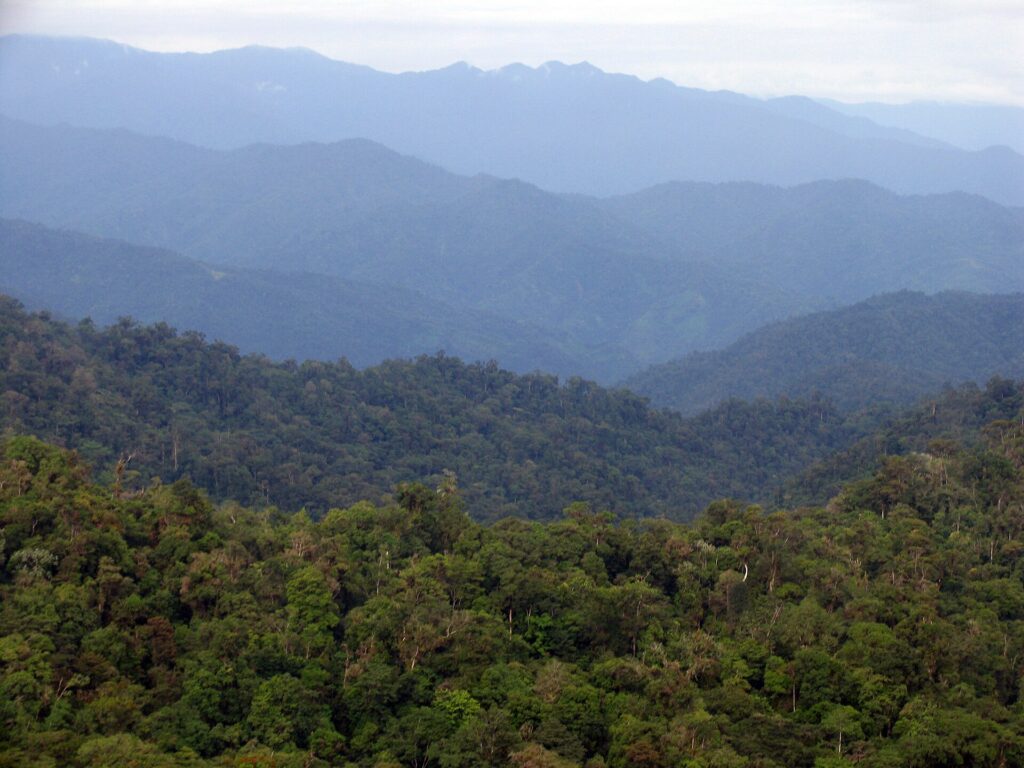
Straddling the border of Costa Rica and Panama, the Talamanca Range–La Amistad complex is the largest unspoiled tropical forest remaining in Central America. The site encompasses more than 400,000 hectares of montane forest, páramo, cloud forest, and lowland jungle — a vertical gradient from sea level to 3,819 metres at the summit of Cerro Chirripó — and is considered one of the most important natural heritage sites in the Western Hemisphere for its biological richness and indigenous cultural significance.
Historical Background
Costa Rica inscribed La Amistad National Park and adjacent reserves with UNESCO in 1983; Panama extended the property in 1990 to create the current transboundary serial site. The name “La Amistad” — friendship — was chosen deliberately to symbolise cross-border conservation cooperation, a model that was pioneering for its time. The Talamanca mountains had never been colonised intensively: their rugged terrain, high rainfall, and indigenous territorial control kept large-scale logging and agriculture at bay, allowing the forest to survive largely intact into the conservation era.
Key Features & Architecture/Nature
The dramatic altitudinal range compressed into a compact massif has produced extraordinary biological richness. The reserve supports 215 mammal species including Baird’s tapir (Tapirus bairdii), jaguar, puma, giant anteater, and harpy eagle — one of the world’s largest and most powerful raptors. More than 600 bird species have been recorded, along with an estimated 10,000 plant species, many endemic to the Talamanca highlands. The páramo ecosystem at the summits, a rare high-altitude habitat in Central America, is particularly important for endemic plants adapted to cold, windswept conditions.
Cultural or Ecological Importance
The forests are the ancestral homeland of the Bribrí and Cabécar indigenous peoples, who have maintained their territories and cosmologies within the reserve boundaries for millennia. Their traditional ecological knowledge encompasses hundreds of medicinal plant species, sophisticated cacao cultivation systems recognised by UNESCO as intangible heritage, and sustainable watershed management practices passed down through oral tradition. The Bribrí and Cabécar presence inside the reserve is not a complication to conservation — it is integral to the site’s long-term ecological health.
UNESCO Inscription Criteria
The Talamanca Range–La Amistad Reserves were inscribed under natural criteria (vii), (viii), (ix), and (x), one of the broadest multicriterion inscriptions in the Americas. UNESCO recognised the site’s outstanding natural beauty (cloud forest and páramo landscapes), its geological significance (the Talamanca Range is the highest non-volcanic mountain chain in Central America), its role as a centre of ongoing speciation, and its critical importance for biodiversity conservation across both Costa Rica and Panama.
Visitor Experience
The Costa Rican sector offers the most accessible entry points. Cerro Chirripó, the country’s highest peak, draws trekkers who spend two days ascending through cloud forest to the summit páramo, where frost is common at night despite the tropical latitude. La Amistad National Park’s Altamira sector (accessible from Buenos Aires de Puntarenas) offers less-visited trails into primary forest with high chances of encountering tapir and quetzal. The Panamanian side, accessed from Chiriquí, is significantly wilder and receives very few visitors.
Getting There & Practical Info
The main Costa Rican access points are San Isidro de El General (for Chirripó) and Buenos Aires de Puntarenas (for La Amistad’s Altamira station). San Isidro is about 3.5 hours by bus from San José. Climbing Cerro Chirripó requires advance booking — permits are limited to 40 visitors per day — and an overnight stay at the mountain refuge (Crestones Base Camp) is mandatory. Park entrance fees apply; guides are recommended for La Amistad given the trail complexity and lack of signage.
Nearby Attractions & Context
The Osa Peninsula and Corcovado National Park, about 2.5 hours by road from San Isidro, offer complementary lowland tropical forest experiences and are often combined with Talamanca visits in longer itineraries. The Valle de El General and its Boruca indigenous communities — known for their carved masks and annual Fiesta de los Diablitos — provide cultural depth to a Talamanca trip. On the Panamanian side, the Chiriquí Highlands and the cloud forests of the Barú Volcano add further natural and cultural context to the broader Talamanca bioregion.
Find it on the map
See this place and what’s around it →📷 Become a Cultural Heritage Online photographer
Share your photos of places: they stay published under your name as the author. The more they're seen, the more you get noticed — and soon a contest will reward the most appreciated photos.
Log in or sign up free to add a photo