
Overview
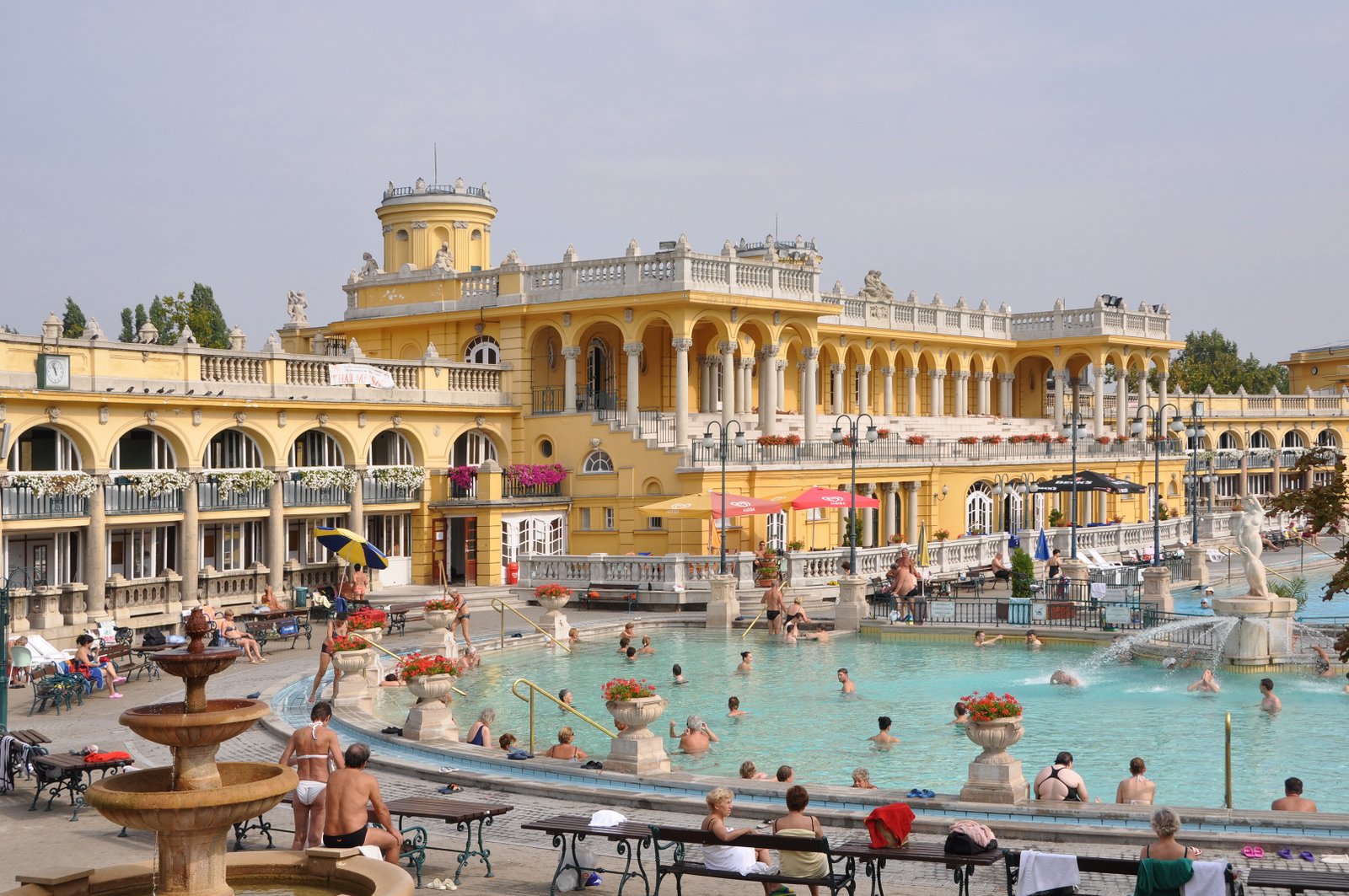
The Széchenyi Thermal Bath in Budapests City Park district is one of the largest medicinal bath complexes in Europe, encompassing eighteen pools across a grand Neo-Baroque palace. Fed by natural hot springs reaching 74–76°C, its waters have drawn visitors seeking therapeutic bathing since the facility opened in 1913. Declared a national monument, Széchenyi is at once a functioning therapeutic institution, a social landmark, and one of the most architecturally spectacular public buildings in Hungary.
Architecture
The original building was designed by Győző Czigler — who died in 1905, before construction began — and completed in 1913 under Ede Dvorák and Kálmán Gerster in a magnificent Neo-Baroque style, its monumental yellow facade articulated by colossal pilasters, arched windows, and a central dome that crowns the main indoor hall. A major expansion by Ede Dvorák in 1927 added the three celebrated outdoor pools and further treatment facilities, extending the palatial composition. The overall ensemble occupies an entire city block and reads as an architectural monument to the therapeutic culture of the Austro-Hungarian era, comparable in ambition to the finest spas of Vienna and Baden-Baden.
History
The hot spring underlying the site was discovered in 1879 during drilling operations, yielding waters at a remarkable 74°C. Construction began in 1909 to Czigler's design; he had died in 1905, and the building was completed in 1913 under Ede Dvorák and Kálmán Gerster. The facility was named after Count István Széchenyi, the great nineteenth-century Hungarian statesman and reformer. The 1927 extension by Dvorák added the iconic outdoor pools that appear in countless photographs. The baths survived World War II damage and continued operating through the communist period, when they served an important social welfare function. A comprehensive restoration in the 1990s and 2000s returned the interiors to their original splendour.
Interior
The interior contains fifteen indoor pools and treatment rooms arranged around a grand central hall beneath the main dome, its coffered ceiling decorated with painted plasterwork and gilded ornamental friezes. Thermal waters circulate through pools maintained at temperatures between 27°C and 38°C, with dedicated pools for swimming lanes and relaxation. Marble columns, mosaic floors, ornate tile work, and period light fittings create a bathing environment of extraordinary opulence. Traditional massage, sauna, and medical treatment services remain available throughout the year.
Visiting
Open daily from 6:00 to 22:00, year-round including public holidays. Entry tickets cover access to pools and the changing facilities; saunas and massages are priced separately. Online advance booking is strongly recommended during summer and weekends. Swimwear and towel hire available on site. The outdoor pools are popular in winter for steam bathing in the open air.
Getting There
Állatkerti körút 9–11, Budapest XIV, Hungary. Metro: M1 (yellow line), Széchenyi fürdő stop, one-minute walk. Trolleybus 72 and 75 stop at the entrance. City Park is a pleasant 20-minute walk from Heroes Square.
In the Area
Széchenyi occupies the eastern edge of Városliget (City Park), alongside the Vajdahunyad Castle, Budapest Zoo, and the Museum of Fine Arts. Heroes Square, Budapests ceremonial landmark, is a short walk west at the park entrance.
Find it on the map
See this place and what’s around it →📷 Become a Cultural Heritage Online photographer
Share your photos of places: they stay published under your name as the author. The more they're seen, the more you get noticed — and soon a contest will reward the most appreciated photos.
Log in or sign up free to add a photo