

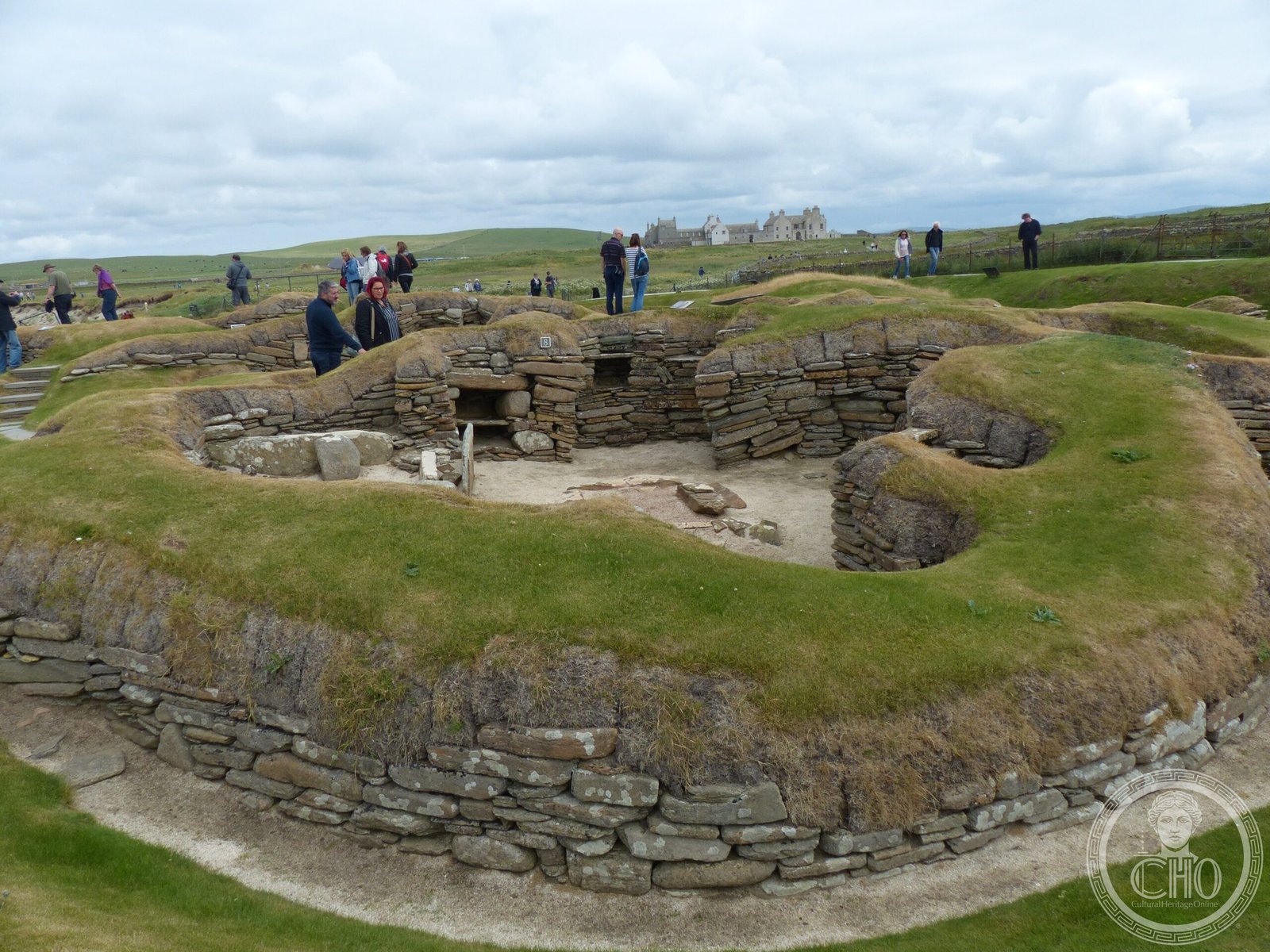
Europe’s most complete Neolithic village, Skara Brae is a stone-built settlement revealed by storm erosion along the Bay of Skaill, its ten structures and stone furniture offering unparalleled insight into Neolithic life.
At a glance
Ten stone structures, four passageways, and remnants of domestic fixtures survive at this Neolithic village on Orkney’s west coast. The site spans roughly 700 years of continuous occupation, making it one of the world’s oldest known communities.
History
Skara Brae was occupied from approximately 3180 BC to around 2500 BC. The settlement remained unknown to the modern world until a storm exposed stone structures within the coastal sand dunes, revealing an intact community frozen in time for millennia.
What you see
Ten dwellings interconnected by four passageways form the village layout. Each structure contains stone furniture—beds, storage boxes, and hearths—demonstrating the inhabitants’ sophisticated understanding of domestic design. The stone-built architecture was adapted to an environment where timber was scarce.
Cultural significance
Skara Brae stands as Europe’s most complete Neolithic village, offering archaeologists and visitors alike an exceptionally detailed picture of prehistoric domestic life. The site gained UNESCO World Heritage recognition as part of “The Heart of Neolithic Orkney,” a designation encompassing four archaeological sites that collectively illuminate this transformative period in human settlement.
Key facts
- Location: Bay of Skaill, Mainland, Orkney, United Kingdom
- Coordinates: 59.0487, -3.3417
- Occupation period: c. 3180–2500 BC
- UNESCO World Heritage Site: Yes (part of “The Heart of Neolithic Orkney”)
Practical information & getting there
The site is cared for by Historic Environment Scotland in partnership with Orkney Islands Council, NatureScot, and the Royal Society for the Protection of Birds. Visitors are welcome year-round. Check the Historic Environment Scotland website for current access details and facilities before your visit.
Sources & resources
Find it on the map
See this place and what’s around it →📷 Become a Cultural Heritage Online photographer
Share your photos of places: they stay published under your name as the author. The more they're seen, the more you get noticed — and soon a contest will reward the most appreciated photos.
Log in or sign up free to add a photo