
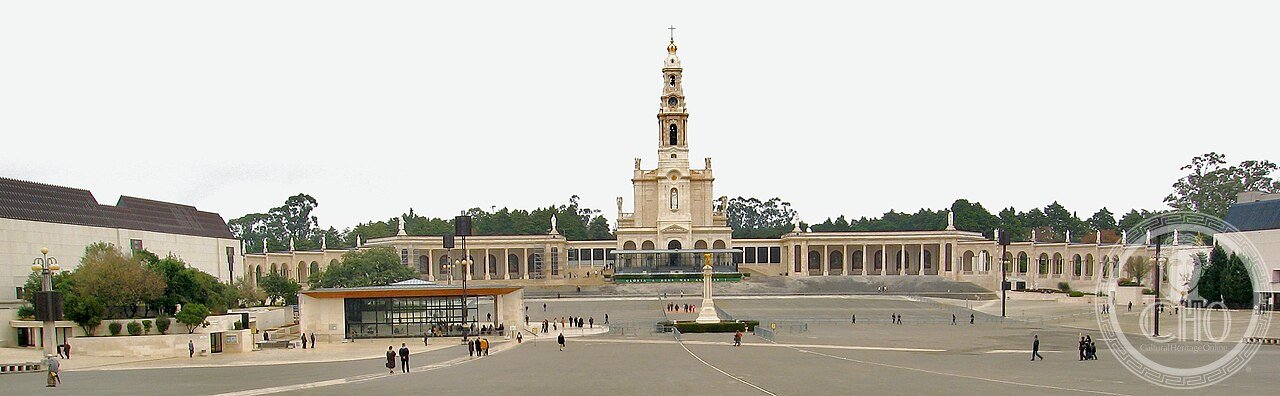
At Cova da Iria, near Fátima, in Portugal, three shepherd children reported seeing the Virgin Mary on six occasions between 13 May and 13 October 1917. They were Lúcia de Jesus Rosa dos Santos, ten years old, and her cousins Francisco and Jacinta Marto, aged nine and seven. One apparition, on 19 August, came a few days late because the children had been briefly detained by the civil authorities. The last apparition, on 13 October 1917, was accompanied, according to many witnesses, by the so-called «miracle of the sun», a luminous phenomenon seen by a crowd whose size the sources estimate inconsistently, between about 30,000 and 100,000 people. According to the later accounts of Sister Lúcia, the apparitions included three «secrets»: a vision of hell, a prophecy linked to the end of the First World War and the outbreak of the Second, and a third secret, made public by the Vatican only in 2000, which Cardinal Angelo Sodano connected to the attempt on the life of Pope John Paul II on 13 May 1981. That is an official interpretation of the Church, not an independently verifiable historical fact, and it is still discussed among some Catholic commentators. On the exact site of the apparitions the small Chapel of the Apparitions has stood since 1919, destroyed by opponents in 1922 and rebuilt at once. The Basilica of Our Lady of the Rosary, its foundation stone laid on 13 May 1928, was designed by the Dutch architect Gerardus Samuel van Krieken and completed after his death by the Portuguese João Antunes, and dedicated on 7 October 1953. The larger Basilica of the Most Holy Trinity, by the Greek architect Alexandros Tombazis, was built between 2004 and 2007 and can hold about 9,000 people. Francisco and Jacinta Marto, who died at ten and nine, were canonised by Pope Francis on 13 May 2017, the centenary of the first apparition, becoming among the youngest non-martyr saints in the history of the Church. Lúcia dos Santos instead became a Discalced Carmelite nun and died in 2005, aged 97. The sanctuary, among the great Marian pilgrimage places of the world, receives millions of visitors every year, with especially large crowds on the anniversary dates of 13 May and 13 October, and has been visited by several popes, among them Paul VI, John Paul II, Benedict XVI and Francis.
About the Sanctuary of Fátima
At Cova da Iria, near Fátima, Portugal, three shepherd children — ten-year-old Lúcia de Jesus Rosa dos Santos and her cousins Francisco and Jacinta Marto, aged nine and seven — reported seeing the Virgin Mary on six occasions between 13 May and 13 October 1917, with one apparition on 19 August delayed a few days after the children were briefly detained by civil authorities. The final apparition, on 13 October 1917, was accompanied, according to numerous witnesses, by the so-called “Miracle of the Sun,” a luminous phenomenon observed by a crowd whose size sources estimate inconsistently, generally somewhere between roughly 30,000 and 100,000 people. According to Sister Lúcia’s later accounts, the apparitions included three “secrets”: a vision of hell, a prophecy linked to the end of the First World War and the outbreak of the Second, and a third secret, made public by the Vatican only in 2000, which Cardinal Angelo Sodano connected to the 13 May 1981 assassination attempt on Pope John Paul II — an official Church interpretation, not an independently verifiable historical fact, and still debated among some Catholic commentators. On the exact site of the apparitions has stood, since 1919, the small Chapel of the Apparitions, destroyed by opponents in 1922 and rebuilt shortly after; the Basilica of Our Lady of the Rosary, its first stone laid on 13 May 1928, was designed by Dutch architect Gerardus Samuel van Krieken and completed after his death by Portuguese architect João Antunes, dedicated on 7 October 1953; the larger Basilica of the Most Holy Trinity, by Greek architect Alexandros Tombazis, was built between 2004 and 2007 and can seat about 9,000 people. Francisco and Jacinta Marto, who died at ten and nine, were canonized by Pope Francis on 13 May 2017, the centenary of the first apparition, becoming among the youngest non-martyr saints in Church history; Lúcia dos Santos instead became a Discalced Carmelite nun and died in 2005, aged 97. The sanctuary, among the world’s major Marian pilgrimage sites, draws millions of visitors annually, with especially large crowds on the anniversary dates of 13 May and 13 October, and has been visited by several popes, including Paul VI, John Paul II, Benedict XVI and Francis.
Key facts
- 13 May – 13 October 1917: six reported apparitions to Lúcia, Francisco and Jacinta at Cova da Iria.
- 13 October 1917: the “Miracle of the Sun,” witnessed by an estimated 30,000-100,000 people.
- 1919-1953: the Chapel of the Apparitions and Basilica of Our Lady of the Rosary built at the site.
- 2004-2007: the larger Basilica of the Most Holy Trinity built, seating about 9,000.
- 13 May 2017: Francisco and Jacinta Marto canonized by Pope Francis on the apparitions’ centenary.
- Millions of pilgrims annually, with the largest crowds on 13 May and 13 October.
History
Fátima’s transformation from a rural Portuguese hamlet into one of Catholicism’s most visited pilgrimage sites unfolded within a single generation: the Chapel of the Apparitions, destroyed by opponents of the cult in 1922, was rebuilt almost immediately, while the vast basilica complex around it grew across the 20th and into the 21st century as the shrine’s international following expanded. The 2000 Vatican disclosure of the “Third Secret,” and its stated connection to the 1981 attempt on John Paul II’s life, drew the sanctuary directly into recent papal history, a link the Church has affirmed but which remains a matter of interpretation rather than independently documented fact.
What you see
A vast paved esplanade connects the small, plain Chapel of the Apparitions, marking the exact reported site of the visions, to the twin-towered Basilica of Our Lady of the Rosary at one end and the low, circular Basilica of the Most Holy Trinity at the other — two basilicas from two different centuries framing the same open space, built to absorb crowds that can run into the hundreds of thousands on anniversary dates.
Practical information
- Opening hours: the esplanade and chapels are generally open daily; Mass and prayer schedules vary, especially around the 13th of each month; check current times before visiting.
- Address: Cova da Iria, 2495-424 Fátima, Portugal.
Getting there
The Sanctuary of Fátima lies in the town of Fátima, roughly 120 km north of Lisbon, reachable by bus, car or organized tour. GPS: 39°37′56″N, 8°40′18″W.
Nearby
- Basilica of the Most Holy Trinity — the larger, modern basilica at the opposite end of the esplanade.
- Chapel of the Apparitions — the small chapel marking the exact reported apparition site.
- Alcobaça and Batalha monasteries — major medieval monastic UNESCO sites within a short drive.
Sources
- Wikipedia — “Sanctuary of Fátima” and “Our Lady of Fátima” (en.wikipedia.org).
- Official sanctuary site — fatima.pt.
- Vatican — homilies and speeches for papal visits to Fátima (vatican.va).
Find it on the map
See this place and what’s around it →Events here — now on & upcoming
- Anniversary: The Miracle of the Sun at Fátima — October 13, 191713 Oct 2027See the event →
📷 Become a Cultural Heritage Online photographer
Share your photos of places: they stay published under your name as the author. The more they're seen, the more you get noticed — and soon a contest will reward the most appreciated photos.
Log in or sign up free to add a photo