
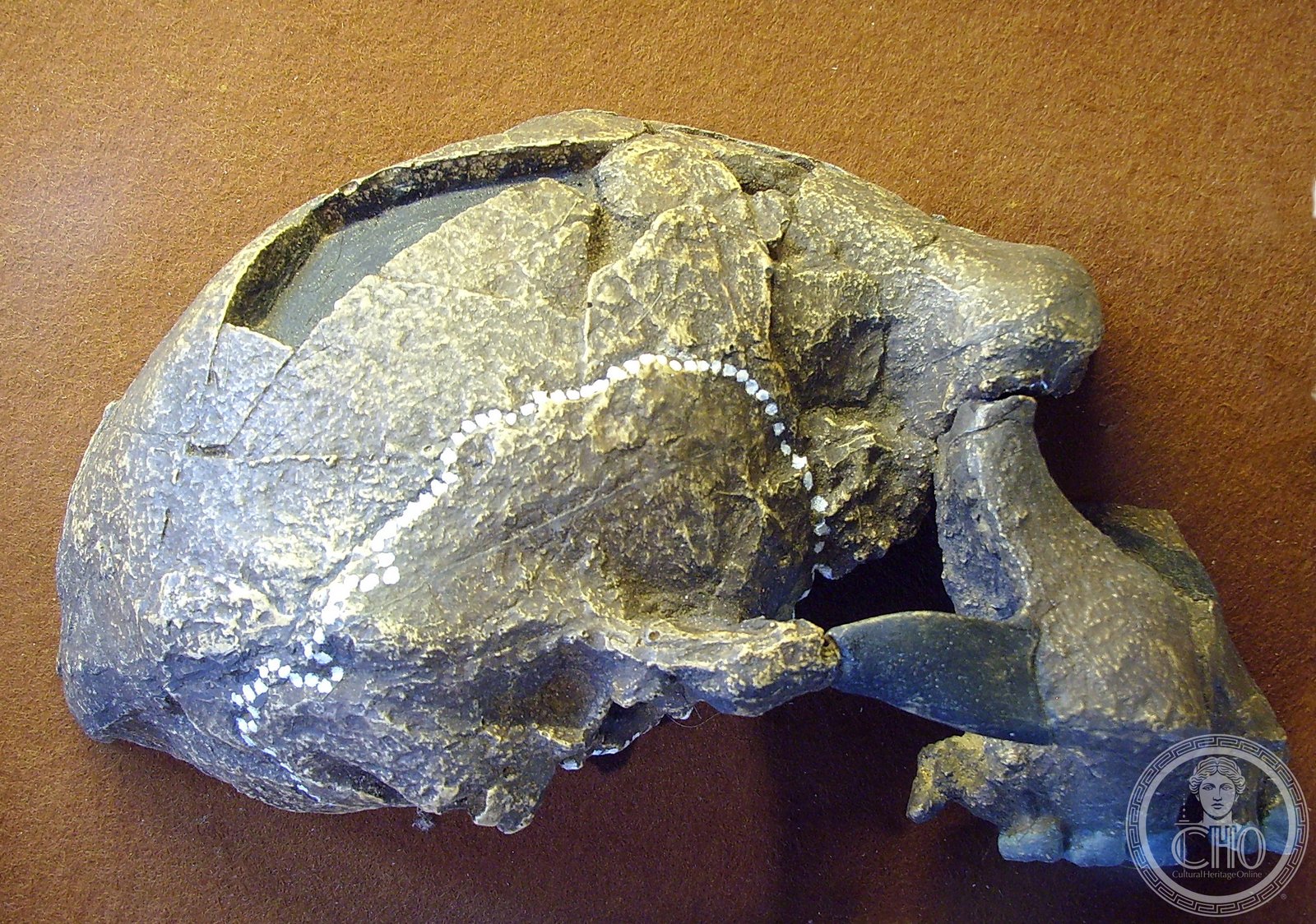
The volcanic dome near Solo in Central Java where roughly half of all known Homo erectus fossil specimens have been found — the single most important paleoanthropological site in Asia, and a UNESCO World Heritage Site since 1996.
At a glance
Sangiran is a dome-shaped geological formation approximately 56 km² in extent, located about 15 kilometres north of Surakarta (Solo) in Central Java, Indonesia. Over more than a century of systematic excavation and accidental discovery, the site has yielded approximately 65 fossil specimens of Homo erectus — representing close to 50 percent of all Homo erectus fossils known to science globally — along with stone tools, fossilised animal bones, and a rich stratigraphic sequence spanning from approximately 1.5 million to 200,000 years ago. It was here, in 1891, that the Dutch military doctor Eugène Dubois unearthed the first specimen he named Pithecanthropus erectus (now reclassified as Homo erectus), triggering one of the most consequential scientific controversies of the 19th century. UNESCO inscribed Sangiran as a World Heritage Site in 1996, citing its outstanding universal value as “one of the most important sites in the world for the study of human evolution.”
Key facts
- UNESCO WHS: 1996 (criteria III, VI)
- Location: Sangiran, Sragen and Karanganyar Regencies, Central Java, Indonesia
- GPS: 7°26′46″S, 110°50′32″E
- Site area: approximately 56 km²
- Time span: c. 1.5 million – 200,000 years ago (Early to Middle Pleistocene)
- Key species: Homo erectus (formerly Pithecanthropus erectus)
- Fossils recovered: approximately 65 Homo erectus specimens (~50% of global total)
- First major discovery: 1936–1941, G.H.R. von Koenigswald
- Museum: Sangiran Museum of Ancient Human (reopened 2011)
History of discovery
In 1891, the Dutch anatomist Eugène Dubois excavated the banks of the Solo River near Trinil, Central Java, and recovered a skullcap and femur of an ancient hominin. He published his findings in 1894 as Pithecanthropus erectus — “upright ape-man” — claiming it was the predicted “missing link” between apes and humans. The European scientific community largely rejected his claim for decades.
The Sangiran site itself was identified as extraordinarily rich in 1934 by the German-Dutch geologist Gustav Heinrich Ralph von Koenigswald, who recognised that the dome-shaped erosion feature exposed Plio-Pleistocene strata in which hominin fossils were concentrated. Between 1936 and 1941, von Koenigswald recovered multiple Homo erectus crania at Sangiran. Following Indonesian independence, systematic excavations continued under the Indonesian Centre for Archaeology. By the 2020s, the accumulated collection numbered approximately 65 individual specimens — by far the largest concentration of Homo erectus fossils from any single site in the world.
The stratigraphy of the Sangiran Dome exposes four main geological formations: Kalibeng, Pucangan, Kabuh, and Notopuro. The oldest hominin-bearing deposits (Pucangan Formation) date to approximately 1.5 million years ago; the youngest (Kabuh Formation) to approximately 200,000 years ago. Stone tools found in Kabuh Formation deposits indicate that the Homo erectus population at Sangiran manufactured stone tools — a significant finding for understanding early hominin behaviour in Southeast Asia.
What you see today
Sangiran is not a single excavated ruin but an active archaeological landscape distributed across eroded gullies and exposed hillsides in the dome. The visible geology — bands of volcanic tuff, ancient river sediments, and marine deposits — is itself a primary attraction. The centre of the visitor experience is the Sangiran Museum of Ancient Human, significantly expanded and reopened in 2011, which houses fossil casts and original specimens, geological core samples, life reconstructions of Homo erectus, and a chronological display of the stratigraphic sequence.
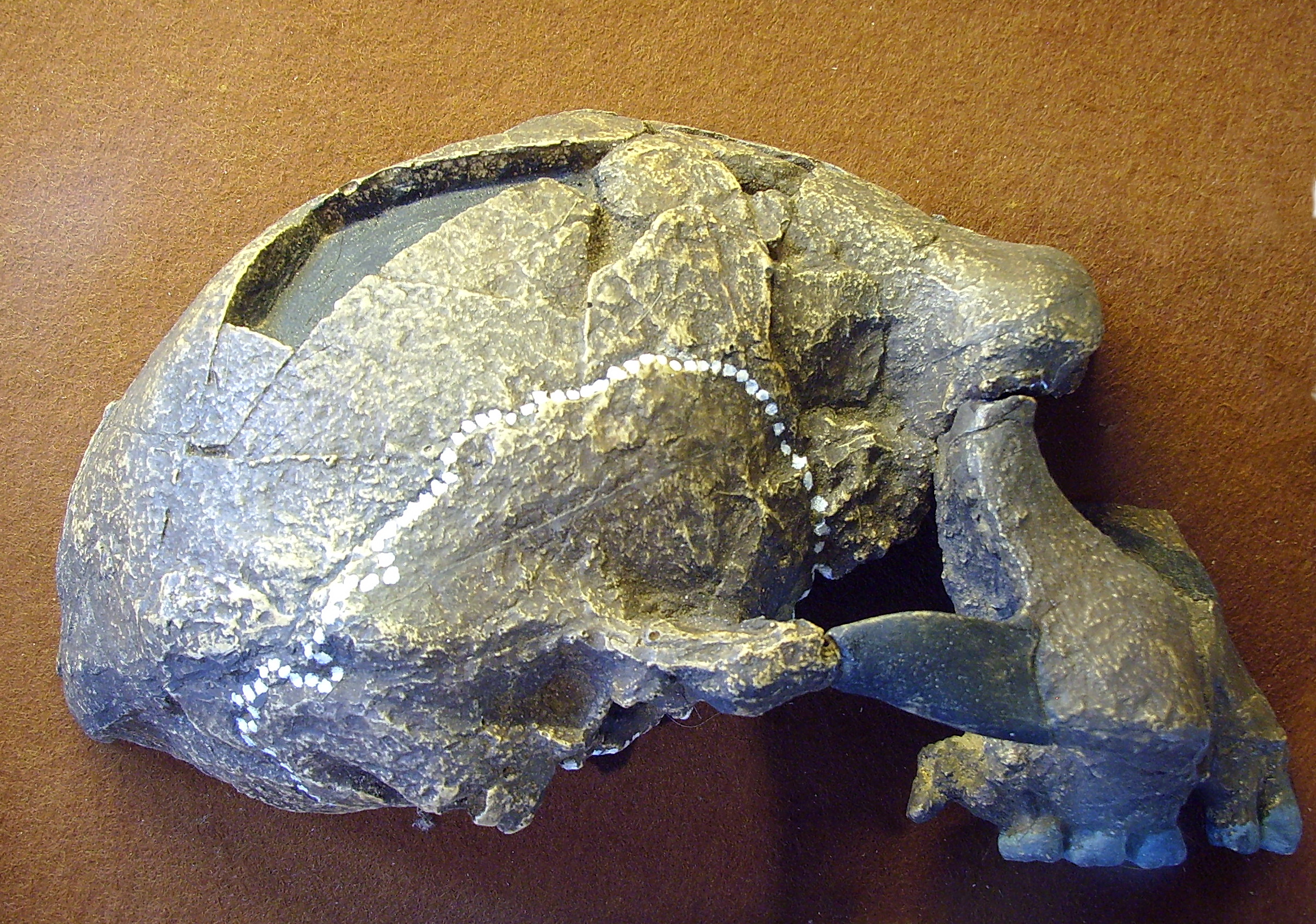
The museum complex includes four satellite cluster buildings (Klaster Ngebung, Klaster Bukuran, Klaster Dayu, and Klaster Manyarejo), each located near a significant discovery area. The most celebrated specimen is Sangiran 17 — a nearly complete adult male Homo erectus cranium recovered in 1969, with a cranial capacity of approximately 1,004 cc, making it one of the most informative specimens for understanding the anatomy of the species.
Practical information
- Opening hours: Tuesday–Sunday 08:00–16:00 (closed Monday and national holidays)
- Entry fee: nominal combined ticket for main museum and satellite clusters
- Guided tours: guides available at the main museum; recommended for field stratigraphy visits
- Photography: permitted in the museum complex; some original specimens under restricted photography policy
- Facilities: parking, toilets, and a small café at the main museum
- Best season: accessible year-round; dry season (May–September) preferable for field site visits
Getting there
Sangiran is approximately 15 kilometres north of Surakarta (Solo) and approximately 65 kilometres east of Yogyakarta. The nearest major transport hub is Solo Balapan Railway Station, served by trains from Jakarta, Yogyakarta, and Surabaya. From Surakarta, the most convenient option is a rented vehicle or taxi (30–45 minutes). Public minibuses serve the route from Solo’s Tirtonadi bus terminal to the Sangiran area. Sangiran combines well with Prambanan Temple Compounds (UNESCO, approximately 50 km west) or Borobudur (approximately 100 km) in a multi-day Central Java itinerary.
Nearby
- Keraton Surakarta: the living palace of the Sunanate of Surakarta, approximately 15 km south
- Prambanan Temple Compounds (UNESCO WHS): the great 9th-century Hindu temple complex, approximately 50 km southwest
- Borobudur (UNESCO WHS): the world’s largest Buddhist monument, approximately 100 km west
- Trinil Museum: the site of Dubois’s original 1891 discovery on the Solo River, approximately 80 km northwest
- Candi Sukuh: an enigmatic 15th-century Majapahit temple on the slopes of Mount Lawu, approximately 40 km southeast
Sources
- UNESCO World Heritage List — Sangiran Early Man Site (593)
- Wikipedia — Sangiran Early Man Site
- Anton, S. C. (2003). Natural history of Homo erectus. Yearbook of Physical Anthropology, 46, 126–169.
- Swisher, C. C. et al. (1994). Age of the earliest known hominids in Java, Indonesia. Science, 263, 1118–1121.
Gallery
Find it on the map
See this place and what’s around it →📷 Become a Cultural Heritage Online photographer
Share your photos of places: they stay published under your name as the author. The more they're seen, the more you get noticed — and soon a contest will reward the most appreciated photos.
Log in or sign up free to add a photo