
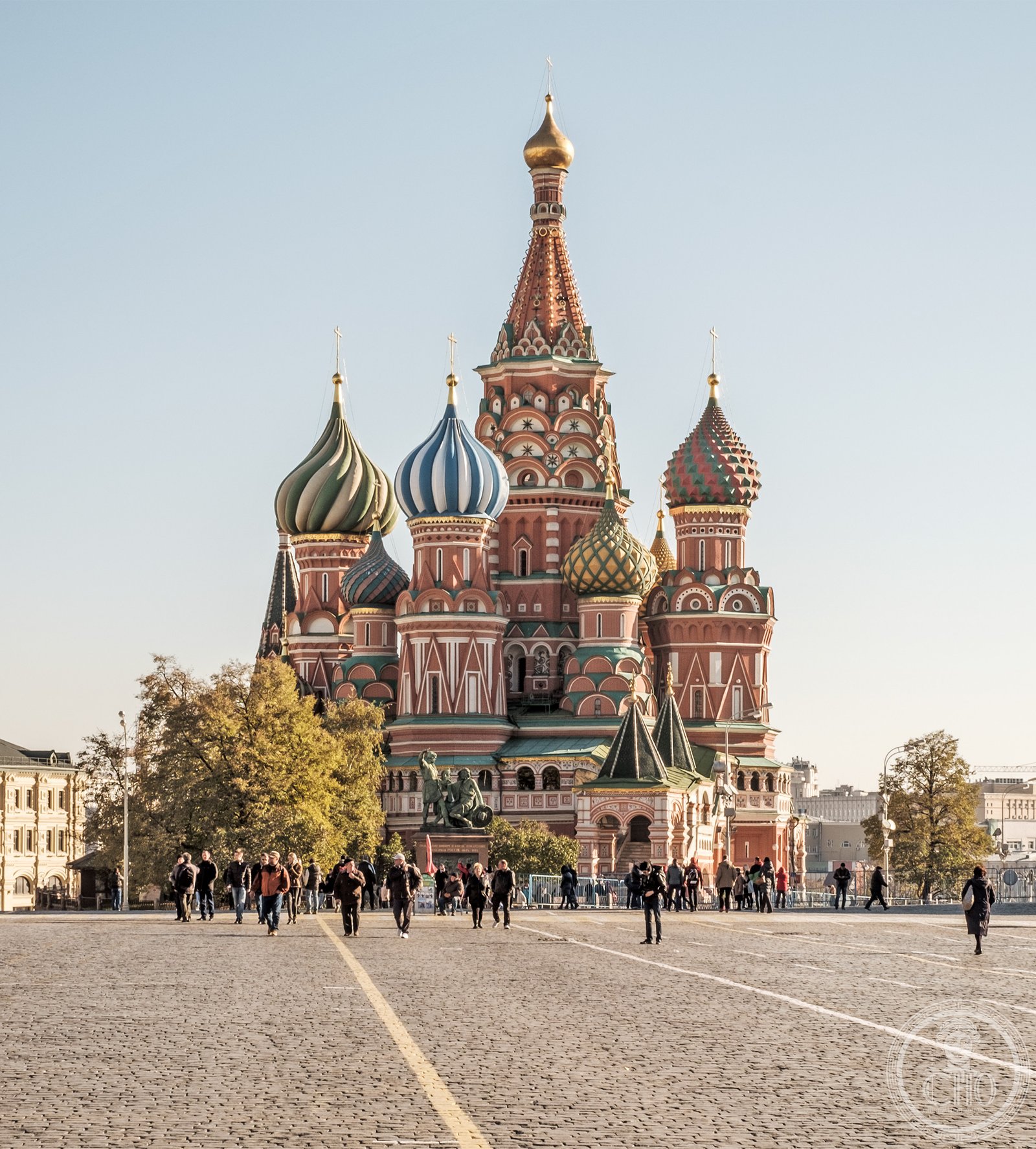
A Russian Orthodox church of incomparable design, its nine onion domes rising from Red Square like a bonfire frozen in stone. Built to commemorate military triumphs, it has become an enduring symbol of Russia itself.
At a glance
Saint Basil’s Cathedral stands at the heart of Moscow, on Red Square. Officially titled the Cathedral of the Intercession of the Most Holy Theotokos on the Moat, or Pokrovsky Cathedral, it now operates as a museum and UNESCO World Heritage Site. Nine distinctive onion domes crown the structure, each representing a separate chapel within the larger composition.
History
Ivan the Terrible commissioned the cathedral between 1555 and 1561 to commemorate Russia’s capture of Kazan and Astrakhan. The original Trinity Church contained eight chapels arranged around a central chapel dedicated to the Intercession. A tenth chapel was added in 1588 above the grave of the venerated saint Vasily (Basil), after whom the building became popularly known.
During the medieval period, the cathedral served as the earthly symbol of the Heavenly City. Like Byzantine churches across Christendom, it was popularly called “Jerusalem” and functioned as an allegory of the Jerusalem Temple, hosting the annual Palm Sunday procession attended by the Patriarch of Moscow and the Tsar. The cathedral’s colorful exterior was completed in 1683.
Soviet authorities confiscated the church in 1928 as part of state atheism campaigns and transferred it to the State Historical Museum. Complete secularization followed in 1929. Following the Soviet Union’s collapse in 1991, weekly liturgical celebrations and prayers to Saint Basil resumed in 1997.
What you see
The cathedral’s form resembles a bonfire rising toward the sky, shaped by nine onion domes in varied colors and patterns. Russian historian Dmitry Shvidkovsky noted its profound uniqueness: “it is like no other Russian building. Nothing similar can be found in the entire millennium of Byzantine tradition.”
The design combines complexity with dazzling interplay of intricate architectural details. Each dome corresponds to one of the nine chapels, creating a unified yet visually distinct composition. The cathedral represents a prime example of Russian Renaissance architecture and foreshadowed the major developments of Russian national style in the seventeenth century.
Cultural significance
Saint Basil’s Cathedral ranks among the world’s most recognizable religious structures and remains one of Russia’s most powerful cultural symbols. Its unprecedented architectural language emerged from Russian tradition yet created something entirely original—a building that still astonishes by its unexpectedness and complexity.
Key facts
- Location: Red Square, Moscow, Russia (55.7525°N, 37.6231°E)
- Built: 1555–1561 by order of Ivan the Terrible; completed with colors in 1683
- Composition: Nine onion domes representing nine chapels; central chapel dedicated to the Intercession
- Status: Federal Museum property; UNESCO World Heritage Site (Moscow Kremlin and Red Square) since 1990
- Current use: Museum and active Orthodox worship space
Practical information & getting there
The cathedral is located on Red Square in central Moscow. It functions as both a museum and active Orthodox worship site. Visitors should check current opening hours and any liturgical schedules before planning a visit. The site remains part of Russia’s federal cultural heritage.
Sources & resources
- Saint Basil’s Cathedral – Wikipedia
- Cultural Heritage Online
Find it on the map
See this place and what’s around it →📷 Become a Cultural Heritage Online photographer
Share your photos of places: they stay published under your name as the author. The more they're seen, the more you get noticed — and soon a contest will reward the most appreciated photos.
Log in or sign up free to add a photoIs this page about you?
This page is read by travellers and heritage enthusiasts who find it on Google. Tell us how you are connected to this place and we will take it from there.