

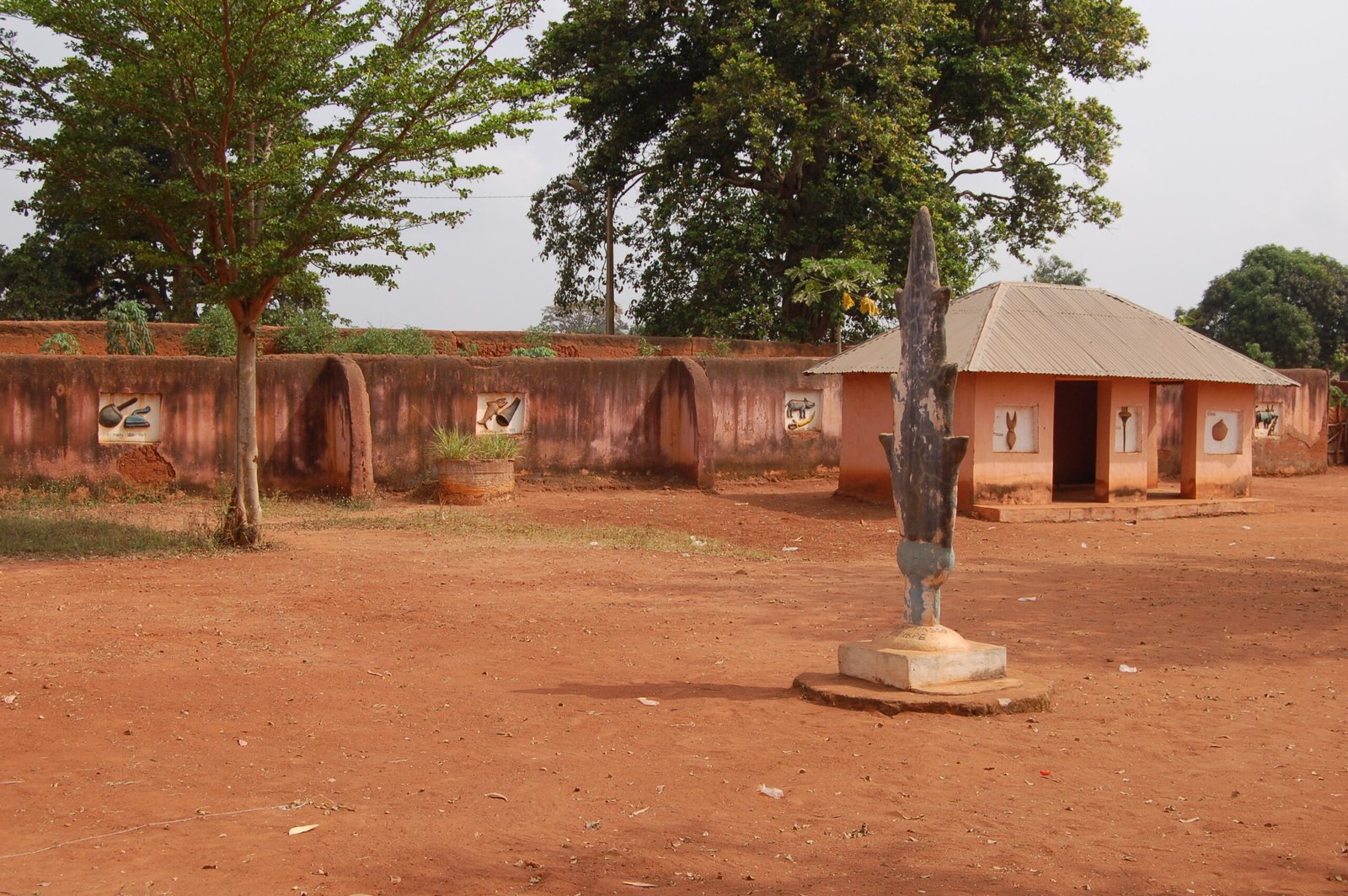
For nearly three centuries, twelve successive kings of Dahomey each built their palace within the same 40-hectare royal domain at Abomey — layering centuries of earthen architecture, bas-relief narrative panels, and royal ceremonial space into one of West Africa’s most extraordinary historical complexes.
At a glance
The Royal Palaces of Abomey were inscribed as a UNESCO World Heritage Site in 1985 and placed on the List of World Heritage in Danger in the same year (removed in 2007 following restoration work). The complex is the former royal capital of the Kingdom of Dahomey (c. 1600–1894 CE), located in the city of Abomey in southern Benin. What makes the site unique in West Africa is the layered accumulation of palace structures: each of the twelve kings built his own palace within the enclosed royal domain, creating a 40-hectare palimpsest of Fon earthen architecture across nearly three centuries of uninterrupted royal occupation.
Key facts
- UNESCO inscription: 1985 (also on Danger List 1985–2007)
- Period: c. 1620–1894 CE (Kingdom of Dahomey)
- Location: Abomey, Zou Department, southern Benin
- Site area: approximately 40 hectares
- Builders: Twelve successive kings of Dahomey
- Architectural style: Fon earthen architecture — mud walls, thatched roofs on wooden posts, bas-relief decorated surfaces
- Notable features: Over 600 surviving bas-relief panels; royal thrones; Agojie (female warrior corps) historical record; Abomey Historical Museum
History
The Kingdom of Dahomey emerged in the early 17th century under King Houegbadja (c. 1645–1685), who established the capital at Abomey and began building the royal palace complex. Each subsequent king added his own palace to the domain, following a tradition that bound the living king symbolically to his predecessors by building within the same royal enclosure rather than abandoning it.
By the 17th and 18th centuries, Dahomey had become one of the most militarily powerful states in West Africa. It was also a principal actor in the Atlantic slave trade — historians estimate that Dahomey was the largest single supplier of enslaved Africans sold to European traders, raiding neighbouring peoples and exchanging captives for European firearms, which in turn amplified its military dominance. This history is inseparable from the kingdom’s architecture and iconography: the bas-relief panels on the palace walls depict military victories, royal symbols, and scenes of captive-taking alongside more ceremonial and mythological imagery.
The Dahomey Amazons — known as the Agojie — were the kingdom’s all-female military corps, feared throughout the region. They served as the king’s personal bodyguard and as elite assault troops, reaching a strength of perhaps 6,000 fighters at the kingdom’s peak. Their story has attracted global attention through scholarly and popular accounts in recent decades.
In 1892, French forces invaded Dahomey. King Béhanzin, the last independent king, ordered the palace complex partially burned before surrendering, to prevent its treasures and ceremonial objects from falling intact into French hands. The French conquest was completed in 1894, ending the kingdom’s independence. The surviving palace structures, though damaged by fire and a cyclone in 1984, have been progressively restored since the 1990s.
What you see
The surviving palace complex consists of a series of earthen-walled compounds, each originally belonging to a different king, connected by gateways and internal courtyards. The mud walls, still standing up to 3 m high in places, bear the bas-relief panels that are the complex’s most distinctive artistic feature: over 600 individual panels survive, depicting royal histories, clan symbols, military victories, and mythological narratives in vivid stylised form.
The Abomey Historical Museum, installed in the palaces of Kings Glélé and Ghézo, is the primary visitor destination within the complex. It holds extraordinary royal objects: thrones — including the famous throne of King Glélé, mounted on skulls of defeated enemies — royal sceptres, banners, appliqué wall-hangings of the royal family (some of the finest examples of West African textile art), and ceremonial objects associated with vodun ritual. The appliqué hangings (tapisseries royales), made from bright-coloured fabrics, depict royal symbols and historical scenes in a pictographic narrative system unique to the Fon court.
Practical information
- Address: Abomey, Zou Department, southern Benin
- Museum opening: The Abomey Historical Museum is open daily; check locally for current hours as they vary seasonally
- Admission: Entry fee for the museum; guided tours strongly recommended and typically available on-site
- Photography: Photography permitted in most areas; some ceremonial objects restricted — follow guide instructions
- Best time: November to February (dry season); the rainy season (May–September) makes earthen structures and unpaved areas difficult
Getting there
Abomey is approximately 145 km north of Cotonou, the economic capital of Benin and the country’s main international gateway. Shared taxis (zemidjans and bush taxis) run regularly between Cotonou and Abomey, taking approximately 2–3 hours. Private car hire is available from Cotonou. There is no direct rail connection; the nearest airport is Cadjehoun International Airport in Cotonou. Road conditions are generally good on the main Cotonou–Abomey route.
Nearby
- Cotonou — the main city of Benin, 145 km south, with international connections and the Dan Tokpa market, one of West Africa’s largest
- Ouidah — the historical slave-trade port, with the Route des Esclaves memorial and the Python Temple; about 100 km south of Abomey
- Ganvié — the “Venice of Africa,” a stilt village on Lake Nokoué near Cotonou
- Pendjari National Park — one of West Africa’s last intact savannah ecosystems, UNESCO Biosphere Reserve, approximately 400 km north
Sources
- UNESCO World Heritage — Royal Palaces of Abomey
- Wikipedia — Royal Palaces of Abomey
- Musée Historique d’Abomey — musee-abomey.org
Find it on the map
See this place and what’s around it →📷 Become a Cultural Heritage Online photographer
Share your photos of places: they stay published under your name as the author. The more they're seen, the more you get noticed — and soon a contest will reward the most appreciated photos.
Log in or sign up free to add a photo