
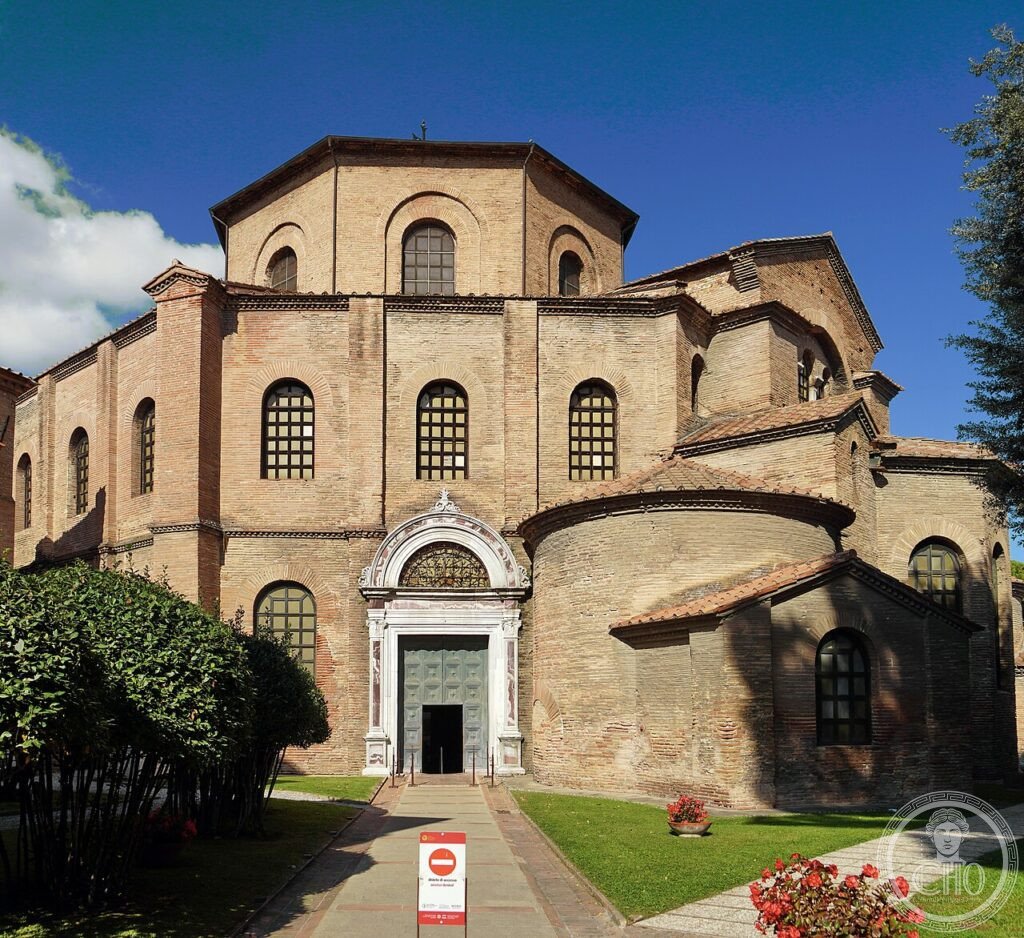
Ravenna was the capital of the western Roman Empire from 402 to 476, the capital of the Ostrogothic kingdom from 493 to 540, and the administrative capital of Byzantine Italy from 540 to 751 — and each of these successive regimes left behind religious buildings with mosaic decoration that is among the finest surviving from the ancient world: the gold tesserae and lapis lazuli of the Mausoleo di Galla Placidia (425-450), the imperial portraits of Giustinian and Theodora in San Vitale (547), and the extraordinary narrative cycle of Sant’Apollinare Nuovo (505-526) are not reproductions of ancient art — they are ancient art, intact in the rooms where they were made 1,500 years ago.
At a glance
Ravenna (province of Ravenna, Emilia-Romagna) is a UNESCO World Heritage Site inscribed in 1996 (ref. 788) as “Early Christian Monuments of Ravenna.” The inscription covers eight separate buildings: the Mausoleo di Galla Placidia, the Battistero Neoniano (Battistero Ortodosso), the Basilica di Sant’Apollinare Nuovo, the Battistero degli Ariani, the Cappella Arcivescovile (Oratorio di Sant’Andrea), the Mausoleo di Teodorico, the Basilica di San Vitale, and the Basilica di Sant’Apollinare in Classe (5 km outside Ravenna). The combined ticket for the five principal buildings (Mausoleo di Galla Placidia, San Vitale, Battistero Neoniano, Sant’Apollinare Nuovo, Cappella Arcivescovile) is available at any of the five sites.
Key facts
- Mausoleo di Galla Placidia (425-450 CE): The cruciform mausoleum of Galla Placidia, daughter of Emperor Theodosius I and regent of the Western Empire 423-433 CE. The mosaics on the interior are the oldest complete mosaic cycle in Ravenna. The ceiling of the central dome depicts a dark-blue starry sky with the 8-armed cross at the zenith, and the lunettes depict Christ the Good Shepherd (with 6 sheep), the Apostle Lawrence at his grille, and a deer drinking from a stream. The light entering through the alabaster windows, not glass, gives the room its distinctive amber-gold luminosity. The three sarcophagi — Galla Placidia, her husband Constantius III, and her son Valentinian III — are against the walls, and the one traditionally identified as Galla Placidia’s was found empty in 1577
- Basilica di San Vitale (526-547 CE): The octagonal church built by Bishop Ecclesius under Ostrogothic rule (building began 526) and completed and dedicated under Byzantine rule (547, year of Justinian I’s reconquest of Ravenna); the interior contains the most complete surviving imperial mosaic programme in the world: the apse mosaics include full-length portraits of Emperor Justinian I (with his general Belisarius, the Bishop Maximian, and the court) and Empress Theodora (with her court of ladies, carrying the chalice for the Eucharist) — the only surviving contemporary portraits of the two rulers who made Byzantium the dominant power of the 6th century
- Battistero Neoniano (c. 400-450 CE): The oldest intact religious building in Ravenna; the dome mosaic (5th century CE) depicts the Baptism of Christ (at the apex, surrounded by the 12 Apostles); the mosaic programme is the oldest surviving complete baptistery mosaic in the world; the octagonal font in the centre was used for total-immersion adult baptism (the standard practice until the 10th century CE)
- Sant’Apollinare Nuovo (505-526 CE): Built by Theodoric the Great (Ostrogothic king) as his palace church; the nave mosaics (dating from different phases, 505-560 CE) show two long processional friezes: on the left (south) wall, a procession of 22 Virgin Martyrs moving from the port city of Classis toward the Enthroned Madonna; on the right (north) wall, 26 male martyrs processing from Theodoric’s palace toward the Enthroned Christ; the mosaics also include 26 scenes from the life of Christ (in the upper zone of the nave) — the most complete early 6th-century gospel narrative cycle to survive
- UNESCO: 1996, ref. 788
- GPS: 44.4168, 12.2014 — Google Maps
History
Ravenna’s importance as an artistic centre derived from its political importance as an imperial capital. The city was chosen as the main imperial residence of the Western Roman Empire in 402 CE by Emperor Honorius, who moved the court from Milan: Ravenna’s position on the Adriatic coast, surrounded by marshes (making it almost impregnable to land attack) and connected directly to Byzantium by sea, made it the most defensible position for the late Roman imperial government. The mosaic workshop tradition established by the imperial court — using tesserae from Byzantium, craftsmen from Constantinople, and imagery from the Hellenistic-Roman tradition of imperial representation — remained active in Ravenna through all political changes: Galla Placidia (425-450), the Ostrogothic kings Theodoric (489-526), and the Byzantine exarchs (540-751) all commissioned mosaics from the same workshops, adapting the iconographic tradition to each new theological and political moment.
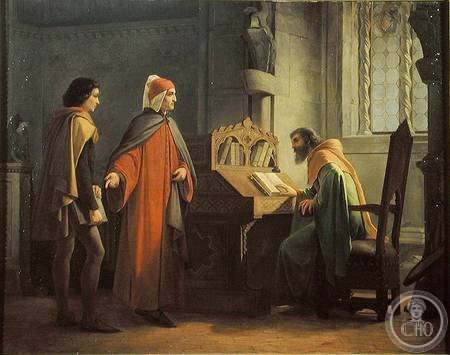
Ravenna passed from Byzantine to Lombard to Frankish and finally to papal control in 754 CE (the “Donation of Pepin,” when the Frankish king Pepin III gave Ravenna to Pope Stephen II — the origin of the temporal power of the papacy). The mosaic workshops survived the political transfer but declined gradually after 800 CE; by the 10th century, Ravenna was a small provincial city with an extraordinary artistic inheritance it could no longer add to. Dante Alighieri spent the last three years of his life in Ravenna (1318-1321), hosted by Guido Novello da Polenta; he died in Ravenna on the night of 13-14 September 1321 and is buried in the Dante Mausoleum adjacent to Sant’Apollinare Nuovo.
What you see
The five principal UNESCO buildings are within 600 metres of each other in the historic centre. The recommended visit sequence is: Mausoleo di Galla Placidia (start here: the oldest, most intimate, most visually extraordinary — arrive first, before the group visits fill the small room) → San Vitale (adjacent to the Mausoleo: the octagonal church with the full Justinian programme) → Battistero Neoniano (10 min walk east: the oldest building, the most complete baptistery mosaic) → Cappella Arcivescovile (adjacent to the Battistero: the bishop’s private oratory with Christ as Warrior mosaic) → Sant’Apollinare Nuovo (5 min south: the longest intact mosaic friezes).
The most important single room in Ravenna is the Mausoleo di Galla Placidia — a room approximately 12 × 10 metres — when the sun enters through the alabaster windows and the mosaic stars in the dark-blue dome above light up. The room holds approximately 30 people comfortably; the queues for reserved access are often 1-2 hours in peak season. The reservation (€2 supplement on top of the combined ticket) is essential from April to October — without a reservation, you may wait outside until a space opens.
Gallery
Practical information
- Combined ticket (5 principal buildings): Valid for 7 days from first use; ~€12 (reduced ~€6 for ages 18-25). Advance booking recommended April-October (limited timed slots for Mausoleo di Galla Placidia: mandatory reservation at €2 supplement). Buy online at ravennamosaici.it.
- Mausoleo di Galla Placidia hours: March-October 9:00-19:00; November-February 9:00-17:00. Maximum 30 visitors at a time; timed slots of 5 minutes (exit required after each slot to allow light recovery). The lighting in the room is natural only — the mosaic effect varies by time of day and season.
- Sant’Apollinare in Classe (5 km south): Not included in the combined ticket; separate admission ~€6; open Monday-Saturday 9:00-19:00, Sunday 9:30-13:00. Reachable by bus (line 4 from Ravenna centre, 15 min).
- Duration: The 5 principal buildings require 2.5-3 hours. Adding Sant’Apollinare in Classe and the Dante Mausoleum: full day.
Getting there
Piazza Arcivescovado, Ravenna (RA), Emilia-Romagna. By train: Trenitalia from Bologna (75 km; 1h10 regional); from Rimini (50 km; 45 min); from Ferrara (75 km; 1h20 with change). Ravenna station is 1 km east of the historic centre (15 min walk via Via Farini). By car: from Bologna, A14 east to Castel San Pietro Terme then SS253 (75 km, 1h); from Rimini, A14 north to Rimini Nord then SS16 (50 km, 45 min). Paid parking near Piazza Farini and Via Trieste (close to the Battistero and San Vitale).
Nearby
- Ferrara — 75 km north-west; UNESCO 1995 (ref.733); (see CHO card)
- Mausoleo di Teodorico (included in UNESCO inscr.) — Via delle Industrie 14, 1.5 km from the centre; the tomb of the Ostrogothic king Theodoric the Great (built c. 520 CE), a two-storey rotunda in Istrian limestone with a monolithic dome (11 m diameter, single block weighing approximately 300 tonnes; the joints are barely visible — Roman engineering that has not yet been fully explained); the dome blocks were quarried from Istria and transported by sea; open Tuesday-Sunday 8:30-18:30; admission ~€4
- San Marino — 60 km south-east; the micro-republic on its limestone cliff (UNESCO 2008 ref. 1245); the Three Towers (Cesta, Montale, Guaita) on the Titano ridge above the city
Sources
- UNESCO: whc.unesco.org/en/list/788
- Wikipedia EN: Ravenna
- Deliyannis, Deborah Mauskopf: Ravenna in Late Antiquity, Cambridge University Press, 2010
- Ravenna Mosaici (ticket + reservations): ravennamosaici.it
Gallery
Find it on the map
See this place and what’s around it →📷 Become a Cultural Heritage Online photographer
Share your photos of places: they stay published under your name as the author. The more they're seen, the more you get noticed — and soon a contest will reward the most appreciated photos.
Log in or sign up free to add a photoIs this page about you?
This page is read by travellers and heritage enthusiasts who find it on Google. Tell us how you are connected to this place and we will take it from there.