
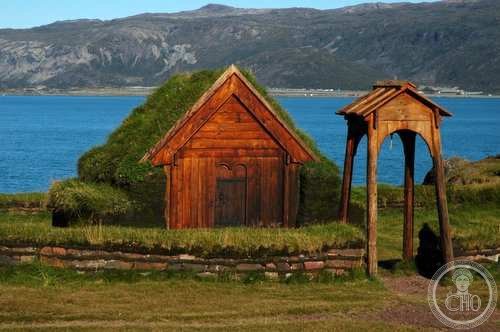
The settlement where Erik the Red established his Greenlandic homestead, now a UNESCO World Heritage Site bearing witness to Norse colonization and Arctic farming traditions.
At a glance
Qassiarsuk occupies southern Greenland, within the Kujalleq municipality. Known by its Danish name Bratalid—derived from Old Norse Brattahlíð—the settlement preserves one of the North Atlantic’s most significant historical sites. Today it supports a small community of 39 residents.
History
Erik the Red, the Norse explorer credited with establishing the first European settlement in Greenland, chose this fjord location for his homestead around 985 CE. The site became the administrative center of the Norse settlements in Greenland, which endured for several centuries. Qassiarsuk remained a focal point of Norse colonial life until the settlements mysteriously declined in the 15th century.
What you see
The landscape contains archaeological remains of Norse structures alongside evidence of traditional Greenlandic farming practices. Stone foundations and field systems mark the homestead, while the surrounding terrain demonstrates how settlers adapted agricultural techniques to the Arctic environment.
Cultural significance
Qassiarsuk’s designation as part of the Kujataa World Heritage Site reflects its dual historical importance. It documents Norse Atlantic expansion at a critical moment in medieval European exploration, while simultaneously testifying to the unique agricultural systems developed by Norse and indigenous Greenlandic populations in extreme northern latitudes.
Key facts
- Country: Greenland
- Location: Kujalleq municipality, southern Greenland
- Coordinates: 61.15°N, 45.52°W
- UNESCO: Part of Kujataa World Heritage Site
- Current population: 39 (2020)
- Historical name: Brattahlíð (Old Norse)
Practical information & getting there
Qassiarsuk is accessible by boat from nearby settlements during summer months. The site operates as an open-air museum and archaeological park. Visitors should plan ahead, as services in this remote location are limited. Detailed travel logistics should be confirmed with local tourism authorities in Greenland.
Sources & resources
Find it on the map
See this place and what’s around it →📷 Become a Cultural Heritage Online photographer
Share your photos of places: they stay published under your name as the author. The more they're seen, the more you get noticed — and soon a contest will reward the most appreciated photos.
Log in or sign up free to add a photoIs this page about you?
This page is read by travellers and heritage enthusiasts who find it on Google. Tell us how you are connected to this place and we will take it from there.