

Putna Monastery was built between 1466 and 1469, straight after the victory of Stephen the Great, prince of Moldavia, in the battle in which he took the fortress of Chilia, held by a Hungarian garrison. On 3 September 1470, in the presence of Stephen and his whole family, Metropolitan Teoctist consecrated the monastery, which at once became the most important religious centre in the region. Stephen the Great ruled for half a century, from 1457 to 1504, earning his byname for his victorious campaigns against the Ottoman Empire; on his death in 1504 he was buried at Putna, and his tomb has drawn pilgrims without interruption for more than five hundred years. The national poet Mihai Eminescu called Putna “the Jerusalem of the Romanian people”, an oasis of green, flowers and beauty — a description that reflects the monastery’s central place in the national and spiritual identity of Romania.
About Putna Monastery
Putna Monastery was built between 1466 and 1469 immediately following Stephen the Great’s victory in the battle in which he captured the Chilia Citadel, then held by a Hungarian garrison. On 3 September 1470, in a ceremony attended by Stephen and his entire family, Metropolitan Teoctist consecrated the completed monastery, which quickly became the most important religious site in the region and one of medieval Moldavia’s most significant cultural, religious, and artistic centres. Stephen the Great (Ștefan cel Mare), regarded as one of the most consequential rulers in Romanian history, reigned for half a century, from 1457 to 1504, earning his epithet “the Great” through a remarkable series of successful military campaigns against the Ottoman Empire that shaped the course of both Romanian and wider European history. Upon his death in 1504, Stephen was buried at Putna, and his tomb has served as a pilgrimage destination for more than five centuries, establishing the monastery as the spiritual centre of Romanian Orthodox tradition and national historical memory. The 19th-century Romanian national poet Mihai Eminescu famously described Putna as “the Jerusalem of the Romanian people,” calling it “an oasis of greenery, flowers and beauty” — a characterisation that has become inseparable from the monastery’s cultural identity ever since. The monastery’s museum today preserves an important collection of medieval art objects, drawn primarily from the era of Stephen the Great and his immediate successors, offering a direct material connection to one of the defining periods of Moldavian history.
Key facts
- 1466-1469: monastery built following Stephen the Great’s capture of Chilia Citadel
- 3 September 1470: monastery consecrated by Metropolitan Teoctist
- 1457-1504: reign of Stephen the Great, marked by victories over the Ottoman Empire
- 1504: Stephen the Great dies and is buried at Putna
- 500+ years: continuous pilgrimage tradition to Stephen’s tomb
- Nickname: “the Jerusalem of the Romanian people,” coined by poet Mihai Eminescu
History
As the foundation and burial site of Stephen the Great, whose decades of military resistance against Ottoman expansion made him one of the most celebrated rulers in the entire history of the Romanian lands — and who was later canonised as a saint by the Romanian Orthodox Church — Putna Monastery occupies a position of unmatched symbolic significance within Romanian national memory. Its consecration in 1470, attended by Stephen’s full family, marked the formal establishment of what would become the spiritual heart of Moldavian Orthodoxy for the following five centuries.
Mihai Eminescu’s characterisation of Putna as “the Jerusalem of the Romanian people” reflects the monastery’s unique dual role as both an active religious pilgrimage site and a foundational locus of Romanian cultural and national identity, comparable in emotional and symbolic weight to the way other nations regard their own most sacred historical shrines.
What you see
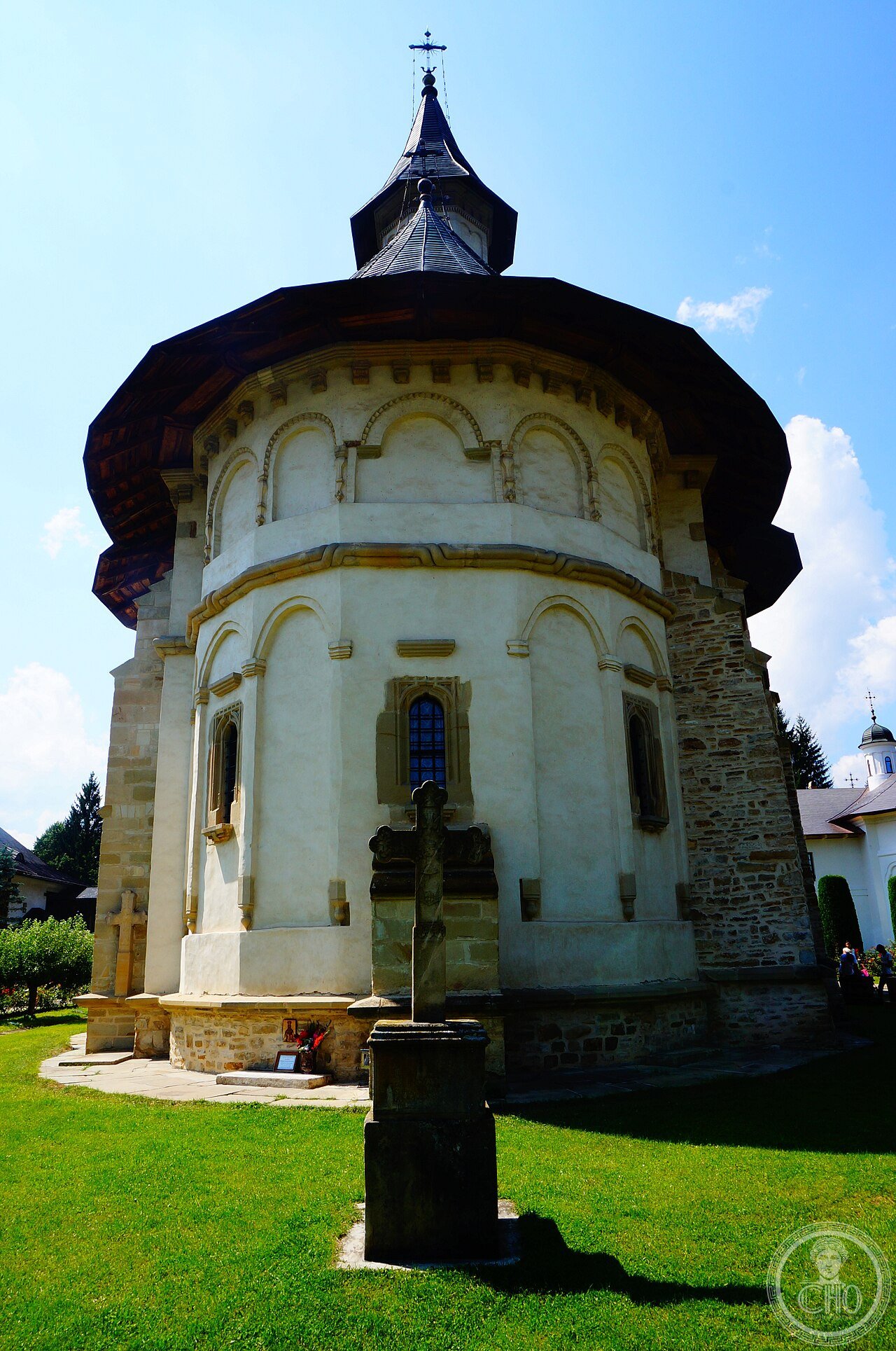
The monastery’s Church of the Assumption of the Virgin Mary, at the heart of the complex, preserves the architectural character of late 15th-century Moldavian religious building, its exterior and grounds set within the tranquil wooded landscape that inspired Eminescu’s description. Stephen the Great’s tomb remains the monastery’s central pilgrimage focus, while the adjoining museum displays medieval art and artefacts from his reign and those of his immediate successors.
Practical information
- Opening hours: generally open daily with seasonal variation; museum has separate admission; check current hours before visiting
- Address: Strada Principală, Putna, Suceava County, Romania
Getting there
Putna Monastery is located in the village of Putna, in Romania’s Suceava County within the historic Bucovina region, reachable by car or train from Suceava. GPS: 47.8661° N, 25.5962° E.
Nearby
- Sucevița Monastery — another painted Bucovina monastery, a drive away
- Moldovița Monastery — UNESCO-listed painted monastery, nearby
- Suceava — the regional capital and former Moldavian seat, a drive away
Sources
- Wikipedia — “Putna Monastery” (en.wikipedia.org)
- Mănăstirea Putna — “Stephen’s Time 1466–1546” (putna.ro)
- Rolandia — “Putna Monastery – the resting place of Stephen the Great” (rolandia.eu)
Find it on the map
See this place and what’s around it →📷 Become a Cultural Heritage Online photographer
Share your photos of places: they stay published under your name as the author. The more they're seen, the more you get noticed — and soon a contest will reward the most appreciated photos.
Log in or sign up free to add a photo