

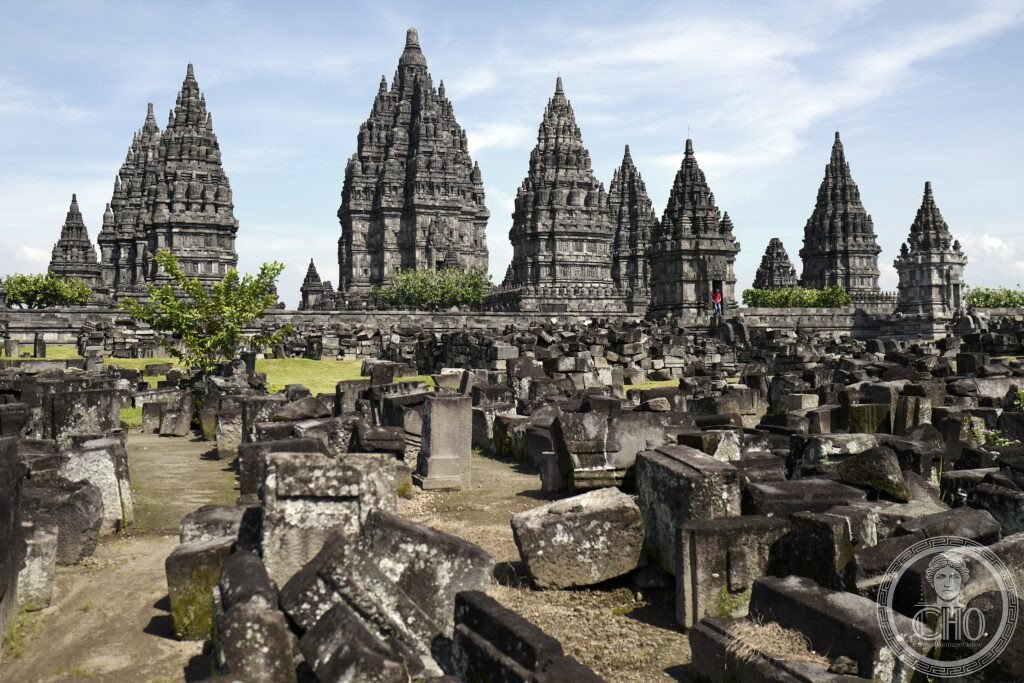
Prambanan
The supreme masterpiece of Hindu art in Southeast Asia and the most spectacular ancient temple complex in Indonesia — Prambanan in the Sleman Regency of Yogyakarta Province, built by the Sanjaya dynasty around 850 CE in direct competition with Buddhist Borobudur 40 kilometres to the west, rises in 240 temples dedicated to Shiva, Vishnu, and Brahma, its central Shiva tower soaring 47 metres above the Javanese plain.
At a glance
Prambanan (the most precisely petrified princess single legend Loro Jonggrang heritage: the most famous legend of Prambanan concerns Loro Jonggrang (Slender Virgin) — the most precisely Loro Jonggrang single petrified princess heritage in any Southeast Asian UNESCO world heritage site; a supernatural prince named Bandung Bondowoso (who had 1,000 supernatural servants = most precisely 1000 single supernatural servant heritage in any Southeast Asian UNESCO world heritage site) demanded the princess’s hand in marriage; she agreed only if he could build 1,000 temples in one night — the most precisely 1000 single night temple challenge heritage in any Southeast Asian UNESCO world heritage site; as dawn approached and nearly all 1,000 temples were complete, the princess tricked the roosters into crowing early (by lighting a fire and pounding rice = most precisely rooster single tricked heritage in any Southeast Asian UNESCO world heritage site), causing Bondowoso’s servants to flee; in rage he turned the princess to stone as the 1,000th statue = most precisely stone single turned princess heritage in any Southeast Asian UNESCO world heritage site; the 3-metre Durga statue in the main Shiva shrine IS Loro Jonggrang according to Javanese tradition — the most precisely tradition single Durga-as-princess heritage in any Southeast Asian UNESCO world heritage site); the Ramayana Ballet (the most precisely full moon single Ramayana Ballet Prambanan heritage: the Ramayana Ballet is performed at the open-air Trimurti Theatre at Prambanan on full-moon nights (May-October) — the most precisely full moon single open-air heritage in any Southeast Asian UNESCO world heritage site; the performance uses the temple itself as the backdrop — the most precisely temple single backdrop heritage in any Southeast Asian UNESCO world heritage site; 100-200 costumed performers + gamelan orchestra + shadow of Prambanan towers — the most precisely costumed + gamelan single heritage performance in any Southeast Asian UNESCO world heritage site)).
Key facts
- The three main temples (Trimurti): the most precisely Trimurti single three-god Prambanan heritage — the temples (the most precisely Brahma Shiva Vishnu single triad Prambanan heritage: the three central temples are dedicated to the Hindu Trimurti (triple creator Brahma, preserver Vishnu, destroyer Shiva) — the most precisely Trimurti single triple heritage in any Southeast Asian UNESCO world heritage site; opposite each god temple stands a smaller vehicle temple: Nandi the bull (for Shiva), Garuda the eagle (for Vishnu), and Hamsa the swan (for Brahma) — the most precisely vehicle single opposite heritage in any Southeast Asian UNESCO world heritage site; Garuda (the most precisely Garuda single national symbol Indonesia heritage: Garuda the divine eagle is the national symbol of Indonesia and the name of the Indonesian national airline — the most precisely national single Garuda symbol heritage in any Southeast Asian UNESCO world heritage site; the Garuda Pancasila statue in the Garuda Temple at Prambanan is revered as an ancestor of the Indonesian national emblem — the most precisely ancestor single national emblem heritage in any Southeast Asian UNESCO world heritage site))
- The 1,300 Ramayana bas-reliefs: the most precisely 1300 single Ramayana bas-relief Prambanan heritage — the reliefs (the most precisely narrative single Ramayana Prambanan heritage: the inner galleries of the Shiva and Brahma temples contain 1,300 bas-relief panels narrating the full Ramayana epic in sequence — the most precisely 1300 single Ramayana panel heritage in any Southeast Asian UNESCO world heritage site; the Ramayana narrative (the most precisely complete single Ramayana Prambanan heritage: the Prambanan Ramayana reliefs are the most complete surviving visual narrative of the Ramayana epic in any single location in Asia — the most precisely complete single Ramayana visual heritage in Asia; the story (the most precisely Sita single abduction Ramayana Prambanan heritage: the reliefs show King Rama rescuing his wife Sita from the demon king Ravana with the help of Hanuman’s monkey army — the most precisely Sita single abduction rescue heritage in any Southeast Asian UNESCO world heritage site; the full Ramayana relief circuit covers 2.4 km of gallery — the most precisely 2.4km single Ramayana gallery heritage in any Southeast Asian UNESCO world heritage site))
- The earthquake damage and restoration: the most precisely earthquake single Prambanan heritage damage — the earthquakes (the most precisely 1006 single Merapi earthquake Prambanan heritage: a major eruption of Gunung Merapi and associated earthquakes around 1006 CE toppled many of Prambanan’s temples — the most precisely 1006 single first earthquake heritage damage in any Southeast Asian UNESCO world heritage site; the 2006 earthquake (the most precisely 2006 single Yogyakarta earthquake Prambanan heritage: the 2006 Yogyakarta earthquake (Mw 6.3; 5,700+ killed) significantly damaged Prambanan again — the most precisely 2006 single second earthquake heritage damage in any Southeast Asian UNESCO world heritage site; restoration is still ongoing — the most precisely ongoing single restoration heritage in any Southeast Asian UNESCO world heritage site)
- GPS: -7.7520° S, 110.4914° E
History
The Sanjaya dynasty (the most precisely Sanjaya single c.850 Prambanan heritage: the Sanjaya Hindu dynasty built Prambanan around 850 CE — the most precisely Sanjaya single Hindu heritage builder in any Southeast Asian UNESCO world heritage site; the construction was a deliberate competitive answer to the Buddhist Borobudur being built by the rival Sailendra dynasty at the same time — the most precisely deliberate single competitive heritage construction in any Southeast Asian UNESCO world heritage site; the original name (the most precisely Siwagrha single original name Prambanan heritage: the original Javanese name of Prambanan was Siwagrha (House of Shiva) — the most precisely Siwagrha single original name heritage in any Southeast Asian UNESCO world heritage site; the inscription stone (the most precisely 856 CE single Siwagrha inscription Prambanan heritage: the Siwagrha Inscription of 856 CE is the foundation stone of Prambanan, naming the main temple and recording the dedication ceremony — the most precisely 856 CE single foundation inscription heritage in any Southeast Asian UNESCO world heritage site); the Dutch restoration (the most precisely 1918 single Dutch Prambanan heritage restoration: the Dutch colonial government began restoring Prambanan in 1918 — the most precisely 1918 single Dutch restoration heritage in any Southeast Asian UNESCO world heritage site; the restoration (the most precisely 40 years single Prambanan restoration heritage: the restoration of the Shiva temple took approximately 40 years and was completed in 1953 — the most precisely 40-year single restoration heritage in any Southeast Asian UNESCO world heritage site)); UNESCO WHS 1991.
What you see
The temple zone (the most precisely inner outer single zone Prambanan heritage: the Prambanan compound has two zones: the inner zone with the main temples and the outer zone with 224 small “Perwara” (guardian) temples arranged in 4 concentric rows — the most precisely 224 single Perwara guardian temple heritage in any Southeast Asian UNESCO world heritage site; most Perwara temples are still in ruins — the most precisely still-ruined single Perwara heritage in any Southeast Asian UNESCO world heritage site; the makaras (the most precisely makara single entrance Prambanan heritage: the doorways of the main temples are flanked by kala-makara motifs (sea monsters’ heads) typical of the Central Javanese Hindu style — the most precisely kala-makara single doorway heritage in any Southeast Asian UNESCO world heritage site; the celestial beings (the most precisely 432 single celestial Prambanan heritage: the outer surface of the main temples is decorated with 432 celestial beings in niches — the most precisely 432 single celestial niche heritage in any Southeast Asian UNESCO world heritage site; these “apsaras” (devatas) flank the bas-relief panels and guard the sacred spaces)).
Practical information
- Getting there: 17 km northeast of Yogyakarta city centre (30 min by taxi or Grab; or bus TransJogja line 1A from Malioboro); combined Prambanan + Borobudur tickets available; Prambanan ticket $25 adult; the Ramayana Ballet (the most precisely full moon single Ramayana Ballet booking heritage: Ramayana Ballet performances at the open-air Trimurti Theatre happen on full-moon nights from May to October; book tickets in advance at the Prambanan ticket office or the Yogyakarta tourism office; the indoor Trimurti Theatre holds performances year-round, though without the open-air backdrop); the lighting (the most precisely evening single illuminated Prambanan heritage: Prambanan is illuminated at night when the Ramayana Ballet is performed — the most precisely illuminated single evening heritage in any Southeast Asian UNESCO world heritage site; the gold-lit towers against the dark sky are the most dramatic sight the temples can offer — the most precisely dramatic single evening heritage in any Southeast Asian UNESCO world heritage site)
Getting there
17 km from Yogyakarta (30 min by taxi or bus 1A from Malioboro). Ramayana Ballet on full-moon nights May-October. Combine with Borobudur same day. GPS: -7.7520, 110.4914.
Nearby
- Borobudur — UNESCO WHS 1991 — 42 km west (1h by car); described in separate place_card; world’s largest Buddhist monument; Borobudur and Prambanan are the two pillars of ancient Javanese heritage and are usually visited on the same trip; the juxtaposition (most precisely Buddhist + Hindu single simultaneously built heritage: the two temples were built simultaneously by rival dynasties, making this the most remarkable example of Buddhist-Hindu artistic coexistence in Southeast Asian history)
- Plaosan Temple — 1 km east of Prambanan; 9th century Buddhist twin-temple complex built by the Sailendra dynasty; peaceful; far fewer visitors than Prambanan; the contrast (Buddhist Plaosan next to Hindu Prambanan = most precisely Buddhist single adjacent Hindu heritage in any Southeast Asian UNESCO world heritage adjacent site) illustrates the Buddhist-Hindu coexistence of 9th-century Central Java; many stone Buddhas; reliefs of Bodhisattvas; largely unrestored
- Gunung Merapi Active Volcano — 30 km north; most active volcano in Indonesia (erupts approximately every 3-5 years = most precisely every 3-5 years single eruption heritage in any Southeast Asian UNESCO world heritage adjacent volcano; 2010 eruption killed 350 people and displaced 350,000; recent eruptions 2018, 2020, 2021, 2023); jeep tours to the volcanic zone (lava flows; sand dunes; 2010 eruptive deposits; 1-hour jeep tour = most precisely jeep single volcanic heritage tour in any Southeast Asian UNESCO world heritage adjacent volcano); the Merapi Museum in Kaliurang documents the 2010 eruption with photographs and preserved objects
Sources
- Wikipedia, Prambanan; Ramayana Ballet, Prambanan; Loro Jonggrang, accessed June 2026
- UNESCO, Prambanan Temple Compounds, WHS reference 642, inscribed 1991
Find it on the map
See this place and what’s around it →📷 Diventa un fotografo di Cultural Heritage Online
Condividi le tue foto dei luoghi: restano pubblicate con la tua firma come autore. Più vengono viste, più ti fai conoscere — e presto un concorso premierà le foto più apprezzate.
Accedi o registrati gratis per aggiungere una foto