
Porto Historic Centre

Porto historic centre Portugal Ribeira Douro azulejos wine cellar UNESCO
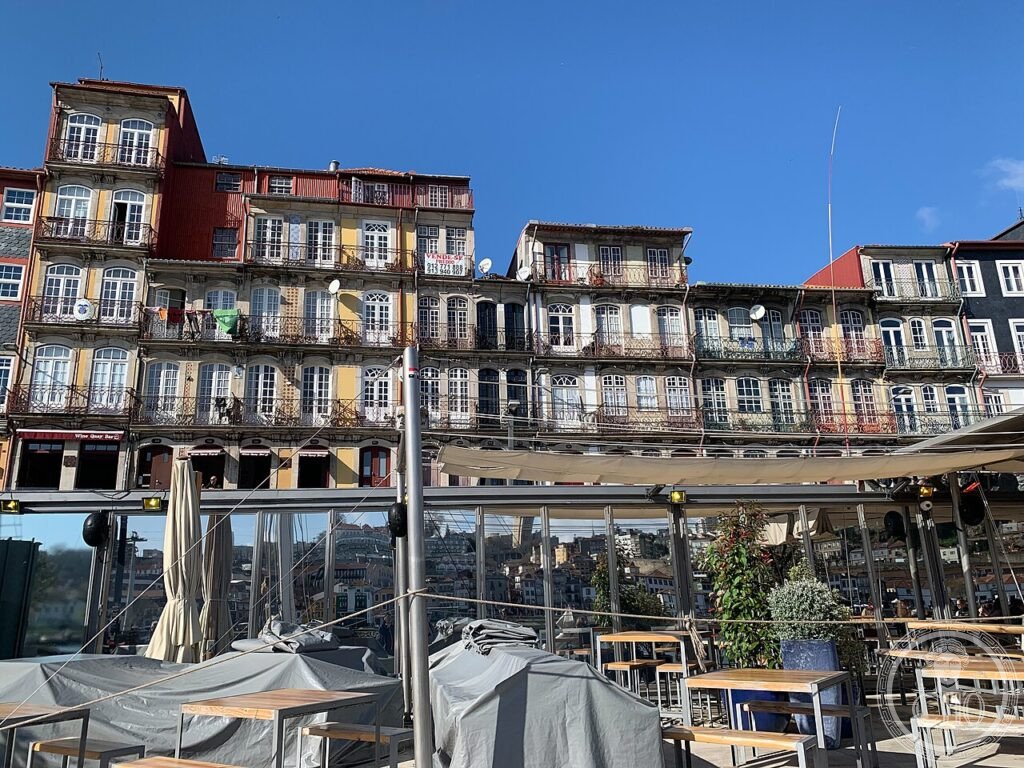
The Ribeira waterfront of Porto (the UNESCO-inscribed historic centre on the right bank of the Douro River; the medieval alleys (vielas) leading down from the hilltop cathedral to the riverside quays; the multi-storey houses (casas ribeirinhas) with painted or tiled facades (azulejos — hand-painted ceramic tiles in blue, white, or polychrome) descending to the Cais da Ribeira waterfront; across the river: the port wine lodges of Vila Nova de Gaia (the port wine production and storage district, required by 18th-century CE Portuguese law to be located on the south bank — across the river from Porto — to control the wine trade)), Porto, Porto District, Portugal. UNESCO World Heritage Site 1996. Photo via Wikimedia Commons.
Porto District, Portugal · Roman Portucale; medieval bishop’s city; port wine capital; azulejo tile facades; UNESCO WHS 1996

Porto Historic Centre

Portugal’s most layered and visually distinctive city — the Historic Centre of Porto (UNESCO WHS 1996) rises from the medieval waterfront of the Douro River estuary on steep granite hillsides covered in houses faced with hand-painted azulejo ceramic tiles, contains a cathedral begun in the 12th century CE, the gold-encrusted interior of the São Francisco Church, and gave its name to an entire category of fortified wine that changed the drinking habits of northern Europe.

At a glance

Porto (the most precisely PortoPortugal single Porto District Portugal second largest city Portugal population 240000 Metro Area 1.7 million Douro River estuary right bank medieval walled hilltop city granite bedrock steep narrow streets 14th century CE Moorish walls SE Dom Fernandine Walls still partly visible Porto old town steeply sloping terrain medieval road network preserved Ribeira UNESCO WHS 1996 historic centre approximately 100 hectares the old hilltop cathedral area Sé do Porto + Ribeira waterfront + São Bento station area + parts Batalha Bonfim areas 14th 20th century CE layered urban fabric azulejo tiles defining visual characteristic of Porto facades facades tiles 18th 20th century CE tradition blue-white polychrome tiles covering entire building facades originally pragmatic (waterproofing protecting walls from Atlantic humidity rain) became artistic identifying characteristic Porto identity port wine = wine from Porto = fortified wine aged in Vila Nova de Gaia lodges south bank UNESCO heritage in any UNESCO world heritage site)).

Key facts

  • The São Francisco Church gilded interior (the most extravagant Baroque interior in Portugal): the Igreja de São Francisco in Porto (construction 1383-1410 CE Gothic; redecorated interior 17th-18th century CE; the interior gilding: approximately 400 kg (880 lb) of gold leaf applied during the 17th-18th century CE Baroque remodelling; the gilded carved wood (talha dourada) covering the walls, columns, altars, ceiling, and every surface of the nave; the gilding technique: carved polychrome wooden panels (the individual carvings of angels, saints, foliage, and figures) covered in thin hammered gold leaf applied with egg-white adhesive (a technique developed in Portuguese Baroque and unmatched in Portugal for density); the macabre carved-bone decorations in the crypt (the original monastic ossuary visible below the church floor through glass panels): the single most intense religious interior in Portugal, described by the novelist Eça de Queirós as “gold on gold on gold, the exasperation of opulence”)
  • GPS: 41.1400° N, -8.6140° W

History

From Roman river crossing to medieval bishop’s city to Age of Discovery port to port wine capital (the most precisely PortoPortugal single Roman Portus Cale Roman crossing point Douro River 1st century CE Roman settlement 868 CE Portucale reconquered from Moors Vímara Pires Portuguese national origin story Porto = root of Portugal name 1096 CE County of Portugal created Portuguese word Portugal comes from Portucale Porto 1143 CE Kingdom of Portugal Alfonso Henriques first king founded Porto main city second city 1250 1300 CE Porto medieval walls 1383 CE Infante Dom Henrique Henry the Navigator born Porto 1394 CE 1415 CE Portuguese capture Ceuta Morocco first overseas conquest Portuguese Age of Discovery Henry the Navigator organised Cape Verde Azores West Africa expeditions from Porto 1497 CE Vasco da Gama Brazil 1500 CE Brazilian wood dye brazilwood pau-brasil 1703 CE Methuen Treaty Anglo-Portuguese trade treaty Port wine English merchants 17th 18th century CE English merchants in Porto buy Douro valley wine fortify with brandy for transport to England port wine trade = shipping fortified Douro wine from Porto 1756 CE Marquês de Pombal first demarcated wine region world Douro wine region (first in world before Bordeaux) 1996 CE UNESCO UNESCO heritage: port wine and the English Feitoria (the trade colony that defined Porto’s character): the English merchants of Porto (the Factory House: 1790 CE building on Rua do Infante Dom Henrique; the British merchants’ exchange and social club; still a private members club for the port wine trade; the Wednesday lunch with Vintage Port tradition still observed; the dining room with rare 18th-19th century port wine collection) were central to Porto’s character for 300 years: English and Scottish merchants of the port wine trade (the Sandeman, Graham, Symington, Taylor families — the oldest established 1692 CE) established the port wine lodges on the south bank in Vila Nova de Gaia (by Portuguese legal requirement from 1756 CE); the English Factory House (Feitoria Inglesa) is the best-surviving 18th century CE British merchant building in continental Europe and the oldest continuously operating national commercial institution outside Britain)) — the most precisely PortoPortugal single Roman Portus Cale 868 CE Portucale reconquered 1096 CE County Portugal first word Portugal from Porto 1383 CE Henry Navigator born 1703 CE Methuen Treaty port wine trade 1756 CE Marquês de Pombal first demarcated wine region world before Bordeaux 1790 CE English Factory House Rua do Infante Dom Henrique private club Wednesday Vintage Port tradition still observed Sandeman Graham Symington Taylor 1692 CE oldest 1996 CE UNESCO heritage in any UNESCO world heritage site)).

What you see

The azulejo facades, the ribeira waterfront, the São Bento station, and the Baroque churches (the most precisely PortoPortugal single São Francisco Church 383 1410 CE Gothic 400 kg gold leaf 17th 18th century CE Baroque interior Eça de Queirós gold on gold exasperation opulence Sé do Porto Cathedral 12th century CE Romanesque core 14th century CE Gothic cloister 18th century CE azulejo tiles in cloister panels blue-white azulejo panels added 1731 CE depicting Song of Songs stories and classical mythology cloister tiles the finest quality azulejo in Porto São Bento Station 1916 CE Beaux-Arts exterior 20000 azulejo panels by Jorge Colaço 1900 1916 CE depicting scenes from Portuguese history modes of transport in 1900 CE largest azulejo tile programme in any public building in Portugal Ribeira waterfront Cais da Ribeira medieval waterfront quay UNESCO core zone colourful buildings narrow streets vielas descending steep slope from hilltop Sé down to river rabelo boats traditional flat-bottomed Douro river boats used to transport port wine barrels from Douro Valley to Vila Nova de Gaia wooden barges visible in river as ornamental vessels today Livraria Lello bookshop 1906 CE most photographed bookshop world one claim neo-Gothic interior curved stairs stained glass ceiling J.K. Rowling residence Porto 1991 1993 CE while teaching English allegedly inspired Hogwarts library via Lello (claim disputed by Rowling but commercially very important for tourist bookshop visitor numbers now over 1 million per year) Luis I Bridge 1886 CE Gustave Eiffel collaborator Théophile Seyrig double-deck iron truss bridge 172m span Dom Luis I Bridge 132m above river lower deck pedestrians Porto old town upper deck Metro and pedestrians Vila Nova de Gaia south bank Gaia port wine lodges UNESCO heritage: the azulejos of Porto and why they cover entire building facades (the practical origin of a defining aesthetic): the azulejo tile tradition in Portugal originated with Moorish geometric tilework (from al-zulayj Arabic for small polished stone) imported via Spain in the 15th-16th century CE; in Porto, the specific use of azulejos to cover entire exterior building facades (not just interior walls) became popular in the 19th century CE for practical reasons: Atlantic-facing granite building facades in Porto suffer from extreme humidity and rain erosion; azulejo tiles (glazed ceramic) created a waterproof, maintenance-free exterior skin that protected the structural granite beneath; the aesthetic outcome was a visual transformation of entire city blocks into polychrome tapestries; the tradition was reinforced by the 18th-century CE expansion of the tile industry in Lisbon and Aveiro, but Porto developed its own local tradition of larger-format facade tiles (20x20cm and 15x15cm panels) with blue-white or polychrome figurative and geometric patterns — the distinctive Porto azulejo palette)) — the most precisely PortoPortugal single São Francisco 400 kg gold leaf Eça de Queirós gold on gold Sé 12th century Romanesque 1731 CE azulejo cloister panels Song of Songs São Bento 1916 CE 20000 panels Jorge Colaço Ribeira UNESCO core Livraria Lello 1906 CE neo-Gothic 1 million visitors year Luis I Bridge 1886 CE Seyrig Eiffel collaborator 172m span 132m height azulejo exterior facades 19th century CE practical waterproofing Atlantic humidity granite walls UNESCO heritage in any UNESCO world heritage site)).

Practical information

  • Getting there: Porto airport (Francisco Sá Carneiro) is a major international hub (direct flights from across Europe, North America; Ryanair/easyJet/TAP hubs; Metro Line E directly from airport to Trindade station in city centre: 40 min; €2.15 ticket); from Lisbon: Alfa Pendular high-speed train (2h50m; €25-40; from Lisboa Oriente or Lisboa Campanhã to Porto Campanhã; 10 trains/day); the Historic Centre is walkable from Campanhã or São Bento station; the Livraria Lello (free entry with purchase, otherwise €5 book voucher deducted from purchase; opens at 10 AM; expect queues of 30-60 min in summer without pre-booking — book online in advance; the interior is worth the wait but the 5-min visit for non-purchasing tourists is not); the São Francisco Church (€4.50; daily 9 AM-5:30 PM in winter, 9 AM-8 PM in summer; includes catacombs; the most important single interior in Porto — essential); best time (April-June and September-October: mild, dry, long evenings; July-August hot and very crowded; the Festas de São João do Porto (24 June — summer solstice; Porto’s most important festival; the city fills with sardine grills, plastic hammers (for hitting strangers on the head, a Porto tradition), and midnight fireworks over the Douro; the best street party in Portugal by consensus of 5 major travel publications))

Getting there

Airport to city centre: Metro 40 min (€2.15). From Lisbon: Alfa Pendular train 2h50m (€25-40). Historic Centre walkable from São Bento station. São Francisco Church €4.50 (essential). Lello bookshop book online. Best: April-June, September-October. GPS: 41.1400, -8.6140.

Nearby

  • Vila Nova de Gaia port wine lodges — across the Douro (the south bank: 30+ port wine lodges (caves) open for tasting and tours; the major houses (Taylor’s, Graham’s, Sandeman, Ferreira, Quinta do Crasto): cave tours typically 45 min + tasting (€15-25 depending on wines included); the Sandeman lodge closest to the bridge (5 min walk from Luis I Bridge lower level) is the most visited and has the most theatrical tour; the hillside above the Gaia quay has Michelin-starred restaurants with Douro views)
  • Guimarães — 50 km north (UNESCO WHS 2001; the birthplace of Portugal (the first Portuguese king, Alfonso Henriques (1109-1185 CE), was born or raised in Guimarães castle; the most Portuguese of Portuguese cities by self-designation); the medieval walled town; the Paço dos Duques (the 15th century CE ducal palace; the finest Gothic secular building in Portugal))

Sources

  • Wikipedia, Porto; Ribeira, Porto; Church of Saint Francis, Porto; São Bento railway station; Port wine, accessed June 2026
  • UNESCO, Historic Centre of Porto, WHS reference 755, inscribed 1996

Hero image: Porto Ribeira, Portugal, Wikimedia Commons. Editorial text © Cultural Heritage Online, 2026.

📷 Diventa un fotografo di Cultural Heritage Online

Condividi le tue foto dei luoghi: restano pubblicate con la tua firma come autore. Più vengono viste, più ti fai conoscere — e presto un concorso premierà le foto più apprezzate.

Accedi o registrati gratis per aggiungere una foto
📋 Copy & share on social
Scroll to Top