
Pompeii and Herculaneum

Pompeii Forum Mount Vesuvius Roman city 79 CE eruption excavation Italy UNESCO World Heritage
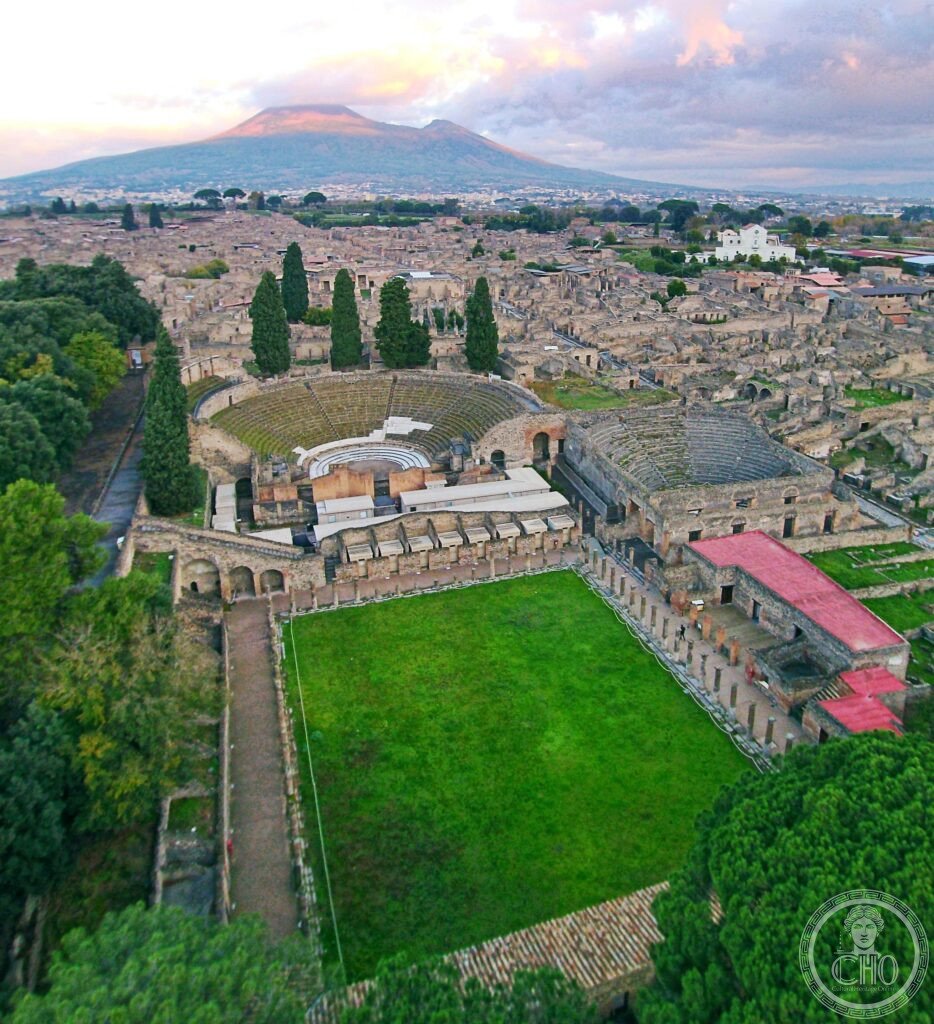
The Forum of Pompeii (the civic and religious centre of the Roman city; the broad rectangular colonnaded plaza at the heart of Pompeii; the Temple of Jupiter (the largest and most important temple of the city; dedicated to the Capitoline Triad of Jupiter, Juno, and Minerva) at the north end of the Forum, with Mount Vesuvius (1,281 m) visible in the background — the same volcano that buried the city under approximately 4–6 m of volcanic ash and pumice on 24 August 79 CE (the most precisely dated and most completely documented natural disaster in the ancient world; the date recorded by Pliny the Younger (61–113 CE; the nephew of Pliny the Elder, who died during the eruption; Pliny the Younger described the events in two letters to the historian Tacitus — the most important primary source for the eruption and the most vivid eyewitness account of a volcanic disaster in the ancient world; the correction of the eruption date (the most recent archaeological evidence (an inscription found in 2018) records work done in the house “17 days after the September calends” — i.e., 17 October — suggesting the eruption occurred in late October, not 24 August as traditionally held))), Pompeii, Campania, Italy. UNESCO World Heritage Site 1997. Photo via Wikimedia Commons.
Pompeii (Pompei), Campania, Italy · Roman city buried 79 CE by Mount Vesuvius; 44 hectares of excavated urban fabric (the most complete surviving example of a Roman city in the world); the plaster casts (the bodies of approximately 1,150 victims preserved as hollow cavities in the volcanic ash, filled with plaster by archaeologist Giuseppe Fiorelli from 1863); the House of the Faun (3,000 m² mosaic floors; the Alexander Mosaic now in Naples); the Villa of the Mysteries (the most important fresco cycle of the ancient world); Herculaneum (the smaller, wealthier, and better-preserved companion city); the Great Pompeii Project (the most ambitious archaeological conservation project in Italy) · UNESCO World Heritage 1997

Pompeii and Herculaneum

The most important archaeological discovery in the history of Western civilisation and the most complete surviving window into daily Roman life — Pompeii and Herculaneum, the two Roman cities buried by the eruption of Mount Vesuvius in 79 CE, preserve under the volcanic ash the streets, houses, shops, taverns, brothels, gardens, mosaics, frescoes, and the plaster casts of 1,150 victims of the most dramatic natural disaster of the ancient world.

At a glance

The Archaeological Areas of Pompeii, Herculaneum, and Torre Annunziata (UNESCO WHS 1997; approximately 44 hectares of excavated urban area at Pompeii; the most important single archaeological site for understanding Roman daily life; population of Pompeii at the time of the eruption: approximately 11,000–20,000 (the estimates vary; the excavated area shows evidence of a prosperous commercial city with a substantial merchant and artisan class)) are located at the foot of Mount Vesuvius in Campania, southern Italy; the eruption of Vesuvius on (approximately) 24 October 79 CE (the date is now believed to be late October rather than August 24 based on new archaeological evidence; the traditional August date comes from Pliny the Younger’s letters but was probably miscopied from an original “XVII Kal. Nov.” — 17 days before November Kalends = 15 October) buried Pompeii under approximately 4–6 m of volcanic ash and pumice; the volcanic material sealed the city, preserving organic materials (food in jars, wooden furniture, leather goods, textiles, the remains of victims) that would have rotted in any other context; the excavation history (the site was rediscovered in 1748 during well-digging works commissioned by King Charles III of Naples and Sicily; systematic excavation began under Giuseppe Fiorelli (director of excavations 1860–1875; the most important figure in the history of Pompeii archaeology; he invented the plaster cast technique, introduced the system of numbering regio/insula/house for the first time, and transformed Pompeii from a treasure hunt to a scientific excavation); the ongoing excavation (approximately 2/3 of the city has been excavated; the remaining 1/3 is being excavated by the Pompeii Grande Progetto (the Great Pompeii Project; a EUR 105 million EU-funded restoration and excavation programme begun in 2012; the most important findings of the programme include the Villa of Civita Giuliana (discovered 2018–2021; the best-preserved Pompeian villa found in the modern excavation era; the ceremonial chariot (2021; a wooden quadriga still in its garage, decorated with bronze and tin ornaments and erotic medallions; the most spectacular single find of the 21st century at Pompeii)).

Key facts

  • The plaster casts: the most haunting archaeological technique in the history of the discipline — the plaster casts of Pompeii (the technique: when the victims of the Vesuvius eruption died in the ash fall and pyroclastic flow, their bodies decomposed over centuries while the surrounding volcanic ash hardened; the bodies left hollow cavities in the exact shape of the person at the moment of death; Giuseppe Fiorelli (1860–1875) realised that by injecting liquid plaster of Paris into these cavities via holes in the volcanic surface, he could reconstruct the exact form of the person (including their clothing folds, facial expression, and body position at the moment of death); the most important casts (the “Garden of the Fugitives” (the most dramatic group of casts; 13 individuals found in a vineyard trying to escape the city; still in situ in the vineyard; the most emotionally powerful single location in Pompeii); the dog (a chained dog, twisted in its death throes trying to escape its chain; the most striking individual cast; the most reproduced cast image); the total (approximately 1,150 victims have been cast; approximately 100 are on display in Pompeii; the majority are in the National Archaeological Museum in Naples or in storage); the ethical debate (the practice of displaying the casts has been questioned by some archaeologists and ethicists; the display of the plaster casts is legal under Italian cultural heritage law; the Pompeii Archaeological Park continues to display them as the most powerful and educational element of any visit to the site))
  • The Villa of the Mysteries: the most important ancient fresco cycle in the world — the Villa dei Misteri (the Villa of the Mysteries; the largest and best-preserved suburban villa at Pompeii; approximately 90 rooms; located just outside the Porta Ercolano at the north-west edge of the ancient city; the fresco cycle (the most important surviving example of ancient wall painting; 29 life-size figures arranged in a continuous frieze around the walls of the “mystery room” — the main triclinium (dining room) of the villa; the subject (the most debated question in the archaeology of Pompeii: the nature of the ritual depicted is unclear; the dominant interpretation (a Dionysiac initiation rite; the figures depict a young woman being initiated into the Dionysiac (Bacchic) mystery cult; the sequence of the frieze (the reading direction: from the entrance, proceeding clockwise): a child reading a scroll (the initiand beginning her education); a silent woman following with a tray (preparation); a scene of sacrifice; a terrified woman being whipped by a winged figure (the moment of initiation — the terrifying and ecstatic climax); a dancing nude woman (probably the Dionysiac spirit of ecstasy herself; the most dynamic figure in the cycle); the bridal toilet (the completion of the initiation; the young woman now prepared as a bride of Dionysus); the colour (the famous “Pompeian red” — the deep red background pigment that characterises the Third Style of Roman wall painting; the most recognisable single visual element of Pompeian interiors; the pigment (iron oxide (haematite); the specific Pompeian shade was produced using a unique local technique that the Romans kept as a trade secret and that was only rediscovered by 20th-century analysis))
  • Herculaneum: the smaller, wealthier, and better-preserved companion city — Herculaneum (Ercolano; approximately 4 km north-west of Pompeii; buried under approximately 20–25 m of volcanic material (pyroclastic flow — a much denser and hotter material than the ash that buried Pompeii; this makes Herculaneum harder to excavate but better preserved — the organic materials at Herculaneum (wooden furniture, food, papyrus scrolls, the wooden boat found at the shoreline) are even better preserved than at Pompeii); the differences (Herculaneum was a wealthier resort town for the Roman elite; the houses are more luxurious; the mosaics and frescoes are better preserved; the population was smaller (approximately 4,000–5,000); the eruption killed approximately 300 people at the boat sheds (their skeletons found in 1980–1981 at the shoreline — waiting for rescue boats; the most dramatic single discovery in the excavation history of Herculaneum; the skeleton analysis (the bone chemistry of the skeletons reveals instantaneous death from temperatures estimated at 300–500°C — the pyroclastic flow killed by thermal shock, not by burial)); the Villa of the Papyri (the most important single structure in Herculaneum; a suburban villa of approximately 250 m length (the longest villa in the Roman world); named for the 1,800 carbonised papyrus scrolls found there (1750s); the villa’s library — the only surviving ancient private library in the world; the scrolls were so badly damaged that they appeared to be lumps of charcoal; 18th-century attempts to unroll them physically destroyed many; current technology (multispectral imaging; X-ray tomography; the Vesuvius Challenge (a 2023 international AI competition that successfully read previously unreadable scrolls — the most important breakthrough in ancient text recovery in the 21st century))
  • Heritage: UNESCO World Heritage Site, Archaeological Areas of Pompeii, Herculaneum and Torre Annunziata, inscribed 1997
  • GPS: 40.7491° N, 14.4869° E

History

Pre-Roman Pompeii (the Oscan settlement; the Samnite period (4th–2nd century BCE); the Roman colony (80 BCE; Sulla established the Roman colony after the Social War; the most important political event in Pompeii’s history before the eruption)); the Roman city (80 BCE–79 CE; the most productive period; the major public buildings (the Forum, the amphitheatre (80 BCE; the oldest permanently built Roman amphitheatre in the world), the Baths, the theatres); the earthquake of 62 CE (a major earthquake 17 years before the eruption; much of Pompeii was still being rebuilt when Vesuvius erupted; the earthquake may have triggered the eruption by disturbing the magma chamber; the most consequential natural event before the final eruption); the eruption (c.24 October 79 CE; Pliny the Younger’s letters to Tacitus; the sequence (the eruption column reaching approximately 33 km into the atmosphere; 18 hours of ash and pumice fall (the phase that killed most of the Pompeii victims by roof collapse and crushing); the pyroclastic flow (the phase that killed the Herculaneum victims instantly by thermal shock; the phase that buried Pompeii under 4–6 m of ash)); the rediscovery (1748; King Charles III; Fiorelli 1860; UNESCO WHS 1997.

What you see

The essential Pompeii tour (allow a full day; summer heat (35°C+) makes a very early start (8am opening) essential; bring water): the Forum (the civic centre; the Temple of Jupiter; the view of Vesuvius from the Via dell’Abbondanza); the House of the Faun (the largest private house in Pompeii; 3,000 m² of mosaic floors; the bronze dancing faun in the impluvium; the site of the Alexander Mosaic (the mosaic itself is in the National Museum in Naples, but the exact spot where it was found is marked in the house)); the House of the Vettii (the most completely decorated house in Pompeii; the garden statues still in situ; the fresco of Priapus at the entrance (the most discussed single painting in Pompeii)); the Garden of the Fugitives (the most emotionally powerful single location; the 13 casts still in situ in the vineyard); the Villa of the Mysteries (separate entrance at the north-west end; the fresco cycle); the Herculaneum visit (a separate day trip; accessible from the Ercolano Scavi station on the Circumvesuviana; the most concentrated luxury-villa heritage per square metre in the Roman world).

Practical information

  • Getting there: the Circumvesuviana regional train from Naples (Napoli Porta Nolana or Garibaldi stations; every 30 min; approximately 35 min to Pompeii Scavi station; approximately EUR 2.80 one way; the most economical approach; the only access point (there is no practical way to drive to the site — parking is remote from the entrance and the area is congested)); the high-speed train from Rome to Naples (1h 10min; Frecciarossa; from EUR 25) then the Circumvesuviana; the combined visit (Pompeii + Herculaneum in two days from a Naples base is the most efficient approach; staying in Naples (40 min from Pompeii, 20 min from Herculaneum by Circumvesuviana) rather than in Pompeii itself is strongly recommended)
  • The management crisis: the most visited archaeological site in Europe — the visitor numbers (Pompeii received approximately 3.9 million visitors in 2023 — the most visited archaeological site in Europe; the site suffers from the same over-tourism challenges as Dubrovnik and Venice but with the additional complication that the site is both fragile (the volcanic material is sensitive to the vibration and humidity changes caused by large crowds) and physically challenging (the uneven basalt paving stones, the kerb stones at road crossings (designed to allow carts to cross while keeping pedestrians dry above the cart ruts), and the lack of shade make the summer visit physically demanding for elderly and mobility-impaired visitors)); the management response (timed entry, limited visitor numbers on the busiest summer days; the best times (early morning in late spring or autumn; July and August are the worst months — a full day on the site in August is genuinely uncomfortable)); the Great Pompeii Project (described in Overview — the EUR 105 million restoration and conservation programme; the new sections opened by the project include the Regio V area (northern excavation zone; the most recent major excavations; the Thermo-polium (a Roman fast-food counter with food still in its containers)); the new restaurants at the site (decent; significantly better than the average archaeological site cafeteria))
  • The National Archaeological Museum of Naples: the essential complement to the Pompeii visit — the Museo Archeologico Nazionale di Napoli (MANN; the finest collection of ancient Roman art in the world; the essential context for the Pompeii and Herculaneum sites (many of the finest individual objects from the sites are displayed here: the Alexander Mosaic; the Farnese collection; the Secret Cabinet of erotic art); the location (Piazza Museo Nazionale, Naples; 20 min from Pompeii by train; the most important single museum in Italy by archaeological significance (the Vatican Museums have more total art but the Naples Museum has the finest Roman collection)); the single most important object in the museum: the Alexander Mosaic (described in the Rome Nearby section; the context here — seeing the mosaic the same day as the exact spot where it was found in the House of the Faun is the most powerful combination in any Italian heritage itinerary))

Getting there

Circumvesuviana from Naples (Garibaldi station; 35min; EUR 2.80) to Pompeii Scavi station. Frecciarossa Rome–Naples 1h10. GPS: 40.7491, 14.4869.

Nearby

  • Amalfi Coast (UNESCO WHS 1997) — 50 km south of Pompeii (1h by car; buses from Salerno or Sorrento); the most dramatic coastal landscape in Italy — the Amalfi Coast (Costiera Amalfitana; the 50-km coast between Positano and Vietri sul Mare; 13 villages clinging to the cliff above the Tyrrhenian Sea; the most spectacular cliff-road drive in Europe; the SITA bus (the most economical approach; the bus serves all the coastal villages; approximately EUR 2 per journey; the bus is extremely crowded in July–August — standing in the aisle on the cliff-edge section is common and memorable); Amalfi (the ancient Maritime Republic; the most important Italian maritime republic before Venice; founded 6th century CE; the Cathedral of St. Andrew (the 9th-century cathedral; the most important medieval monument on the coast; the Romanesque bronze doors (cast in Constantinople; the finest Byzantine metalwork in Italy)); Ravello (the village above the Amalfi coast; the most refined small town on the coast; the Villa Rufolo (the garden with the cliff-edge view that Richard Wagner described in 1880 as “Klingsor’s magic garden” — and used as inspiration for Parsifal (his last opera))); Positano (the most photographed village on the coast; the vertical village; the most fashionable resort))
  • Paestum — 100 km south of Naples (1h 30min by bus or train from Salerno); the three best-preserved Greek temples in the world — Paestum (ancient Poseidonia; a Greek colony founded c.600 BCE; the three Doric temples (the Temple of Hera I (the “Basilica”; 550 BCE; the oldest surviving Greek temple in the world with its full colonnade intact; 9 × 18 columns; the finest example of the archaic Doric order in existence); the Temple of Hera II (the “Temple of Neptune”; 450 BCE; the best-preserved of the three; considered by many architectural historians to be the single finest example of Doric temple architecture in the world — finer than the Parthenon in Athens because it has survived with both interior walls and the full outer colonnade intact); the Temple of Athena (the “Temple of Ceres”; 500 BCE; the smallest; the most elegant); the tombs (the Tomb of the Diver (480 BCE; the only surviving example of a complete ancient Greek painted tomb in existence; the fresco of the Symposium on three walls and the famous diving figure on the ceiling — the most important single painting in the pre-Hellenistic Greek tradition; in the Paestum Museum on site)))
  • Caserta Royal Palace — 30 km north of Naples (30 min by Frecciarossa from Naples Centrale; a short taxi from Caserta station); the largest royal palace in the world by volume and the “Versailles of Italy” — Reggia di Caserta (UNESCO WHS 1997; built 1752–1845 for the Bourbon Kings of Naples; designed by Luigi Vanvitelli; 1,200 rooms; 44,000 m²; the longest single garden axis in any palace grounds (3 km of cascading water features ending in a Grand Cascade 78 m high); the garden (the finest Italian formal garden in the Baroque tradition; the most ambitious landscape engineering in 18th-century Italy; the English Garden (a deliberately irregular naturalistic garden within the formal axis — the first example of the English landscape garden tradition in southern Italy; created by John Andrew Graefer at the instruction of Queen Maria Carolina (Marie Antoinette’s sister))))

Sources

  • Wikipedia, Pompeii; Herculaneum; Mount Vesuvius; Villa of the Mysteries, accessed June 2026
  • UNESCO, Archaeological Areas of Pompeii, Herculaneum and Torre Annunziata, WHS reference 829, inscribed 1997
  • Mary Beard, Pompeii: The Life of a Roman Town, Profile Books, 2008

Hero image: Pompeii Forum with Vesuvius, Wikimedia Commons. Editorial text © Cultural Heritage Online, 2026.

📷 Diventa un fotografo di Cultural Heritage Online

Condividi le tue foto dei luoghi: restano pubblicate con la tua firma come autore. Più vengono viste, più ti fai conoscere — e presto un concorso premierà le foto più apprezzate.

Accedi o registrati gratis per aggiungere una foto
📋 Copy & share on social
Scroll to Top