

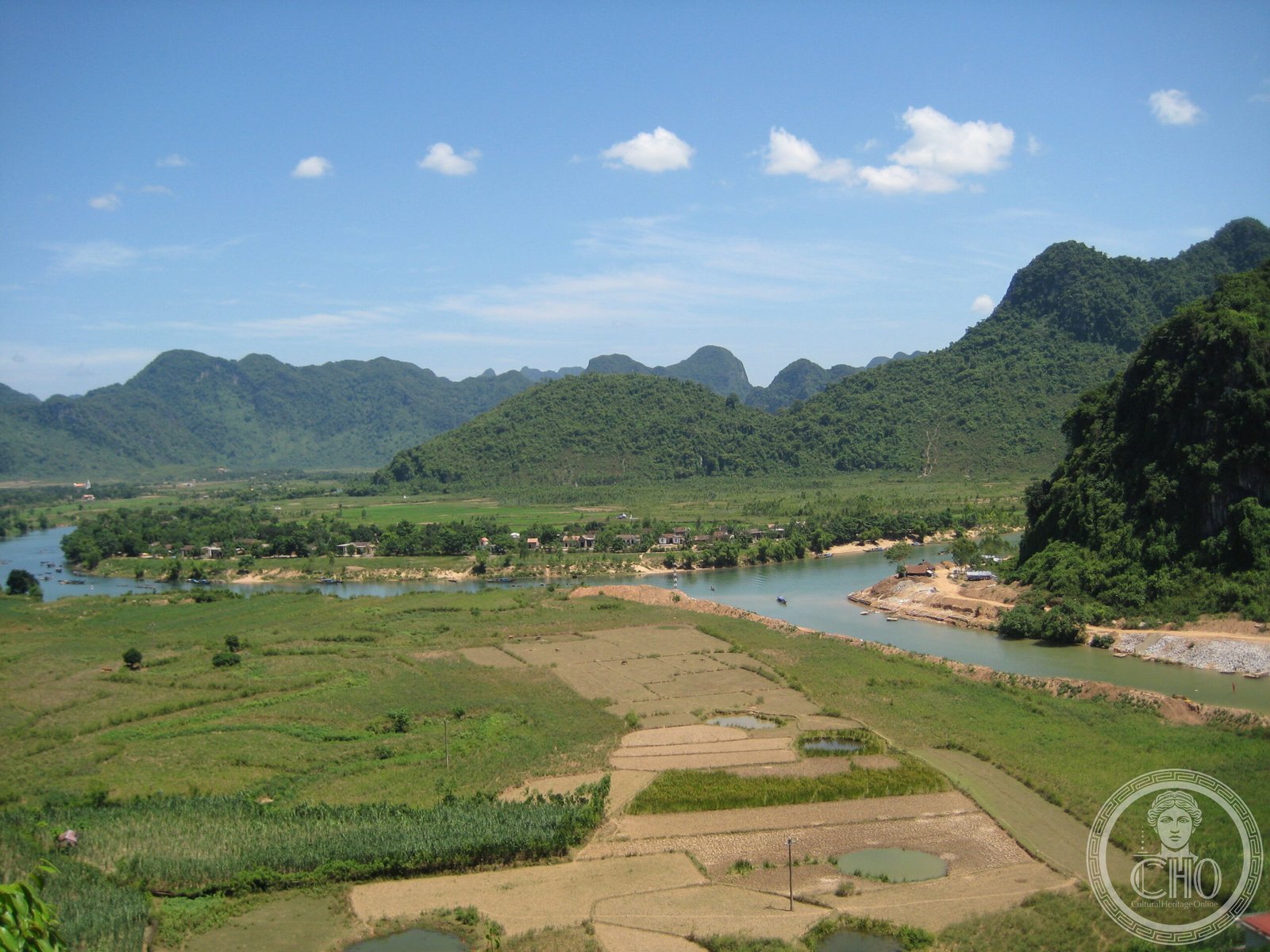
Home to the world’s largest known cave — Son Doong, a passage so vast it contains its own internal weather system and two separate jungles — Phong Nha-Ke Bang is a UNESCO-listed karst wilderness in central Vietnam where 400-million-year-old limestone holds over 300 surveyed cave systems.
At a glance
Phong Nha-Ke Bang National Park in Quảng Bình Province protects one of the world’s oldest and most complex karst systems — a mountain landscape of ancient limestone towers, underground rivers, and cave passages that took 400 million years to form. UNESCO first inscribed the park in 2003 and extended the boundary in 2015. Its scientific importance is exceptional: over 300 caves and grottoes have been surveyed, including Son Doong, the world’s largest known cave by volume, and Phong Nha Cave, the longest navigable river cave in Asia. The park also carries layers of human history from Cham Hindu temples to Ho Chi Minh Trail supply routes.
Key facts
- UNESCO inscription: 2003 (extended 2015) — Mixed Natural and Cultural WHS
- Karst age: approx. 400 million years (one of the world’s oldest karst formations)
- Surveyed caves: 300+
- Son Doong: World’s largest known cave by volume — 5 km long, 200 m high, 150 m wide
- Phong Nha Cave: 7.7 km of navigable river passage — longest accessible river cave in Asia
- Province: Quảng Bình, North Central Coast, Vietnam
- Gateway: Phong Nha village (approx. 50 km from Đồng Hới city)
- Historical layers: Cham temples (9th–10th c. CE) + Ho Chi Minh Trail use (1965–1975)
History and significance
The limestone of Phong Nha-Ke Bang began forming approximately 400 million years ago during the Devonian period, when this region lay beneath a shallow tropical sea. The dissolution of carbonate rock by weakly acidic groundwater over geological time created a labyrinth of passages, chambers, and sinkholes that remains only partially explored. Vietnamese cavers and the British Cave Research Association have been the principal surveyors; the most celebrated discovery came in 2009, when a team led by Howard Limbert confirmed that a cave entrance found by a local farmer in 1991 led to a passage of unprecedented dimensions — Son Doong, the world’s largest cave.
Human presence in the region is ancient. Cham Hindu temples dating to the 9th–10th centuries CE survive within the park, testimony to the Cham Kingdom’s northern extent along what is now the Vietnamese coast. In the 20th century the park’s cave systems acquired an entirely different significance: during the Vietnam War (1965–1975), dozens of cave passages were used by North Vietnamese Army units and the Viet Cong as shelters, hospitals, storage depots, and supply-convoy waypoints on the Ho Chi Minh Trail. Several caves still contain traces of this use — rusted equipment, blackened walls from cooking fires, carved inscriptions.
The park’s biodiversity is also exceptional. Species found nowhere else include several new-to-science mammals and amphibians discovered during post-1986 surveys, as the previously closed region became accessible after the Doi Moi reforms.
What you see
Son Doong Cave is the park’s most extraordinary feature, but access is strictly limited: a maximum of 800 visitors per year (in groups of approximately 10), via a licensed multi-day expedition with Oxalis Adventure that involves jungle trekking, river crossings, and camping inside the cave. Inside, the passage is high enough to contain a 40-storey building; where the roof has collapsed, dolines (skylights) admit sunlight that has enabled two internal jungle ecosystems to develop, each unique in the world. Calcite formations — pearls, flowstones, and columns — reach scales unknown in any other cave.
Phong Nha Cave is the most accessible significant cave: visitors travel 7.7 km by boat along an underground river, through chambers of stalactites and stalagmites, to a dry cave section containing some of the most dramatic speleothem formations in Vietnam.
Paradise Cave (Thiên Đường) requires a boardwalk trek through jungle before descending 83 steps into a 31-km surveyed dry cave of extraordinary height and formation density — the most visually spectacular of the accessible caves.
Hang En (the world’s third-largest cave) can be reached only via a 2-night jungle trek organised through licensed operators; the cave houses a colony of thousands of swiftlets whose calls echo through a passage large enough to contain entire hillsides.
Practical information
- Base: Phong Nha village (Son River; 50 km from Đồng Hới); accommodation ranges from homestays to eco-lodges
- Son Doong tours: Oxalis Adventure (sole licensed operator, advance booking essential, very limited spots per year)
- Phong Nha Cave: Boat tours available daily from Phong Nha village pier; no advance booking required for most groups
- Paradise Cave (Thiên Đường): Day trip possible from Phong Nha; independent entry with park ticket
- Best season: February–August (dry season; Sept–Jan has flooding risk)
- Getting to Đồng Hới: Domestic flights from Hanoi (1h) and Ho Chi Minh City (1.5h); also on the Reunification Express railway
Getting there
Đồng Hới Airport (VDH) receives domestic flights from Hanoi (approx. 1 hour) and Ho Chi Minh City (approx. 1.5 hours) on Vietnam Airlines, Bamboo Airways, and VietJet. The train from Hanoi takes approximately 6–8 hours on the Reunification Express. From Đồng Hới, the town of Phong Nha is approximately 50 km by road (45–60 minutes by car or motorbike). Buses run between Đồng Hới and Phong Nha several times daily. Bicycle hire is popular for local exploration around the village once you arrive.
Nearby
- Đồng Hới city (50 km south): the provincial capital with the nearest airport and full services
- Hué (approx. 200 km south): imperial capital, UNESCO-inscribed citadel and royal tombs — a full day’s journey south
- Vinh Moc Tunnels (approx. 90 km south): a complete underground village dug during the Vietnam War, preserved as a memorial
- 17th Parallel / Hiền Lương Bridge (approx. 80 km south): the former DMZ demarcation line across the Bến Hải River
Sources
- UNESCO World Heritage List — Phong Nha-Ke Bang National Park (2003, extended 2015)
- British Cave Research Association — Son Doong survey reports (2009–present)
- Oxalis Adventure — oxalis.com.vn
- Wikipedia — Phong Nha-Ke Bang National Park
Find it on the map
See this place and what’s around it →
📷 Become a Cultural Heritage Online photographer
Share your photos of places: they stay published under your name as the author. The more they're seen, the more you get noticed — and soon a contest will reward the most appreciated photos.
Log in or sign up free to add a photo