
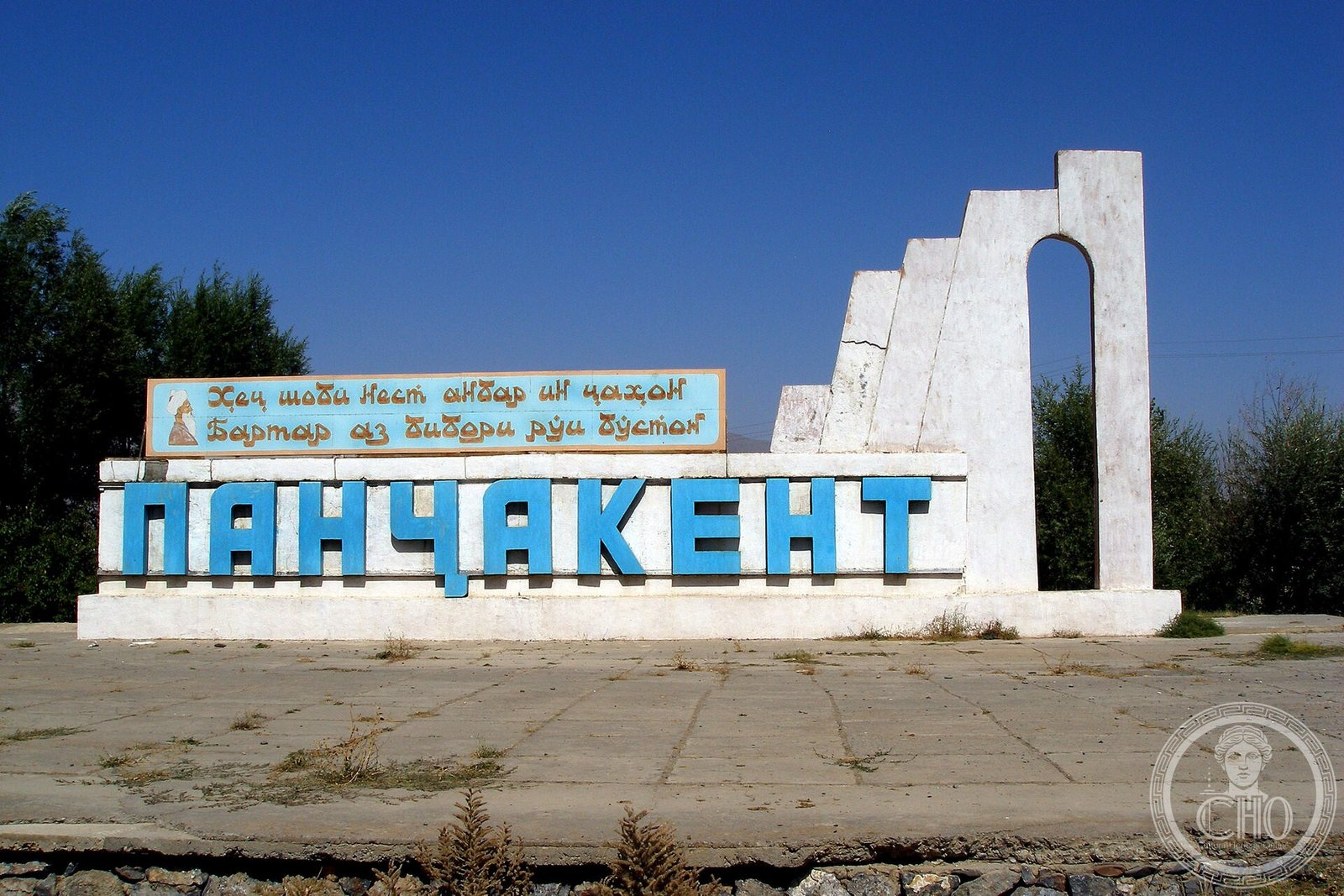
On a plateau above the Zerafshan River in present-day Tajikistan, the ruins of this Sogdian city preserve the largest and richest body of pre-Islamic Central Asian painting surviving anywhere in the world — a vivid window into the culture of the merchant civilisation that connected China to Byzantium along the Silk Road.
At a glance
Pendjikent (also transliterated as Panjikent or Panjakent) was the capital of a minor Sogdian principality that lasted approximately 200 years before being burned and abandoned following the Arab conquest of 722 AD. In itself this would make it a moderately significant site; what elevates it to one of the most important pre-Islamic discoveries of the 20th century is that its abandonment was sudden and complete, and its preservation by the dry Central Asian climate so thorough, that the interior walls of private houses, temples, and public buildings survived with their painted plaster murals essentially intact beneath collapsed debris. The Sogdians were the great merchant people of the ancient Silk Road, and their murals at Pendjikent are the primary visual record of their distinctive civilisation. Excavated since 1946, the site today shows the grid-plan layout of the Sogdian city at the moment of its destruction.
Key facts
- Location: 65 km east of Samarkand, on the Zerafshan River, Sughd Region, Tajikistan
- Period: c. 500-722 AD (Sogdian; destroyed and abandoned after Arab conquest)
- Culture: Sogdian civilisation; Zoroastrian with Buddhist and Hellenistic influences
- Main significance: Largest surviving body of pre-Islamic Sogdian wall painting in the world
- Murals now in: Hermitage Museum (St Petersburg) and National Museum of Tajikistan (Dushanbe)
- Excavation history: Soviet and Tajik archaeological expeditions since 1946, ongoing
- Access: Open ruins; entry via Panjakent town, approximately 3 hours from Dushanbe by car or shared taxi
History
The Sogdians were the dominant trading people of the ancient Silk Road, operating as the commercial intermediaries between China and the Roman and Byzantine worlds from roughly the 4th to the 8th century AD. Their home territory was the Zerafshan Valley (present-day Tajikistan and Uzbekistan), and they established merchant colonies as far east as Tang Dynasty China, where Sogdian script contributed to the development of several Central Asian writing systems. At their home cities — Samarkand, Bukhara, Pendjikent — Sogdian aristocrats and wealthy merchants commissioned elaborate painted decorations for their private halls and temples, depicting scenes from their mythology, epic literature, and daily aristocratic life. Pendjikent, as the capital of a small but prosperous principality, accumulated an exceptional concentration of these paintings over its roughly two centuries of flourishing.
The Arab conquest of 722 AD brought Pendjikent's history to an abrupt end: the city was burned, and its inhabitants fled or were killed. The ruins were not excavated systematically until a Soviet expedition in 1946 began the painstaking removal of collapsed debris to reveal the painted walls beneath. The murals proved to be extraordinary in both quantity and quality: multi-armed Sogdian deities, banquet scenes with aristocratic figures in silk robes drinking wine from gold vessels, epic narrative scenes (some identified as episodes from pre-Islamic Iranian oral mythology), and battle scenes with detailed armour and weaponry. Stylistically, the paintings show a distinctive fusion of Zoroastrian iconography, Buddhist compositional conventions, and Hellenistic figural traditions inherited from the post-Alexandrian Greek kingdoms of Bactria.
The geopolitical significance of Pendjikent extends beyond art history: the Sogdian commercial network that it exemplifies was the primary mechanism by which technologies, religions (Buddhism, Christianity, Manichaeism, Islam), and artistic conventions travelled between East Asia and the Mediterranean world in Late Antiquity. The silk in Byzantine churches, the Chinese taste for Western glass and gold, the spread of Buddhism to Central Asia — all passed through Sogdian hands and along routes that Pendjikent's merchants travelled.
What you see today
The ruins of Pendjikent extend over a plateau above the modern town of Panjakent, some 2 km from the town centre. The site is open and unroofed, which means the fragile painted plaster that once adorned the walls has long since been removed to museums; what remains is the structural skeleton of the Sogdian city: the grid of streets, the footprints of private houses (some with multiple rooms and identifiable hearths and storage areas), the two principal temples on the city's western end, the palace complex, and the bazaar area. The scale of the city is surprisingly domestic — Pendjikent was a merchant town, not a great imperial capital, and its human scale communicates the reality of Silk Road commerce far more directly than the monumental ruins of larger sites.
The on-site museum in Panjakent displays copies of several murals in context; the originals are in the Hermitage's Central Asian collection (Rooms 46-50) and in the Dushanbe National Museum. Both museum collections are essential viewing for anyone who wants to understand what Pendjikent actually looked like in its prime; the ruins alone, without the murals, give only a partial picture of one of the most visually rich urban cultures of the pre-Islamic world.
Practical information
- Entry: Small fee at the site gate; combined ticket with the local museum available
- Opening hours: Generally open daily during daylight hours; confirm locally in Panjakent
- Guides: English-speaking guides available in Panjakent (arrange through local guesthouses)
- Best time to visit: April-June and September-October (mild weather; July-August is very hot)
- Combining with museums: Allow a full day for site + Panjakent museum; the Hermitage collection requires a separate trip to St Petersburg
- Accommodation: Guesthouses and small hotels in Panjakent town
Getting there
Panjakent is approximately 65 km east of Samarkand (Uzbekistan) via the Zerafshan valley road, and approximately 270 km from Dushanbe (Tajikistan's capital) by road. The crossing from Uzbekistan to Tajikistan at this border point requires the appropriate visas; both countries now offer e-visa systems. From Dushanbe, shared taxis depart from the Korvon bazaar and take approximately 3 hours. From Samarkand, the border crossing at Jartepa takes approximately 1.5 hours to Panjakent. No direct rail connection; the nearest airports are Samarkand (Uzbekistan) and Khujand (Tajikistan, approximately 200 km northwest).
Nearby heritage
- Afrasiab (ancient Samarkand) (Uzbekistan, 65 km west) — the pre-Islamic city of Samarkand, with its own extraordinary Sogdian murals in the Afrasiab Museum on site; UNESCO WHS as part of the Samarkand ensemble
- Shah-i-Zinda necropolis (Samarkand) — exceptional 14th-15th century Islamic tilework, a direct successor in the same decorative tradition
- Khujand Citadel (Tajikistan, 200 km northwest) — Sogdian and later Islamic fortification at the original Alexandria Eschate founded by Alexander the Great
Sources
- Marshak, B. I. (2002). Legends, Tales and Fables in the Art of Sogdiana. Bibliotheca Persica Press.
- Azarpay, G. (1981). Sogdian Painting: The Pictorial Epic in Oriental Art. University of California Press.
- Grenet, F. and de la Vaissiere, E. (2002). The Last Days of Panjikent. Silk Road Art and Archaeology, 8.
- Hermitage Museum — Central Asian collection, Rooms 46-50, St Petersburg.
- Wikipedia — “Panjakent” (accessed June 2026).
Find it on the map
See this place and what’s around it →📷 Become a Cultural Heritage Online photographer
Share your photos of places: they stay published under your name as the author. The more they're seen, the more you get noticed — and soon a contest will reward the most appreciated photos.
Log in or sign up free to add a photo