
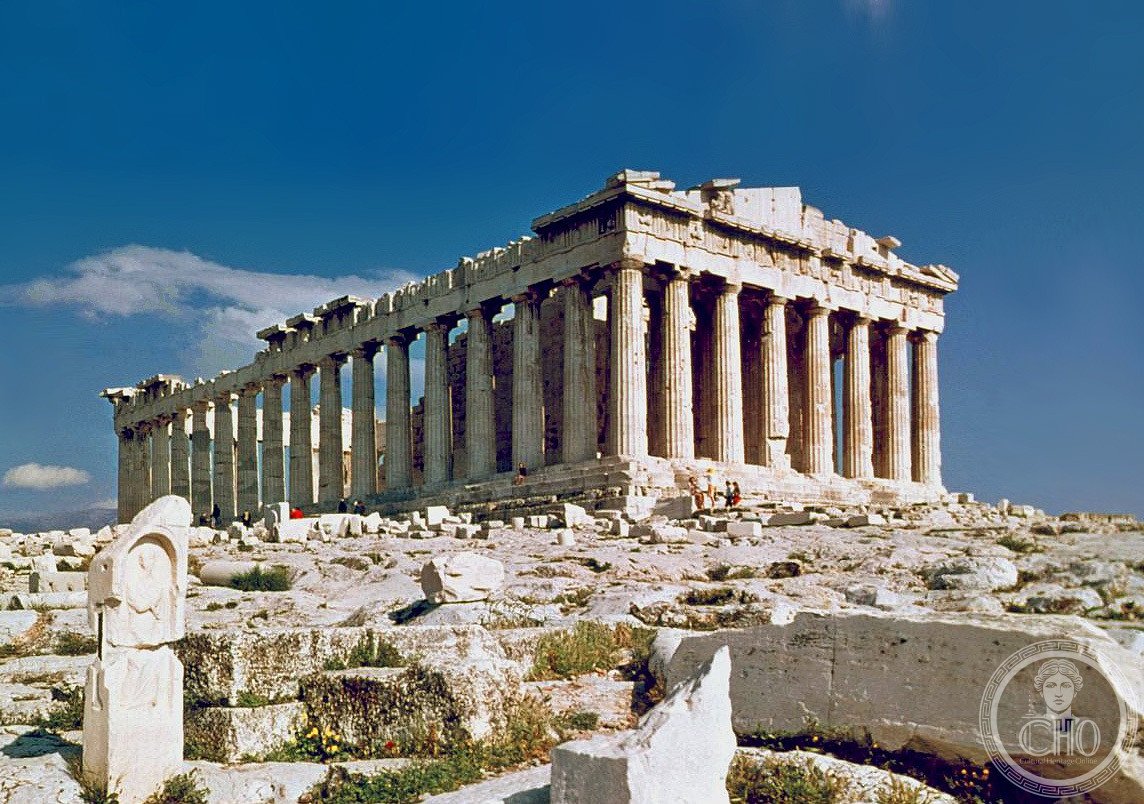
This ancient temple to Athena stands as an enduring symbol of classical Greece, Western civilisation, and democracy. Its sculptures rank among the greatest achievements of Greek art.
At a glance
A former temple on the Athenian Acropolis dedicated to the goddess Athena, the Parthenon was constructed in thanksgiving for Greek victory over Persian invaders during the Greco-Persian Wars. Beyond its role as a sacred space, it served as the city treasury and embodied the architectural and artistic aspirations of classical Athens.
History
Construction began in 447 BC when the Delian League stood at peak power. The main structure was completed in 438 BC, with decorative work continuing until 432 BC. The building later served as the Delian League treasury before becoming part of the Athenian Empire.
In the final decade of the 6th century AD, the Parthenon was converted into a Christian church dedicated to the Virgin Mary. Following the Ottoman conquest in the mid-15th century, it became a mosque. During the 1687 siege of the Acropolis in the Morean War, a Venetian bomb struck the building—then used by the Ottomans as a munitions dump—causing severe damage.
From 1800 to 1803, the 7th Earl of Elgin controversially removed many surviving sculptures, which were subsequently shipped to England as the Elgin Marbles. Since 1975, large-scale restoration projects have worked to preserve remaining artefacts and ensure structural stability.
What you see
The Parthenon exemplifies classical Greek temple design. Its decorative sculptures are considered among the high points of classical Greek art, showcasing the technical mastery and aesthetic refinement of the period.
Cultural significance
The Parthenon remains an enduring symbol of ancient Greece and Western civilisation, representing democratic ideals and artistic achievement. Its influence on architecture and culture extends across centuries and continents, making it one of antiquity’s most recognisable structures.
Key facts
- Country: Greece
- City: Athens
- Coordinates: 37.9715, 23.7266
- Built: 447–438 BC (main structure); decorations completed 432 BC
- Dedicated to: Athena
Practical information & getting there
The Parthenon is located on the Acropolis in central Athens. Consult official sources for current opening hours, admission fees, and guided tour options.
Sources & resources
- Parthenon – Wikipedia
- Cultural Heritage Online
Find it on the map
See this place and what’s around it →
📷 Become a Cultural Heritage Online photographer
Share your photos of places: they stay published under your name as the author. The more they're seen, the more you get noticed — and soon a contest will reward the most appreciated photos.
Log in or sign up free to add a photoIs this page about you?
This page is read by travellers and heritage enthusiasts who find it on Google. Tell us how you are connected to this place and we will take it from there.