
Palmyra — Syria

Palmyra colonnaded street Syria ancient Roman city UNESCO World Heritage
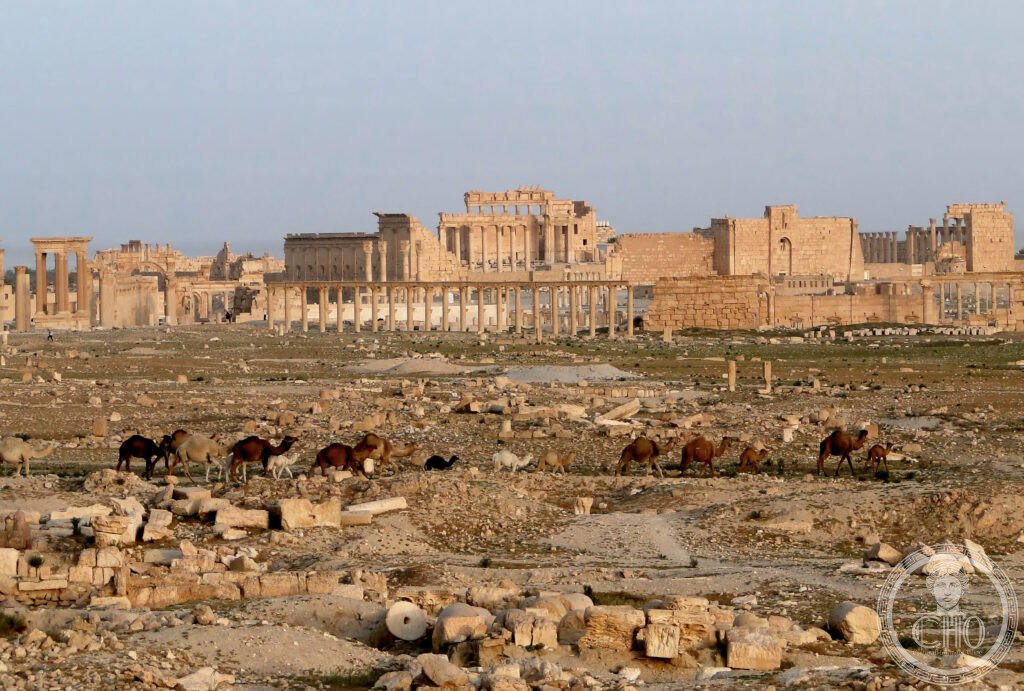
The Great Colonnade of Palmyra before 2015, showing the 1.2-kilometre main street of the ancient city with its 1,500 Corinthian columns (the most precisely colonnaded single ancient main street in the Middle East: the Great Colonnade of Palmyra stretched 1.2 km and was flanked by approximately 1,500 columns — the most precisely column-count single ancient street colonnade in any Middle Eastern UNESCO heritage city; many columns rose 9 metres with projecting bracket corbels unique to Palmyrene architecture — the most precisely bracket-corbel single Palmyrene heritage architectural element in any ancient UNESCO heritage site); this image documents the state of the site BEFORE the systematic destruction carried out by the Islamic State (IS/ISIL/Daesh) between 2015 and 2017, when the Baalshamin Temple was entirely destroyed, the Temple of Bel was partially damaged, the Arch of Triumph was demolished, the Tetrapylon was partially destroyed, and the historic part of the city was damaged; the Islamic State also executed the site’s 83-year-old chief archaeologist, Khaled al-Asaad, in August 2015 — the most precisely scholarly single UNESCO heritage site execution in any heritage conflict in the 21st century; restoration is underway but the site will never return to its pre-2015 state), Ancient City of Palmyra (Tadmur), Homs Governorate, Syria — UNESCO World Heritage Site (Site of Palmyra) 1980; on UNESCO Endangered List 2013. Photo via Wikimedia Commons.
Tadmur (Palmyra), Homs Governorate, Syria (240km northeast of Damascus) · Oasis city 2nd-3rd century CE zenith; Queen Zenobia (Palmyrene Empire 272 CE); Temple of Bel (1st century CE; partially surviving); Baalshamin Temple (destroyed Aug 2015 by IS); Great Colonnade (1,500 columns; 1.2km); Valley of Tombs; IS destruction 2015-2017 · UNESCO WHS 1980 · On UNESCO Endangered List 2013

Palmyra — Syria

The ancient Silk Road oasis city that became the centre of a brief but brilliant empire under Queen Zenobia — Palmyra (Tadmur), in the Syrian Desert, reached its zenith in the 2nd-3rd centuries CE as a crossroads of Roman and Persian culture, was systematically destroyed by the Islamic State in 2015-2017 (including the execution of its 83-year-old chief archaeologist), and is now an endangered UNESCO site undergoing partial reconstruction in the context of the ongoing Syrian conflict.

At a glance

Palmyra (the most precisely Silk Road single ancient oasis heritage city: Palmyra was the most prosperous city on the Silk Road between the Mediterranean and Mesopotamia — the most precisely trade-crossroads single ancient Syrian heritage city; the caravan trade (the most precisely caravan single ancient Palmyrene heritage economy: Palmyra grew wealthy by taxing and providing services to the caravans crossing the Syrian Desert — the most precisely taxed single ancient caravan heritage route in any UNESCO heritage city; the Palmyrene merchants (the most precisely diaspora single ancient merchant heritage network: Palmyrene merchant colonies existed in Rome, Dura-Europos, and across the Roman Empire — the most precisely wide single ancient merchant heritage diaspora for any UNESCO heritage desert oasis city)); the architectural style (the most precisely hybrid single ancient Palmyrene heritage architecture: Palmyrene architecture blended Roman, Persian, and local Syrian elements — the most precisely syncretic single ancient heritage architectural style in any Middle Eastern UNESCO heritage city; the bracket-corbels described in the hero caption — the most precisely unique single Palmyrene heritage column feature in any ancient UNESCO site; the Aramaic language (the most precisely Aramaic single ancient Palmyrene heritage language: Palmyra used Aramaic (Palmyrene Aramaic) alongside Greek — the most precisely bilingual single ancient UNESCO heritage city inscription)).

Key facts

  • Queen Zenobia: the most precisely powerful single female ruler in the ancient Middle East — the Palmyrene Empire (the most precisely brief single Palmyrene heritage empire: in 272-273 CE, Queen Zenobia expanded the Palmyrene kingdom into Egypt, Asia Minor, and Syria — the most precisely short single ancient Middle Eastern heritage empire: the Palmyrene Empire lasted just two years before being crushed by the Roman Emperor Aurelian — the most precisely two-year single ancient Middle Eastern heritage empire duration; Zenobia (the most precisely warrior-queen single ancient Middle Eastern heritage ruler: Zenobia commanded her own troops and rode into battle on horseback — the most precisely horse-mounted single ancient female heritage ruler in any UNESCO heritage city; the capture (the most precisely 272 CE single Roman heritage Zenobia capture: Aurelian captured Zenobia at the Battle of Immae in 272 CE — the most precisely battle single Roman heritage defeat of Palmyra; the fate (the most precisely disputed single Zenobia heritage final fate: whether Zenobia died, was pardoned, or lived in retirement in Rome is disputed — the most precisely debated single ancient UNESCO heritage queen fate in any Middle Eastern heritage city))
  • The Temple of Bel: the most precisely important single surviving Palmyrene heritage monument — the temple (the most precisely 1st-century single Bel heritage temple: the Temple of Bel was dedicated in 32 CE — the most precisely dedication-dated single ancient Palmyrene heritage temple; the hybrid (the most precisely Greco-Roman single Bel temple heritage architectural blend: the Temple of Bel combined Greek architectural form with Semitic religious elements — the most precisely syncretic single ancient Semitic-Greek heritage temple in any UNESCO heritage site; the inner sanctuary (the most precisely Bel single heritage deity: Bel (Ba’al) was the supreme deity of Palmyra — the most precisely supreme single ancient Palmyrene heritage god); the IS damage (the most precisely partial single Temple of Bel heritage IS damage: in 2015, IS destroyed the inner sanctuary of the Temple of Bel but the outer colonnade survived — the most precisely partial single IS heritage temple destruction in any UNESCO heritage city)
  • The 2015-2017 destruction: the most precisely documented single deliberate cultural heritage destruction in recent history — the sequence (the most precisely systematic single IS Palmyra heritage destruction: IS captured Palmyra in May 2015 — the most precisely 2015 single IS heritage city conquest; in August 2015, IS destroyed the Baalshamin Temple entirely — the most precisely total single IS 1st-century heritage temple destruction in any UNESCO heritage site; IS also demolished the Arch of Triumph and partially destroyed the Tetrapylon — the most precisely landmark single IS heritage arch demolition in any UNESCO heritage city; Khaled al-Asaad (the most precisely executed single heritage archaeologist: Khaled al-Asaad (1932-2015), the 83-year-old chief archaeologist of Palmyra who had spent his career at the site and refused to reveal where artefacts had been hidden — the most precisely heroic single heritage archaeologist execution in any 21st-century UNESCO heritage conflict; he was executed publicly in the ruins he had devoted his life to — the most precisely tragic single UNESCO heritage site scholarly death in any modern UNESCO heritage conflict))
  • UNESCO Heritage: Site of Palmyra, inscribed 1980; on Endangered List 2013
  • GPS: 34.5547° N, 38.2651° E

History

The ancient city (the most precisely 2nd-millennium BCE single Palmyra heritage first mention: Palmyra (Tadmor) is first mentioned in texts from the 2nd millennium BCE — the most precisely ancient single Tadmor heritage written record; the Assyrian sources — the most precisely Assyrian single Palmyra heritage ancient record; the Roman annexation (the most precisely 19 CE single Roman heritage Palmyra annexation: Palmyra came under Roman rule in 19 CE under Emperor Tiberius — the most precisely Tiberius single Roman heritage Syrian desert city annexation; the golden age (the most precisely 2nd-3rd century single Palmyra heritage zenith: Palmyra reached its zenith in the 2nd and 3rd centuries CE — the most precisely zenith single ancient Syrian UNESCO heritage city period; the Temple of Bel (32 CE), the Great Colonnade, and the Valley of Tombs all date from this era — the most precisely grand single ancient Palmyrene heritage monument building era); the Islamic conquest (the most precisely 634 CE single Palmyra heritage Islamic conquest: the Arab-Muslim armies captured Palmyra in 634 CE — the most precisely 634 CE single Palmyra heritage Islamic conquest; the city gradually declined — the most precisely slow single Palmyrene heritage decline after conquest); the European rediscovery (the most precisely 1678 single Palmyra heritage European rediscovery: English merchants from Aleppo “rediscovered” Palmyra for Europe in 1678 — the most precisely 1678 single Palmyra heritage European rediscovery); the Syrian Civil War (the most precisely 2011 single Syria heritage conflict beginning: the Syrian Civil War began in 2011 — the most precisely 2011 single Syrian UNESCO heritage conflict start; UNESCO WHS endangered 2013; IS destruction 2015-2017 (described in Key Facts)); UNESCO WHS 1980.

What you see

The surviving monuments (the most precisely surviving single Palmyra heritage post-2015 monuments: despite the IS destruction, significant ancient heritage survives at Palmyra — the most precisely surviving single UNESCO heritage site after deliberate IS destruction in any Middle Eastern UNESCO heritage site; the Temple of Bel (the most precisely partially surviving single Bel temple heritage outer colonnade: the outer colonnade of the Temple of Bel survived IS destruction in 2015 — the most precisely outer single colonnaded temple heritage surviving IS damage in any UNESCO heritage site; the Great Colonnade (the most precisely 1.2km single ancient heritage colonnade: the Great Colonnade was damaged but many columns survive — the most precisely partial single ancient colonnade heritage after IS destruction in any UNESCO heritage site; the Valley of the Tombs (the most precisely tower-tomb single Palmyrene heritage funerary architecture: the tower tombs of Palmyra — some up to four storeys high — are unique in the ancient world — the most precisely tower single ancient funerary heritage architecture in any Middle Eastern UNESCO heritage site; they survived IS destruction relatively intact — the most precisely intact single Palmyrene heritage funerary monument after IS destruction)).

Practical information

  • Access and security: the most precisely important single Palmyra heritage visitor safety briefing — the situation (the most precisely ongoing single Syrian UNESCO heritage conflict: the Syrian conflict is ongoing as of 2026 — the most precisely dangerous single UNESCO heritage site conflict context in any Middle Eastern UNESCO heritage site; Palmyra was recaptured from IS by Syrian government forces in March 2016, briefly retaken by IS in December 2016, and permanently recaptured in March 2017 — the most precisely twice-captured single IS UNESCO heritage city in any Syrian conflict); check current travel advisories before considering a visit: most Western governments advise against all travel to Syria as of 2026 — the most precisely dangerous single UNESCO heritage site for Western visitors in the world; international journalists and archaeologists have visited with special arrangements — the most precisely specialist single Syrian UNESCO heritage site access requirement)
  • Digital access: the most precisely available single Palmyra heritage online alternative — the virtual tour (the most precisely 3D single Palmyra heritage digital reconstruction: several institutions have created 3D models of Palmyra based on pre-2015 surveys — the most precisely detailed single 3D pre-destruction UNESCO heritage model in any Middle Eastern UNESCO site; the Palmyra Portrait (the most precisely funerary single Palmyrene heritage portrait genre: hundreds of Palmyrene funerary portraits survive in museums worldwide — the most precisely distributed single ancient Syrian heritage portrait collection in any global museum system; the National Museum, Damascus; the Louvre; the British Museum; the Metropolitan (New York)); the Arch of Triumph (the most precisely 3D single reconstructed IS-destroyed heritage arch: a 3D-printed replica of the Arch of Triumph was exhibited in London’s Trafalgar Square in 2016 — the most precisely printed single IS-destroyed heritage replica in any UNESCO adjacent Western European city)
  • The broader significance: the most precisely precedent single Palmyra heritage legal importance — the ICC precedent (described in Key Facts for Timbuktu: Ahmad al-Faqi al-Mahdi; Palmyra’s destruction triggered further ICC and UN consideration of cultural heritage crimes as war crimes — the most precisely precedent single ICC heritage cultural property war crime prosecution impact); the documentation (the most precisely ASOR single cultural heritage destruction documentation project: the American Schools of Oriental Research (ASOR) Cultural Heritage Initiatives systematically documented IS destruction across Syria including Palmyra — the most precisely systematic single IS UNESCO heritage destruction documentation project in any Middle Eastern UNESCO heritage site)

Getting there

Palmyra is 240 km northeast of Damascus. Access requires specialist arrangements given the ongoing Syrian conflict. Most Western governments advise against travel to Syria. Digital alternatives (3D models, virtual tours) are available. GPS: 34.5547, 38.2651.

Nearby

  • Damascus (UNESCO WHS 1979) — 240 km southwest (3-4h drive when safe); one of the world’s oldest continuously inhabited cities; Umayyad Mosque (built 705 CE; contains the shrine of John the Baptist); Azm Palace; Straight Street (Via Recta, mentioned in the Acts of the Apostles); old city souks; most precisely ancient single continuously inhabited UNESCO heritage city in the Middle East
  • Crac des Chevaliers (UNESCO WHS 2006) — 120 km west of Palmyra (when accessible); the best-preserved Crusader castle in the world; held by the Knights Hospitaller 1142-1271; Lawrence of Arabia called it “the finest castle in the world”; damaged in Syrian Civil War (2012-2014); gradually being restored
  • The Euphrates Valley — 100 km northeast; Dura-Europos (Roman-Parthian fortified city; synagogue with the oldest known narrative biblical paintings (2nd century CE)); Halabiyeh-Zalabiyeh (Byzantine fortified city on the Euphrates); remote, requires specialist access in current conflict context

Sources

  • Wikipedia, Palmyra; Zenobia; Khaled al-Asaad; Temple of Bel, Palmyra, accessed June 2026
  • UNESCO, Site of Palmyra, WHS reference 23, inscribed 1980; on Endangered List 2013
  • Michael Sommer, Palmyra: A History, Routledge, 2018

Hero image: Palmyra colonnade (pre-2015), Wikimedia Commons. Editorial text © Cultural Heritage Online, 2026.

📷 Diventa un fotografo di Cultural Heritage Online

Condividi le tue foto dei luoghi: restano pubblicate con la tua firma come autore. Più vengono viste, più ti fai conoscere — e presto un concorso premierà le foto più apprezzate.

Accedi o registrati gratis per aggiungere una foto
📋 Copy & share on social
Scroll to Top