
Where the Great Eastern Steppe Survives Intact
The Landscapes of Dauria form a vast transboundary natural World Heritage Site inscribed by UNESCO in 2017, straddling the boundary between Russia's Zabaykalsky Krai and the Dornod and Khentii provinces of northeastern Mongolia. Together with the adjacent Mongol Daguur Strictly Protected Area on the Mongolian side, the site protects one of the last large expanses of the Eastern Steppe — a temperate grassland and wetland biome that once stretched unbroken from Hungary to China but survives today mainly in fragmented patches. Dauria is the best-preserved exception: a functioning steppe ecosystem at landscape scale.
The Daurian Steppe: Ecology of a Vast Grassland
The Dauria landscape encompasses three interlocking biomes — open steppe, wetland lake complexes, and forest-steppe with Mongolian oak and Siberian birch groves — that together create exceptional habitat heterogeneity. The steppe itself is characterised by feather grasses (Stipa spp.), sedges, and wormwood, maintained by a continental climate with extremely cold winters, hot summers, and annual precipitation averaging just 250–350 mm. Periodic drought cycles, lasting 30–35 years, drive massive fluctuations in lake water levels and profoundly shape wildlife populations.
The Migration of the Mongolian Gazelle
The most spectacular wildlife phenomenon of Dauria is the seasonal migration of the Mongolian gazelle (Procapra gutturosa). Dauria and the adjacent Mongolian steppe support the last viable population of this species, which once numbered in the tens of millions across Eurasia. Today approximately one to two million individuals survive, and their autumn and spring migrations across the Russian–Mongolian border through the Dauria site represent one of the great remaining mass wildlife movements on Earth, comparable in scale to the Serengeti wildebeest migration.
White-Naped Cranes and Threatened Waterfowl
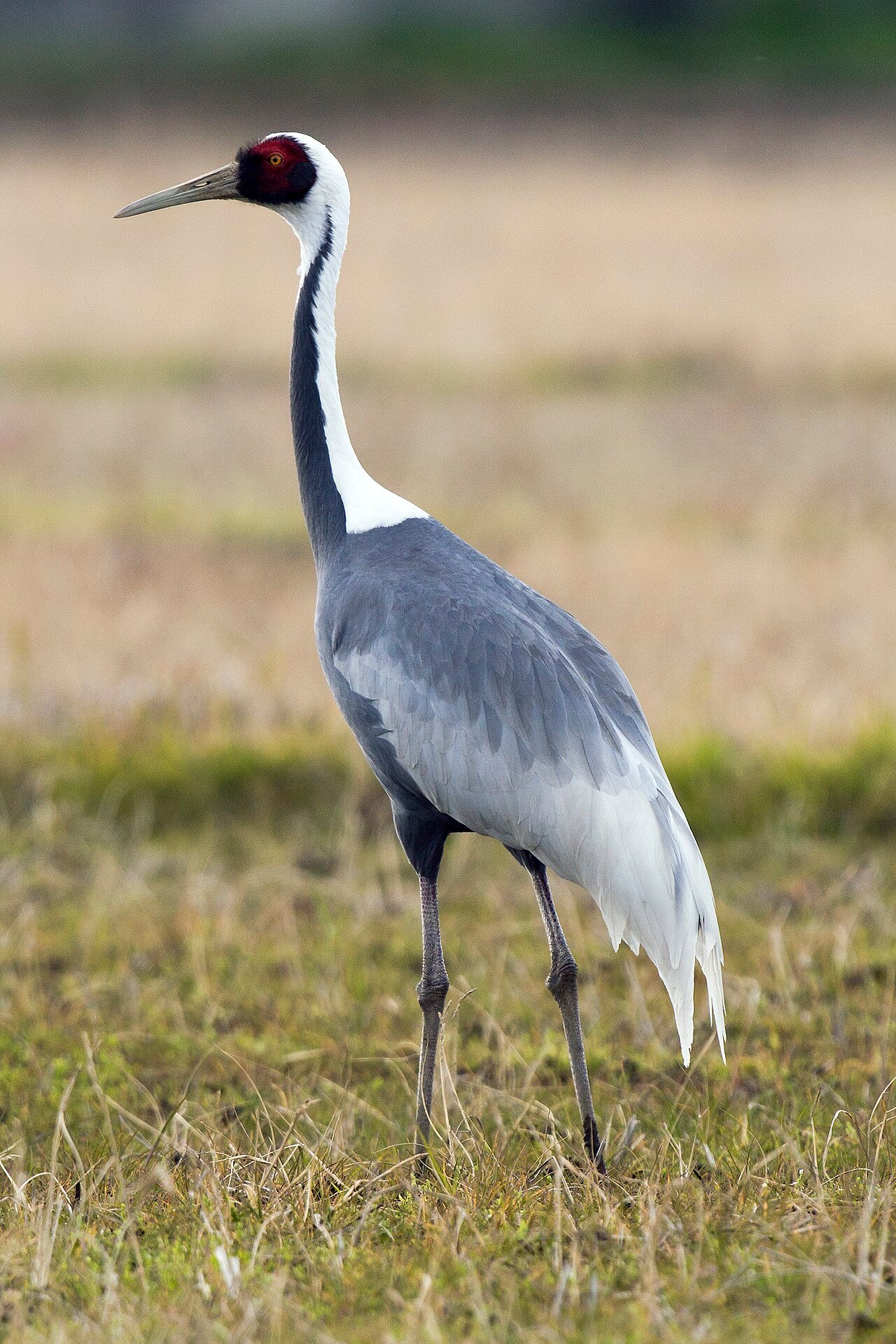
The lake complexes and wetlands of Dauria are globally critical for migratory waterbirds. The site is one of the world's most important breeding grounds for the white-naped crane (Antigone vipio), a species classified as vulnerable with a total population of around 5,700 birds. The Siberian crane, red-crowned crane, and demoiselle crane also breed or stage here. The periodic fluctuation of lake levels, driven by the climatic drought cycle, creates a dynamic mosaic of shallow and deep water habitats that sustains enormous concentrations of waterfowl during migration.
Mammal Diversity Beyond the Gazelle
Beyond the gazelle, Dauria's mammal fauna includes the Pallas's cat, the corsac fox, the steppe polecat, and the Mongolian marmot — a keystone species whose burrow systems create microhabitats used by dozens of other species including burrowing owls, snakes, and small carnivores. The Siberian roe deer and wild boar occupy the forest-steppe fringe. Wolves play an important ecological role as the primary large predator regulating ungulate densities across the steppe, and their presence is maintained within the protected area network.
Climate Sensitivity and the 30-Year Drought Cycle
Dauria's ecosystems are uniquely shaped by a multi-decadal climate oscillation that produces alternating wet and dry phases lasting approximately 30–35 years. During dry phases, shallow lakes shrink or disappear entirely, forcing wetland-dependent species to shift their distribution; during wet phases, water bodies expand and productivity surges. Climate change is now superimposing a warming trend on this natural cycle, reducing the duration and intensity of wet phases and posing an existential risk to the lake-dependent wildlife communities that make Dauria globally significant.
Transboundary Governance and Conservation
Managing a World Heritage site that straddles an international border requires close bilateral cooperation. Russia and Mongolia signed an agreement in the 1990s establishing the Dauria International Protected Area, which coordinates management planning, joint scientific monitoring, and anti-poaching patrols. The Daursky State Nature Biosphere Reserve on the Russian side and the Mongol Daguur SPA on the Mongolian side serve as the administrative anchors. Despite political fluctuations in the broader Russian–Mongolian relationship, ecological cooperation at Dauria has remained consistent.
Visiting the Daurian Landscapes
Access to Dauria is primarily from Chita in Russia's Zabaykalsky Krai, approximately 200 kilometres northwest of the reserve's main research station at Nerchinsk. Visits require coordination with the Daursky Biosphere Reserve administration. The site is not a mass tourism destination — it caters primarily to birdwatchers, wildlife photographers, and researchers. The peak wildlife season runs from late April through June (crane breeding, gazelle calving) and again from September through October (bird migration and gazelle movement). Accommodation is basic, and the journey rewards travellers seeking genuine wilderness over comfort.
Find it on the map
See this place and what’s around it →📷 Become a Cultural Heritage Online photographer
Share your photos of places: they stay published under your name as the author. The more they're seen, the more you get noticed — and soon a contest will reward the most appreciated photos.
Log in or sign up free to add a photo