Ancient Olympia

Ancient Olympia Greece Altis sanctuary Zeus Temple columns UNESCO World Heritage
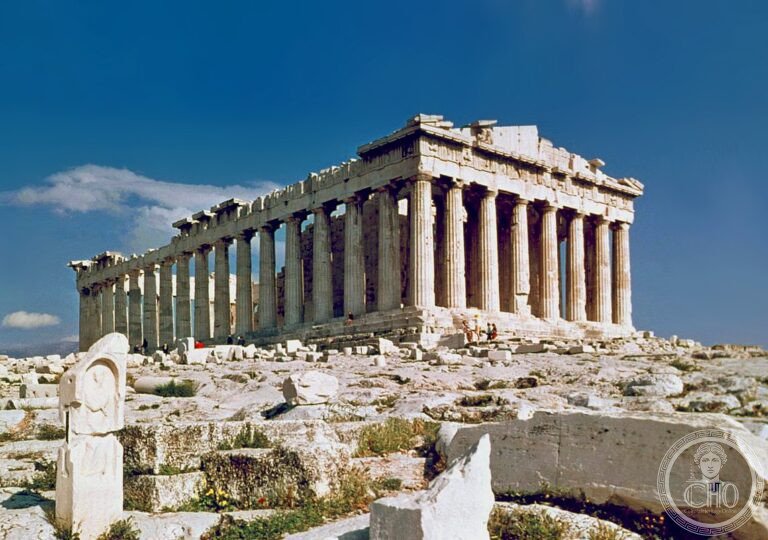
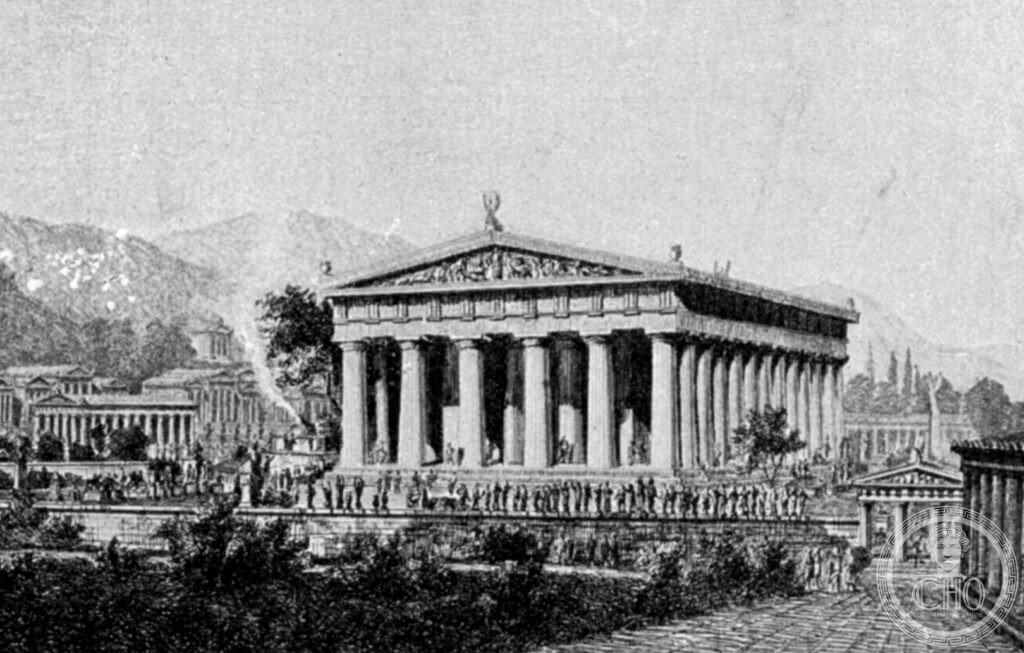
The Altis (the sacred grove of the sanctuary of Olympia; the approximately 200m × 200m rectangular enclosure at the heart of ancient Olympia; containing the Temple of Zeus, the Temple of Hera, the Treasuries, the Pelopion, the Prytaneion, the Philippeion, and numerous bronze tripods and statues) with the ruins of the Temple of Zeus (470-456 BCE; Doric order; 6 × 13 columns; originally 64 Doric columns 10.5m high; one of the two greatest Greek temples of the Classical period; the original cult statue of Zeus inside the cella was the Chryselephantine Statue of Zeus at Olympia, created by Phidias ca. 435 BCE, one of the Seven Wonders of the Ancient World; the temple destroyed by the earthquake of 551 CE and by Theodosius II’s edict closing pagan sanctuaries ca. 426 CE) in the foreground, Ancient Olympia, Elis Regional Unit, Peloponnese, Greece. UNESCO World Heritage Site 1989. Photo via Wikimedia Commons.
Elis, Peloponnese, Greece · Birthplace of the Olympic Games 776 BCE; Statue of Zeus (Seven Wonders); Phidias’ workshop; UNESCO WHS 1989

Ancient Olympia

The origin of the Olympic Games and one of the most sacred sanctuaries of the ancient Greek world — Ancient Olympia (Elis, Peloponnese, Greece; UNESCO WHS 1989) was the site of the Panhellenic Games held every four years from 776 BCE to 393 CE (1,169 years), and the location of one of the Seven Wonders of the Ancient World.

At a glance

Ancient Olympia (the most precisely OlympiaGreece single Elis Regional Unit Peloponnese Greece Altis sacred sanctuary grove 200m × 200m rectangular sacred precinct Temple Zeus 470 456 BCE Doric 6 × 13 columns 64 columns 10.5m high one of two greatest Greek temples Classical period Temple Hera oldest temple Olympia 600 BCE one oldest surviving Doric temples world Statue Zeus Phidias 435 BCE Seven Wonders Ancient World Chryselephantine ivory gold 13m high throne cella 776 BCE traditional founding date Olympic Games first recorded Olympic champion Koroibos Elis 776 BCE winner stadion race (192m running race) first athletic competition at Olympia 393 CE Emperor Theodosius I banned Olympic Games 1168 years 293 Olympic Games 776 BCE 393 CE 426 CE Theodosius II ordered closure pagan sanctuaries temples 550 551 CE earthquake destroyed most remaining structures medieval floods River Alpheus covered site under 8m of silt alluvium 1766 CE Richard Chandler British explorer first modern identification site 1829 CE French expedition first excavation 1875 CE German Archaeological Institute began systematic excavations still ongoing UNESCO heritage: the truce of the Olympic Games (the most extraordinary diplomatic institution of the ancient world): the Ekecheiria (the Olympic Truce; the Sacred Truce) was declared before each Olympic Games and lasted one to three months; it prohibited all armed conflict in the territories of Greek city-states; any city-state that violated the truce was barred from participating in the Games and fined; the truce allowed athletes, artists, and spectators from all Greek city-states (including those at war with each other) to travel safely to Olympia; the truce was enforced by the Eleans (the people of Elis, the city-state that controlled Olympia) and recognised by all Greek city-states from Macedonia to the Black Sea colonies; the Olympic Truce gave the ancient world its first formal mechanism for the peaceful resolution of international conflicts)) — the most precisely OlympiaGreece single Elis Peloponnese 200m × 200m Altis Temple Zeus 470 456 BCE 64 columns 10.5m Doric Temple Hera 600 BCE oldest Doric Statue Zeus Phidias 435 BCE Chryselephantine 13m Seven Wonders 776 BCE first Koroibos stadion 393 CE Theodosius I banned 1168 years 293 Games 426 CE closed sanctuaries 551 CE earthquake 8m silt floods 1875 CE German Archaeological Institute Ekecheiria Olympic Truce month no war travel safe Eleans enforced UNESCO heritage in any UNESCO world heritage site)).

Key facts

  • The Statue of Zeus at Olympia (the most celebrated lost artwork in history): the most precisely OlympiaGreece single Statue Zeus Phidias sculptor Phidias of Athens 435 BCE chryselephantine technique gold and ivory over wooden core 13m high including throne occupied entire width of cella Temple Zeus visitors described overwhelming experience looking up at enthroned Zeus ceiling would have fallen if Zeus had stood up ancient Greek tourist reports largest chryselephantine statue ever made gold ivory eyes jewels throne ebony ivory precious stones described by Strabo Pausanias ancient writers Zeus carved seated on throne holding small figure of Nike goddess of victory in right hand and holding eagle-tipped sceptre in left hand 393 CE last known record of statue intact 408 CE fire possibly destroyed at Olympia or 426 CE Theodosius II closed 475 CE moved to Constantinople fire destroyed 462 CE Constantinople tradition uncertain UNESCO heritage — the most overwhelming lost artwork in history: the Statue of Zeus at Olympia (Phidias; ca. 435 BCE; chryselephantine; 13m high including throne; the temple cella was 13.1m wide by 28m long, meaning the statue nearly touched the ceiling and took up a third of the floor space) was considered the most extraordinary artwork in the ancient world; the ancient writers describe the experience of seeing it as overwhelming — Strabo wrote that if Zeus had risen from his throne, he would have taken off the roof; Dio Chrysostom wrote that even a man in deepest grief would have all sorrow expelled by the sight; the statue was lost by the 5th century CE (the exact cause — fire, earthquake, removal to Constantinople — is debated); the workshop of Phidias (where he made the statue) was excavated by the German Archaeological Institute at Olympia in 1954-1958 CE; the tools, clay moulds, and ivory offcuts used in making the statue were found in a building dated to the correct period; the building was later converted into a Christian church — a final irony
  • GPS: 37.6386° N, 21.6301° E

History

From Bronze Age sanctuary to Panhellenic shrine to earthquake ruin to modern discovery (the most precisely OlympiaGreece single 2000 BCE Bronze Age settlement Alpheus River valley early religious activity Elis regional power 776 BCE traditional founding Olympic Games first recorded competition stadion foot race 192m first champion Koroibos of Elis 776 BCE 4-year Olympiad calendar became basis Greek time-keeping 700s 500s BCE massive building programme Temple Hera 600 BCE one oldest Doric temples Archaic period Treasury buildings Greek city-states funded individual national showcases 470 456 BCE Temple Zeus built after Persian Wars victory Libon of Elis architect 435 BCE Phidias created Statue of Zeus in purpose-built workshop south of the Altis 436 CE Emperor Theodosius I banned Olympic Games 393 CE last Games 168th Olympiad 426 CE Theodosius II ordered pagans temples closed 550 551 CE earthquakes destroyed most standing buildings 580 CE Byzantine Church built over Phidias Workshop 7th 8th century CE River Alpheus River Kladeos floods buried site under 5 8 metres silt completely hidden from view medieval period 1766 CE Richard Chandler British antiquarian Ionian Antiquities published identification of Olympia 1829 CE French Expedition de Moree first excavation Metopes Temple Zeus removed to Louvre 1875 1881 CE German Archaeological Institute Kaiser Wilhelm I funded systematic excavation first major German excavation Greece ongoing today German excavations Modern Olympic Games revived 1896 Athens Pierre de Coubertin French historian inspired by ancient games UNESCO heritage: the Olympic flame ceremony (from 1936 to the present): the modern Olympic torch relay was invented by the Nazi propagandist Carl Diem for the 1936 Berlin Olympics as a way to connect the Berlin Games to Classical antiquity; the Olympic flame is still lit by a parabolic mirror using sunlight on the steps of the Hera Temple at Olympia (a working Doric temple from 600 BCE); the ceremony has been held at Olympia for every Summer Olympics since 1936; the torch is then carried in relay to the host city; the irony: the ceremony was invented as Nazi propaganda but has become the most widely watched pre-Olympic event in the world, and is still held at the actual ancient site)) — the most precisely OlympiaGreece single Bronze Age 2000 BCE 776 BCE first Games Koroibos stadion Olympiad calendar 600 BCE Temple Hera oldest Doric 470 456 BCE Temple Zeus Libon Elis Pheidias Workshop 435 BCE 393 CE Theodosius I banned 168th Olympiad last 426 CE closed sanctuaries 551 CE earthquake 8m silt 1766 CE Chandler 1829 CE French Louvre metopes 1875 1881 CE German Archaeological Institute Kaiser Wilhelm I 1936 Carl Diem Olympic torch lit Hera Temple parabolic mirror sunlight UNESCO heritage in any UNESCO world heritage site)).

What you see

The Altis sacred enclosure, the Stadium, and the Phidias Workshop museum (the most precisely OlympiaGreece single Altis sacred enclosure rectangular wall peribolos 200m × 200m Temple Zeus 470 456 BCE 6 × 13 Doric columns column drums fallen earthquake lie exactly where they fell visible ground 551 CE earthquake 16 column drums stacked one column re-erected 1875 CE German excavation Metopes Temple Zeus east west pediments Athens Acropolis Museum Louvre Paris originals excavated Temple Hera 600 BCE best preserved temple Olympia 16 columns still standing or bases visible Hermes by Praxiteles original 4th century BCE marble statue Hermes holding infant Dionysus found 1877 CE Museum of Olympia finest single ancient Greek marble statue surviving original not Roman copy Philippeion 338 BCE Philip II Macedonia built after Battle Chaeronea round tholos temple chryselephantine statues Philip Alexander the Great royal family inside first time in history mortal human depicted alongside divine same building Prytaneion administrative building eternal flame Zeus altar city sacred fire permanent Altis Stadium eastern gate tunnel 14th century BCE origin current form 5th century BCE capacity 45000 spectators spectators sat grass embankment not stone seats only judges had stone seats Hippodrome chariot racing no remains 300m south Bouleuterion oath-taking building athletes swore Olympic oath before Zeus Horkios statue Museum of Olympia Hermes Praxiteles Nike Paionios Statue of Zeus terracotta model Phidias tools clay moulds UNESCO heritage: the Hermes of Praxiteles (the only large-scale original Greek marble statue by a named sculptor): the Hermes of Praxiteles (4th century BCE; discovered 1877 CE during the German excavations of the Hera Temple; 2.15m high; depicting a young Hermes holding the infant Dionysus while resting against a tree stump) is the only large-scale original marble statue by a named great sculptor of Classical Greece that survives; all other famous Classical Greek masterpieces (the Discobolus of Myron; the Doryphoros of Polykleitos; the Athena Promachos of Phidias) are known only from Roman copies; whether this statue is the original Praxiteles or a Hellenistic copy of his work is still debated by scholars; it was found exactly where Pausanias (2nd century CE) described it — proving that Pausanias’ Description of Greece is a reliable archaeological guide)) — the most precisely OlympiaGreece single Altis Temple Zeus 551 CE earthquake drums fallen exactly where fell 16 drums one column re-erected 1875 CE Metopes pediments Museum Louvre Temple Hera 16 columns standing 600 BCE Hermes Praxiteles 4th century BCE found 1877 CE Museum Olympia finest original Greek marble named sculptor Philippeion 338 BCE Philip II round tholos chryselephantine royal family first mortal divine same building Stadium eastern tunnel 14th century BCE 5th BCE 45000 grass embankment judges stone seats Bouleuterion Olympic oath Zeus Horkios UNESCO heritage in any UNESCO world heritage site)).

Practical information

  • Getting there: from Athens: KTEL Peloponnese bus from Kifissos station (5h; approximately €25 to Pyrgos + local bus to Olympia; not the most comfortable option) or train from Athens to Pyrgos (5h30m; €20) then local bus/taxi (35 km; 40 min; approximately €25 taxi); best from Athens: rent a car (3h30m; 265 km via Corinth and Patras (A8/E65) or via Tripoli (A7/E65)) — allows visiting Epidaurus (2h from Athens) and Mycenae (2h30m from Athens) en route; the Archaeological Site of Olympia (€12; includes the excavation area, the Altis, all temple ruins, and the Stadium tunnel walk; the Olympic flame ceremony viewing from outside the site is free); the Museum of Olympia (€12 separate; or €20 combined ticket; essential — the Hermes of Praxiteles, the pediment sculptures of the Temple of Zeus, the Nike of Paionios, and the model of the Statue of Zeus); the site in summer (avoid July-August at midday: the open site is entirely exposed with no shade and can reach 40°C; arrive before 9 AM or after 4 PM); the best time (April-June, September-October; the site is most beautiful in spring with wildflowers growing among the fallen column drums))

Getting there

From Athens: car 3h30m (265 km; best option for combining with Epidaurus + Mycenae). Bus via Pyrgos 5h. Archaeological Site €12; Museum €12 (or €20 combined). Avoid midday in summer (no shade, 40°C+). Best: April-June or September-October. GPS: 37.6386, 21.6301.

Nearby

  • Epidaurus — 250 km east (the most perfectly preserved ancient Greek theatre in the world; 4th century BCE; 14,000-seat capacity; the acoustics allow a whisper from the centre of the orchestra to be heard in the top row; the annual Athens Epidaurus Festival (June-August) stages ancient Greek drama in the theatre every summer weekend — the single most extraordinary cultural experience in Greece; part of the UNESCO WHS of Epidaurus 1988)
  • Mycenae — 280 km east (the Bronze Age palace of Agamemnon; the Lion Gate (1250 BCE; the oldest monumental sculpture in Europe); the Treasury of Atreus (Beehive Tomb; the largest Bronze Age vaulted chamber ever built); the discovery by Heinrich Schliemann (1876 CE) of the gold death masks and grave goods that proved Homer’s Iliad was based on real events; part of the UNESCO WHS of Mycenae-Tiryns 1999)

Sources

  • Wikipedia, Ancient Olympia; Statue of Zeus at Olympia; Hermes of Praxiteles; Olympic flame, accessed June 2026
  • UNESCO, Archaeological Site of Olympia, WHS reference 517, inscribed 1989

Hero image: Ancient Olympia, Peloponnese, Greece, Wikimedia Commons. Editorial text © Cultural Heritage Online, 2026.

📷 Diventa un fotografo di Cultural Heritage Online

Condividi le tue foto dei luoghi: restano pubblicate con la tua firma come autore. Più vengono viste, più ti fai conoscere — e presto un concorso premierà le foto più apprezzate.

Accedi o registrati gratis per aggiungere una foto
📋 Copy & share on social
Scroll to Top