
The oldest quarter of Warsaw, almost entirely rebuilt after World War II destruction, stands as the world’s first fully reconstructed historic city core.
At a glance
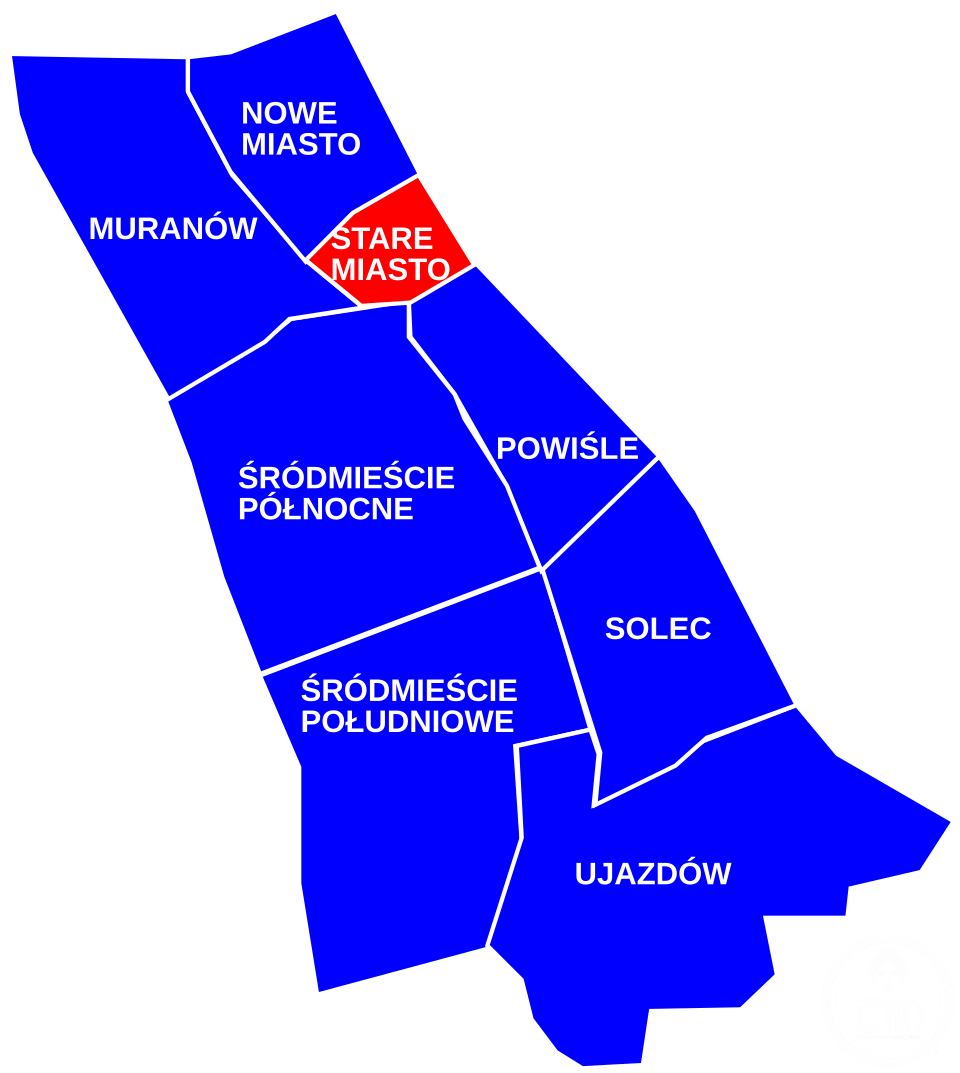
Warsaw Old Town is a UNESCO World Heritage neighbourhood within the Śródmieście district, comprising one of Europe’s most remarkable post-war urban restorations. The quarter contains the Royal Castle, St. John’s Cathedral, the Barbican fortification, and the celebrated Warsaw Mermaid Statue, predominantly featuring 17th and 18th-century architecture.
History
Settlement in this area dates to the 13th or 14th century, with formal town privileges granted around 1300. For centuries, Old Town remained the civic and cultural heart of Warsaw, accumulating monuments and public buildings that defined the city’s character.
World War II brought near-total destruction. What followed was unprecedented: a comprehensive reconstruction that became the first systematic attempt to resurrect an entire historic city core. This ambitious post-war project restored the Old Town to its former character, earning the district UNESCO World Heritage status in 1980. The Archive of Warsaw Reconstruction Office itself was recognised by UNESCO’s Memory of the World programme in 2011.
What you see
The quarter’s principal monuments include the Royal Castle, the seat of Polish power; St. John’s Cathedral, the city’s oldest church; and the Barbican, a defensive structure protecting the northern entrance. The Old Town Market Square, ringed by burgher houses, anchors the district’s public life. Most visible architecture derives from the 17th and 18th centuries, though post-war reconstruction employs meticulous scholarship to honour original forms.
Cultural significance
Warsaw Old Town embodies Poland’s resilience and cultural continuity. Its reconstruction demonstrated that destroyed heritage could be thoughtfully recovered through historical documentation and skilled craftsmanship. The district remains a symbol of Warsaw’s reinvention after catastrophic loss, and a living testimony to the importance of preserving collective memory in urban form.
Key facts
- Location: Warsaw, Poland (coordinates: 52.2497°N, 21.0122°E)
- Original settlement: 13th–14th centuries; town privileges granted c. 1300
- Primary architectural periods: 17th–18th centuries
- World War II: Nearly total destruction; subsequent reconstruction
- UNESCO World Heritage: 1980
- UNESCO Memory of the World: Archive of Warsaw Reconstruction Office, 2011
Practical information & getting there
The Old Town is located in Warsaw’s Śródmieście district and is easily accessible by public transport and foot from central Warsaw. The neighbourhood welcomes visitors year-round to explore its monuments, museums, cafés, and galleries. For current opening hours and admission details, consult official Warsaw tourism resources.
Sources & resources
Find it on the map
See this place and what’s around it →📷 Become a Cultural Heritage Online photographer
Share your photos of places: they stay published under your name as the author. The more they're seen, the more you get noticed — and soon a contest will reward the most appreciated photos.
Log in or sign up free to add a photo