
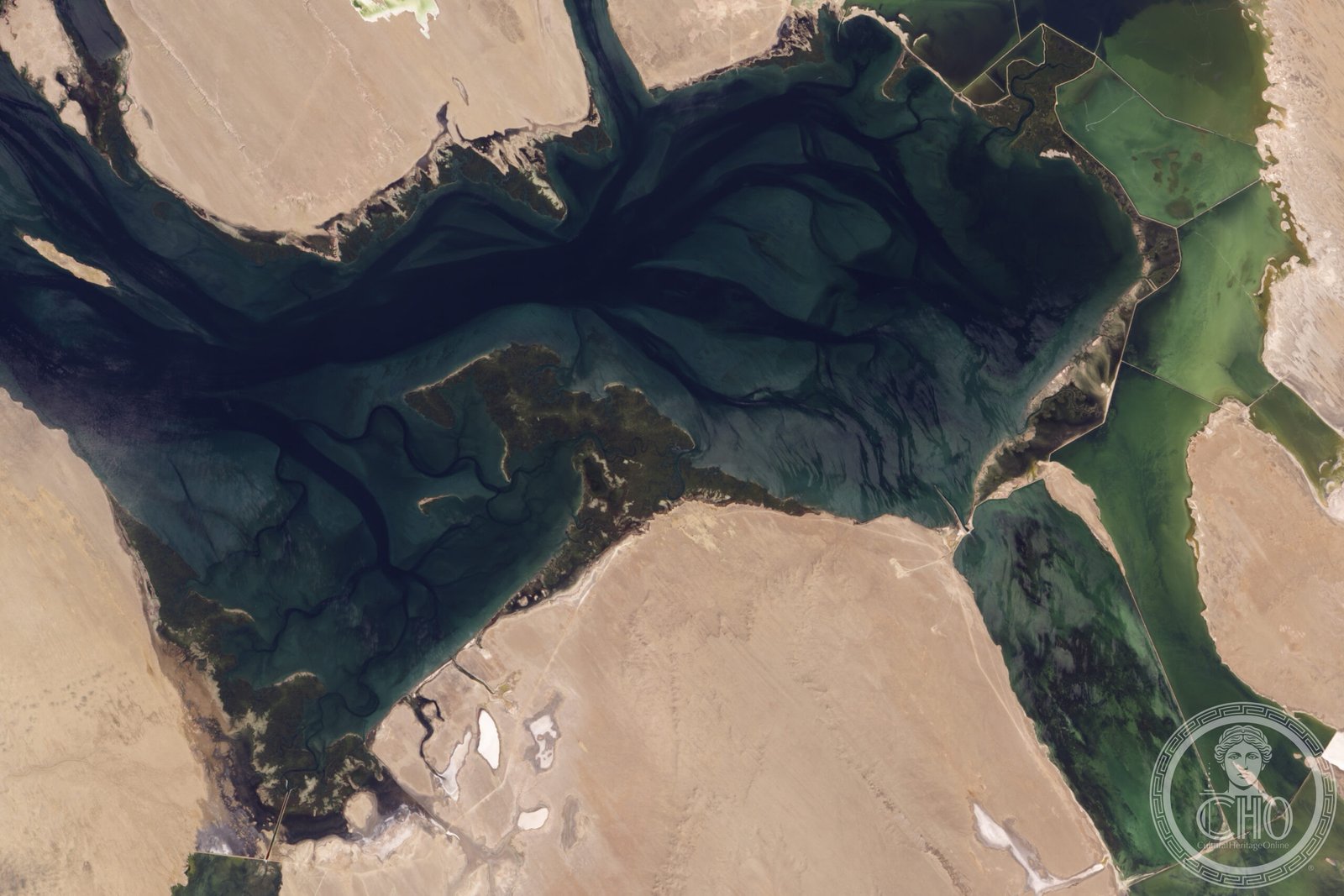
A vital Pacific coastal lagoon and critical breeding ground for gray whales, within one of Mexico’s most important marine protected areas.
At a glance
Ojo de Liebre Lagoon—the “hare eye” in Spanish, also called Scammon’s Lagoon—is a large coastal wetland in northwestern Baja California Sur. It opens to the Pacific Ocean roughly midway between the peninsula’s southern tip and the U.S. border. The lagoon anchors both the Vizcaíno Biosphere Reserve, a UNESCO World Heritage Site, and is designated a Ramsar wetlands site of international importance.
History
The lagoon has long been recognized as a critical marine habitat. Its significance grew as the whaling era declined and conservation efforts expanded in the twentieth century. The site is now actively managed to balance ecological preservation with limited, regulated human activity.
What you see
This is a landscape of water, salt, and wildlife rather than built monuments. The lagoon hosts the world’s largest commercial saltworks plant, a sprawling industrial facility visible across the shallow waters. Beyond the industrial zone, vast tidal flats, mangrove shorelines, and open water create a dynamic ecosystem where marine life congregates seasonally.
Cultural significance
Ojo de Liebre holds international ecological importance as one of the Pacific’s premier marine mammal sanctuaries. Gray whales migrate thousands of miles annually to breed and winter here—a phenomenon that draws scientists and careful observers worldwide. The lagoon also supports four endangered marine turtle species, California sea lions, northern elephant seals, harbor seals, and blue whales. Waterfowl find critical winter refuge in its waters. Tourism, once a threat to the whales, is now strictly controlled to protect breeding populations and natural rhythms.
Key facts
- Location: Mulegé Municipality, Baja California Sur, Mexico
- Coordinates: 27.75°N, 114.25°W
- UNESCO World Heritage Site: Vizcaíno Biosphere Reserve
- Ramsar Wetlands Site designation
- Home to the world’s largest commercial saltworks operation
- Primary breeding and wintering ground for Pacific gray whales
Practical information & getting there
The lagoon lies near Guerrero Negro, accessible by road through northwestern Baja California. Access to sensitive breeding areas is restricted and regulated by reserve authorities to protect marine mammals during critical reproductive periods. Contact local conservation offices or the Vizcaíno Biosphere Reserve administration before planning visits. Viewing opportunities exist from designated areas outside core habitat zones.
Sources & resources
Find it on the map
See this place and what’s around it →📷 Become a Cultural Heritage Online photographer
Share your photos of places: they stay published under your name as the author. The more they're seen, the more you get noticed — and soon a contest will reward the most appreciated photos.
Log in or sign up free to add a photoIs this page about you?
This page is read by travellers and heritage enthusiasts who find it on Google. Tell us how you are connected to this place and we will take it from there.