
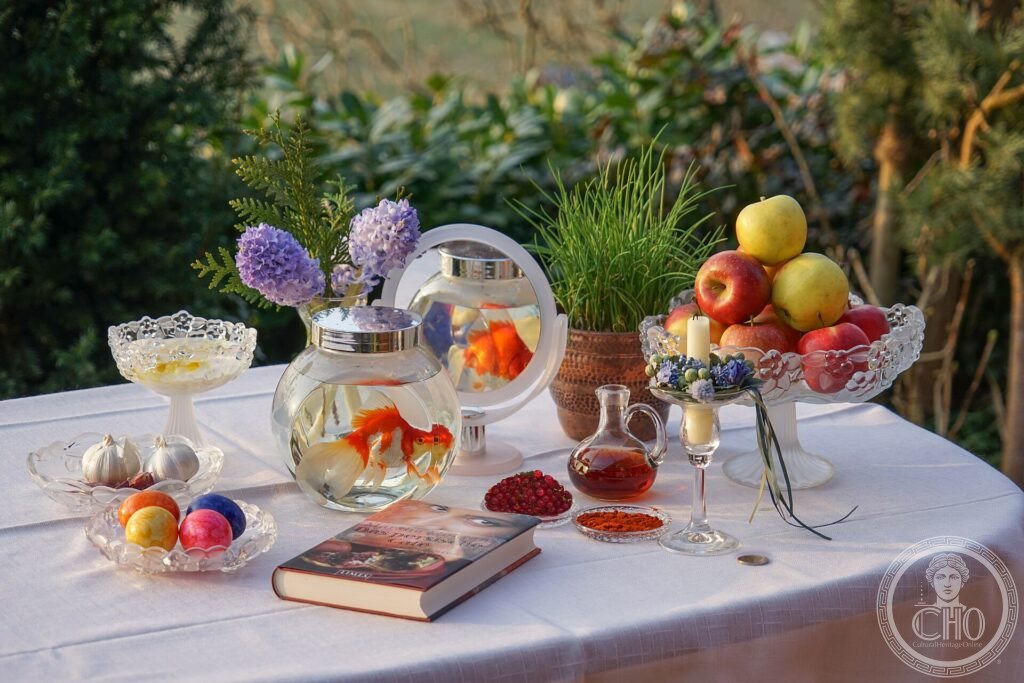
The Persian New Year, celebrated at the spring equinox across thirteen nations and countless diaspora communities, Nowruz marks renewal through fire rituals, water ceremonies, gift-giving, and poetry that have endured for over three millennia.
At a glance
Nowruz—literally “New Day” in Persian—is the New Year’s Day on the Solar Hijri calendar, falling between 19 and 22 March as the Northern Hemisphere enters spring. What began as a Zoroastrian observance has become a shared festival across West Asia, Central Asia, the Caucasus, the Balkans, and South Asia, embraced by Iranian peoples, Arab communities, Turks, Afghans, Indians, and their diaspora worldwide. Though most celebrate it as a secular holiday, it remains sacred to Zoroastrians, Baháʼís, and Ismaili Shia Muslims.
Origins & history
The roots of Nowruz reach back over three thousand years to Zoroastrianism, one of humanity’s oldest religions, which honored the cosmic renewal at the vernal equinox. From its ancient heartland in Iran, the festival spread across the empires and trade routes of West Asia, Central Asia, the Caucasus, and South Asia, becoming woven into the cultures of diverse peoples: Persians, Turks, Afghans, Tajiks, Kurds, Arabs, and many others. Each community has adapted the essential ritual of renewal to its own traditions.
The practice
Nowruz unfolds through rituals of elemental transformation. Fire ceremonies and water rituals stand at the heart of observance—purification and blessing enacted with flame and flow. Celebratory dances bring communities together in movement and joy. Gift exchanges pass tokens of affection and hope between kin and strangers. Poetry recitations honor language and memory, with verses chosen to mark the moment of turning. These customs vary between cultures: some communities emphasize particular rituals, others add instruments, song, or specific foods meaningful to their own heritage. The festival is experienced across homes, public squares, and gathering places where families and friends enact the season’s return together.
Cultural significance
Nowruz represents more than a date change—it embodies the human impulse to mark cyclical renewal and to gather at moments of cosmic turning. For its bearers across thirteen nations, it affirms shared identity and continuity with ancestors. The festival bridges secular and sacred life, allowing individuals of different faiths and none to participate in a common calendar moment. In diaspora, Nowruz becomes a anchor to homeland and heritage, a practice that travels and transforms while retaining its essential meaning of beginning again.
Key facts
- Celebrated in Iran, Afghanistan, Azerbaijan, India, Iraq, Kazakhstan, Kyrgyzstan, Uzbekistan, Pakistan, Tajikistan, Turkey, Turkmenistan, and Mongolia
- Dates: 19–22 March (Northern Hemisphere spring equinox)
- Roots: Zoroastrianism, 3,000+ years old
- UNESCO Intangible Cultural Heritage inscription: 2016 (Reference 02097)
- Sacred to: Zoroastrians, Baháʼís, Ismaili Shia Muslims; celebrated secularly by most
Where to experience it
Nowruz is most deeply rooted in Iran, particularly in Tehran and across Persian-speaking regions, where centuries of continuous practice have shaped the festival’s rituals and repertoire. Yet you may encounter and join Nowruz celebrations in diaspora communities and multicultural cities worldwide, wherever Iranians, Afghans, Tajiks, Turks, Kurds, and other peoples who carry this heritage have settled. The festival is celebrated at home and in public, in domestic ritual and community gathering.
Sources & resources
Find it on the map
See this place and what’s around it →📷 Become a Cultural Heritage Online photographer
Share your photos of places: they stay published under your name as the author. The more they're seen, the more you get noticed — and soon a contest will reward the most appreciated photos.
Log in or sign up free to add a photo