
Negozio Olivetti
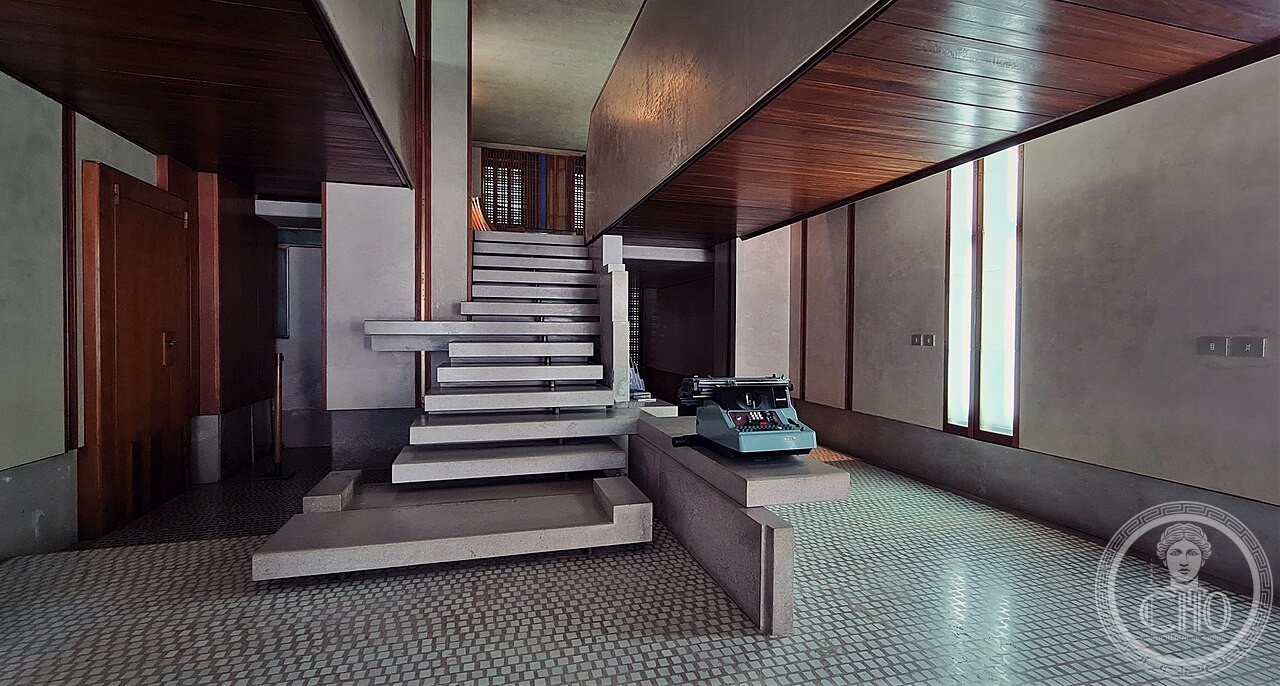
At 118 square metres, the Negozio Olivetti (Piazza San Marco; Carlo Scarpa, 1957–1958) is the smallest major architectural work in Italy and the most studied small commercial interior in the world — a typewriter showroom transformed into a three-dimensional argument for what a space designed with absolute craft attention can do to a commercial product, a visitor, and a city.
At a glance
Negozio Olivetti (the most precisely NegozioOlivetti single Venice Veneto Italy 45.4338 N 12.3388 E FAI Fondo Ambiente Italiano since 2011 managed; the commission: Adriano Olivetti (1901–1960 CE; the visionary president of Olivetti SpA from 1938 CE; the man who hired industrial designers including Marcello Nizzoli (the Lexikon 80 typewriter; the Lettera 22; the Divisumma 24 calculator — all canonical mid-century Italian objects), Ettore Sottsass Jr. (the Valentine typewriter; later Memphis), and hired architects including Ignazio Gardella, Luigi Figini, Gino Pollini, and Franco Albini for Olivetti factory buildings and stores; Adriano Olivetti was also the publisher of the political journal Comunità (Community) which advocated a third way between capitalism and communism based on workplace democracy and community governance; he was a utopian industrialist without a direct equivalent in any country) commissioned Scarpa in 1957 CE to design the Olivetti showroom in the Procuratie Vecchie arcade at Piazza San Marco 101; the brief: display Olivetti typewriters and calculating machines in a space that would communicate the company’s design values; the space: 118 sq m in an 18th-century arcade bay at the north side of Piazza San Marco; the Procuratie Vecchie (16th CE century; Bartolomeo Bon; 50 arcade bays forming the north side of Piazza San Marco) provide identical arched bays to dozens of commercial tenants; Scarpa’s task was to transform one standard Venetian commercial bay into an Olivetti showroom that would be recognizable from the piazza as distinctly different from all the others).
Key facts
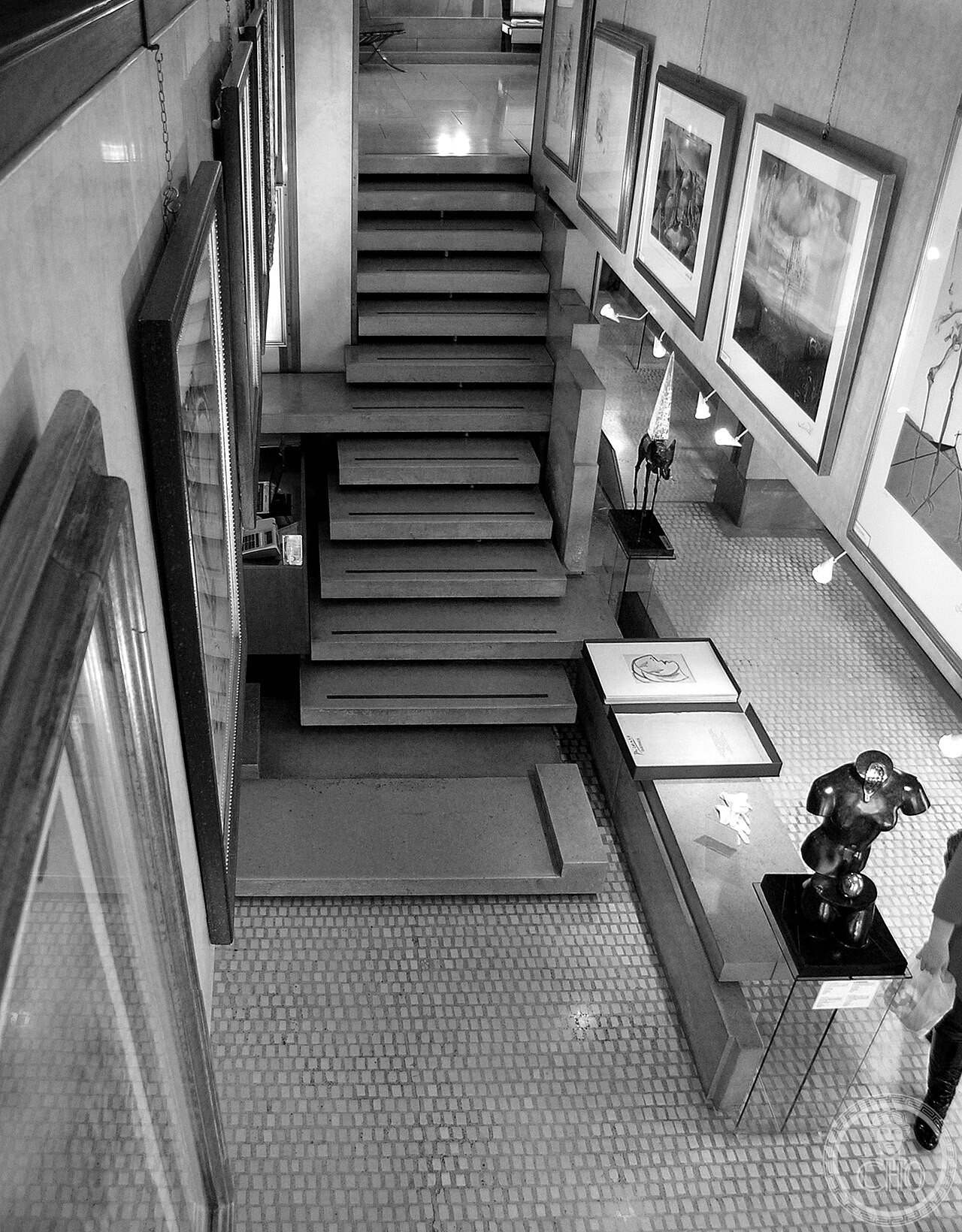
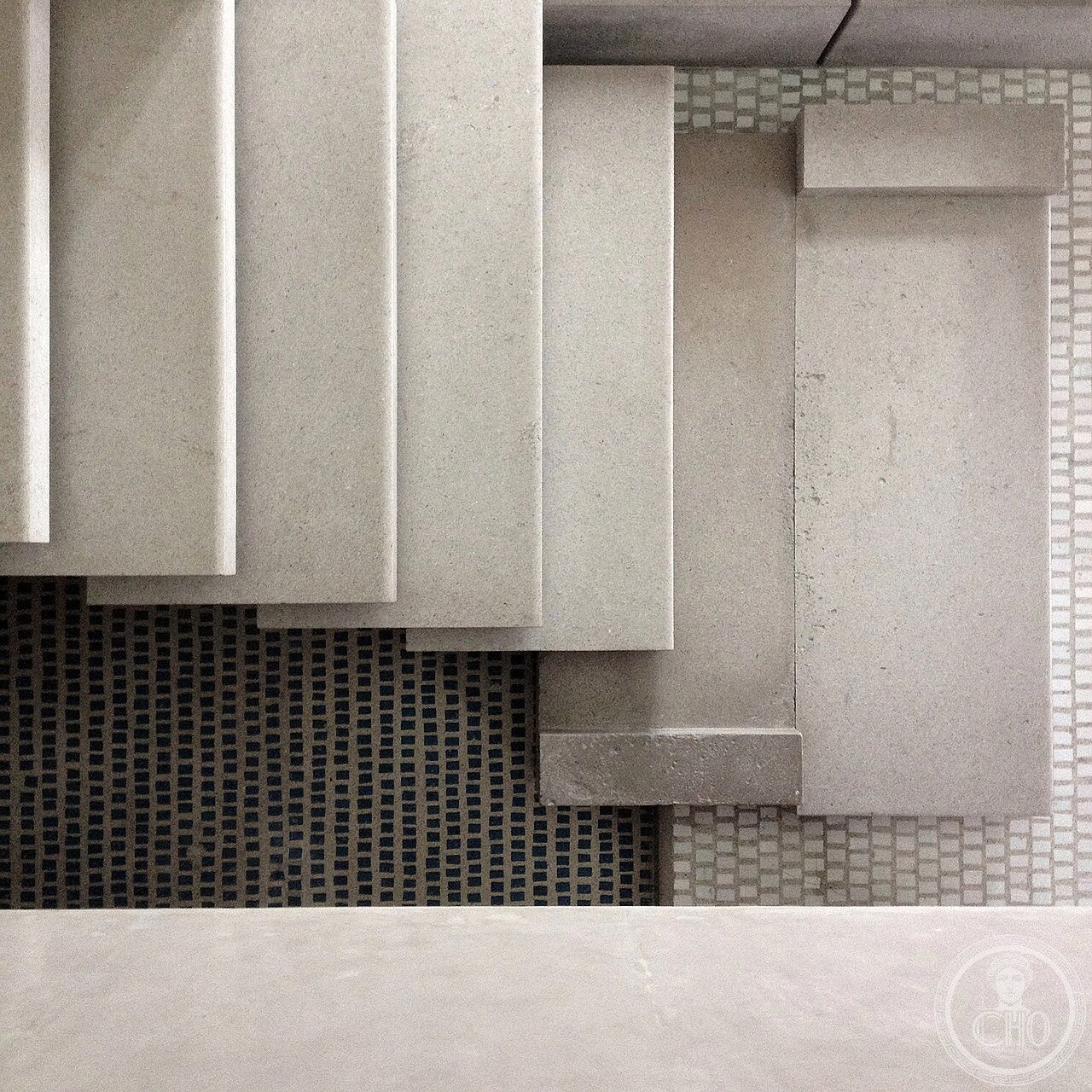
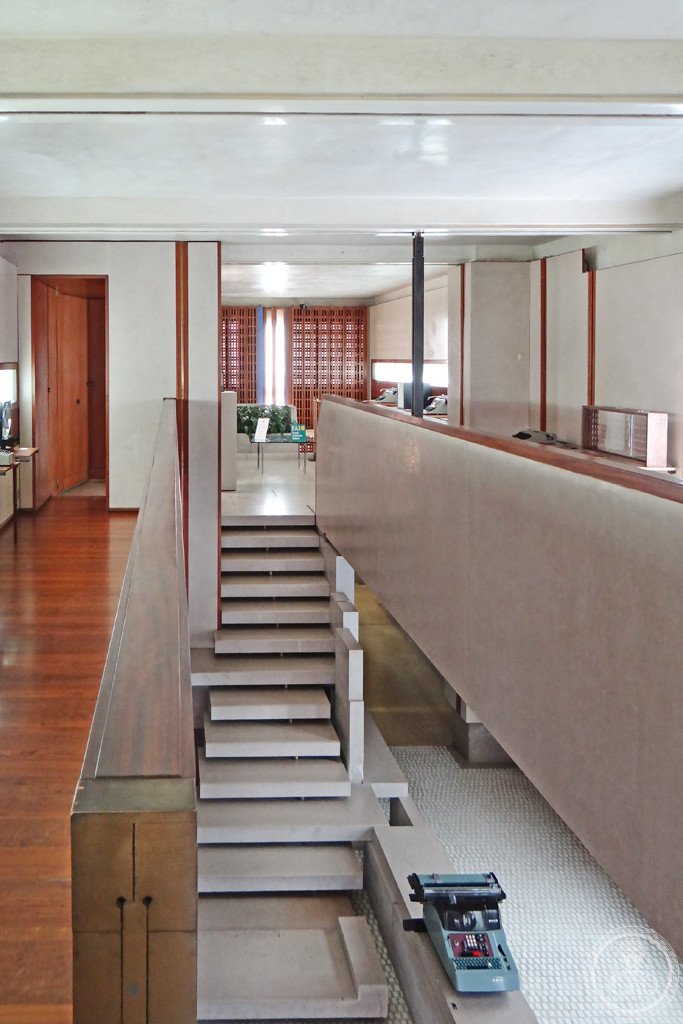
- The Negozio Olivetti staircase and why it is studied in every world architecture school: the staircase (the central spatial element of the Negozio Olivetti; 4.5m rise from ground floor to mezzanine in 2 flights; the total staircase structure occupies approximately 12 sq m of the 118 sq m total floor area — 10% of the plan dedicated to a stair in a showroom where floor area is the most expensive commodity in Italy (the Piazza San Marco commercial rental rates are the highest in Italy and among the highest in Europe)) is studied because it demonstrates Scarpa’s method of using a small space to make maximum spatial complexity: the visitor entering the ground floor immediately sees the stair, which divides the ground floor into left (display cases with Olivetti machines) and right (further display); the stair simultaneously shows the mezzanine (suggesting something more above) and provides the vertical movement axis for the entire spatial experience; each tread is cantilevered from the structure — no riser, no visible support; the underside of the stair is a smooth soffit; the tread surface is convex (this detail: Scarpa observed during construction that a flat marble step under Venetian light (the diffuse reflected light from the water of the lagoon, which enters from the north through the open Procuratie arcade) showed a visual flat dead zone at the center of each tread; he modified the mold for the stone cutting to introduce a 3mm convex profile which eliminated the dead zone and made the treads appear to glow from the center); the handrail (a single steel tube in a continuous S-curve from ground to mezzanine with no interruption at the change-of-direction landing — fabricated from a single tube by a Venetian metalworker who had made railings for gondola prows; the same craft tradition); the specific Scarpa instruction to the craftsmen: he gave them a full-size chalk drawing on the floor of the workshop, not a CAD drawing — the craftsmen worked from the 1:1 drawing
- GPS: 45.4338° N, 12.3388° E (Procuratie Vecchie, Piazza San Marco 101)
History
From Olivetti flagship to FAI preservation (the most precisely NegozioOlivetti single 1957 CE the commission: Adriano Olivetti opened the Piazza San Marco store in 1958 CE (the opening coincided with the Venice Biennale 1958); the store functioned as an Olivetti showroom until 1997 CE (when Olivetti’s commercial decline and the shift from typewriters to personal computers made the Piazza San Marco luxury location commercially unviable); 1997–2011 CE the space was occupied by a tourist gift shop (the most extreme counter-example to the Scarpa design; the space was filled with merchandise and the staircase partially obstructed by display racks); the contrast between the 1958 original use and the 1997–2011 tourist shop use is the most frequently cited example in preservation literature of the vulnerability of modernist commercial interiors to re-tenanting; 2011 CE FAI acquisition: the Fondo Ambiente Italiano acquired and restored the Negozio Olivetti in 2011 CE; the restoration was directed by Tobia Scarpa (Carlo Scarpa’s son; the same architect who completed the Memoriale Brion after his father’s death); the restored interior is now exhibited as an architectural object rather than as a functional store; FAI has filled the showcases with original Olivetti machines (typewriters, calculating machines, and early computers from the period 1955–1975 CE) that function as both the museum object and the intended context for the architecture (Scarpa designed the display cases with specific lighting angles to show the Olivetti machines under ideal conditions)).
What you see
The staircase, the showcases, the floor, and the original Olivetti machines (the most precisely NegozioOlivetti single visit (1 hour; the space is small but the detail density is very high; recommended: 30 min first pass of the whole space, 30 min return looking at the construction details at close range): ground floor: the entry is through the Procuratie Vecchie arcade opening (the 18th century arch frame is left unchanged; the contrast between the historic arch and the modern interior is immediate and deliberately compositional; the floor: Venetian terrazzo (the local floor tradition going back to the 13th century; the Negozio Olivetti floor is a customized Venetian terrazzo in which Scarpa embedded a 4-color geometric pattern using tesserae of glass (red, black, grey, white) in a grid that echoes the geometry of the plan); the showcases (the custom display cases for the Olivetti machines — glass and chrome steel frames with backlighting; the angle of the glass panels is not 90 degrees from vertical but tilted 5 degrees to eliminate reflection of the Piazza San Marco light; each degree of tilt was calculated for the specific sun angle at Piazza San Marco in September — the Venice Biennale month); the water feature (in the entry level, a shallow water channel runs along the left wall — a typical Scarpa device (the Fondazione Querini Stampalia uses the same device) that brings the Venetian water element into the interior as material not as metaphor; the channel is 3cm deep and 15cm wide; the bottom is covered with Murano glass tesserae (blue and silver); the water reflects on the ceiling; the mezzanine: reached via the stair (always the main experience); the mezzanine has lower ceilings (2.2m vs 4.5m on the ground floor) which creates the spatial compression that makes the view down to the ground floor from the mezzanine landing the primary spatial experience of the visit); the Olivetti machines on display (the Lettera 22 portable typewriter (Marcello Nizzoli, 1950 CE; the most awarded product design of the 1950s; won the Compasso d’Oro 1954; won the ADI index of design; in the MoMA New York permanent collection); the Divisumma 24 mechanical calculating machine (Nizzoli, 1956; the machine that could calculate before electronic calculators; the sum of all visible moving parts (the keys, the lever, the platen) was the first industrial product where the mechanical complexity was deliberately made visible as the aesthetic); the Valentine typewriter (Ettore Sottsass, 1969 CE; the red plastic portable typewriter designed for non-office use — for poets, for students, for people who didn’t identify as typists; the Valentine design brief was “take the typewriter out of the office”; the red color and the plastic carrying case changed the category)).
Practical information
- Getting to the Negozio Olivetti and visiting the other Venice Scarpa and FAI sites: address: Procuratie Vecchie, Piazza San Marco 101 (the north portico of Piazza San Marco; the entrance is the third-to-last bay from the Torre dell’Orologio); opening: daily 10 AM–6 PM (closed Monday October–April); admission: €10 adults; €7 reduced; FAI members free; the Venice context (why Scarpa is so deeply associated with Venice: Scarpa was born in Venice and spent most of his professional life in Venice; his projects in Venice include the Fondazione Querini Stampalia (1963 CE; Castello 5252; open Tue–Sun 10 AM–6 PM; €14), the renovation of the Museo Correr at Piazza San Marco (1952 CE; the room sequences and the display of the Canova plaster models), the Fondazione Nazionale della Fotografia at the Museo Fortuny (1975 CE; not open separately), and the Ca’ Foscari University renovations; Venice’s relevance for Scarpa: the city provided him with a complete historical material vocabulary (Istrian limestone; Venetian terrazzo; Murano glass; the gondola’s metal fittings; the water surface) that he translated into 20th century design; the Negozio Olivetti is the most accessible of all Venice Scarpa works because it is in the most visited square in Italy; the most overlooked combination visit: Negozio Olivetti (1 hour) + Museo Correr (in the Procuratie Nuove on the opposite side of Piazza San Marco; 2–3 hours; €30 combined ticket with Palazzo Ducale; the Sala delle Quattro Porte (Four Doors Room) and the Belvedere are the most important spaces; Jacopo Tintoretto’s “Venice Triumphant” ceiling) + Fondazione Querini Stampalia (30 min by water bus; the Scarpa renovation of the ground floor + the temporary exhibitions in the upper floors)
Getting there
Piazza San Marco 101, Procuratie Vecchie (north arcade, third-to-last bay). Vaporetto lines 1/2 to San Marco/Vallaresso or San Zaccaria. Open daily 10-18 (closed Mon Oct-Apr). Admission €10/FAI free. Combine with Fondazione Querini Stampalia Scarpa (30 min by boat). GPS: 45.4338, 12.3388.
Nearby
- Fondazione Querini Stampalia, Venice — 15 min walk (Carlo Scarpa’s 1963 CE ground-floor renovation of a Venetian palace; the water flooding adaptation; the garden; Tue–Sun 10–18; €14)
- Memoriale Brion, Altivole (Treviso) — 45 min by rental car (Carlo Scarpa’s masterwork 1969–1978; FAI property; see the full Scarpa card)
Gallery
Sources
- Wikipedia, Negozio Olivetti; Adriano Olivetti; Carlo Scarpa; Olivetti, accessed June 2026
- FAI Fondo Ambiente Italiano, Negozio Olivetti visitor information, 2023
- Dal Co, Francesco, and Giuseppe Mazzariol. Carlo Scarpa: The Complete Works. New York: Electa/Rizzoli, 1984
Find it on the map
See this place and what’s around it →📷 Diventa un fotografo di Cultural Heritage Online
Condividi le tue foto dei luoghi: restano pubblicate con la tua firma come autore. Più vengono viste, più ti fai conoscere — e presto un concorso premierà le foto più apprezzate.
Accedi o registrati gratis per aggiungere una fotoDo you manage this place?
This page is read by travellers and heritage enthusiasts who find it on Google. Keep it accurate — and make it work for you. Free for non-profit heritage institutions.