
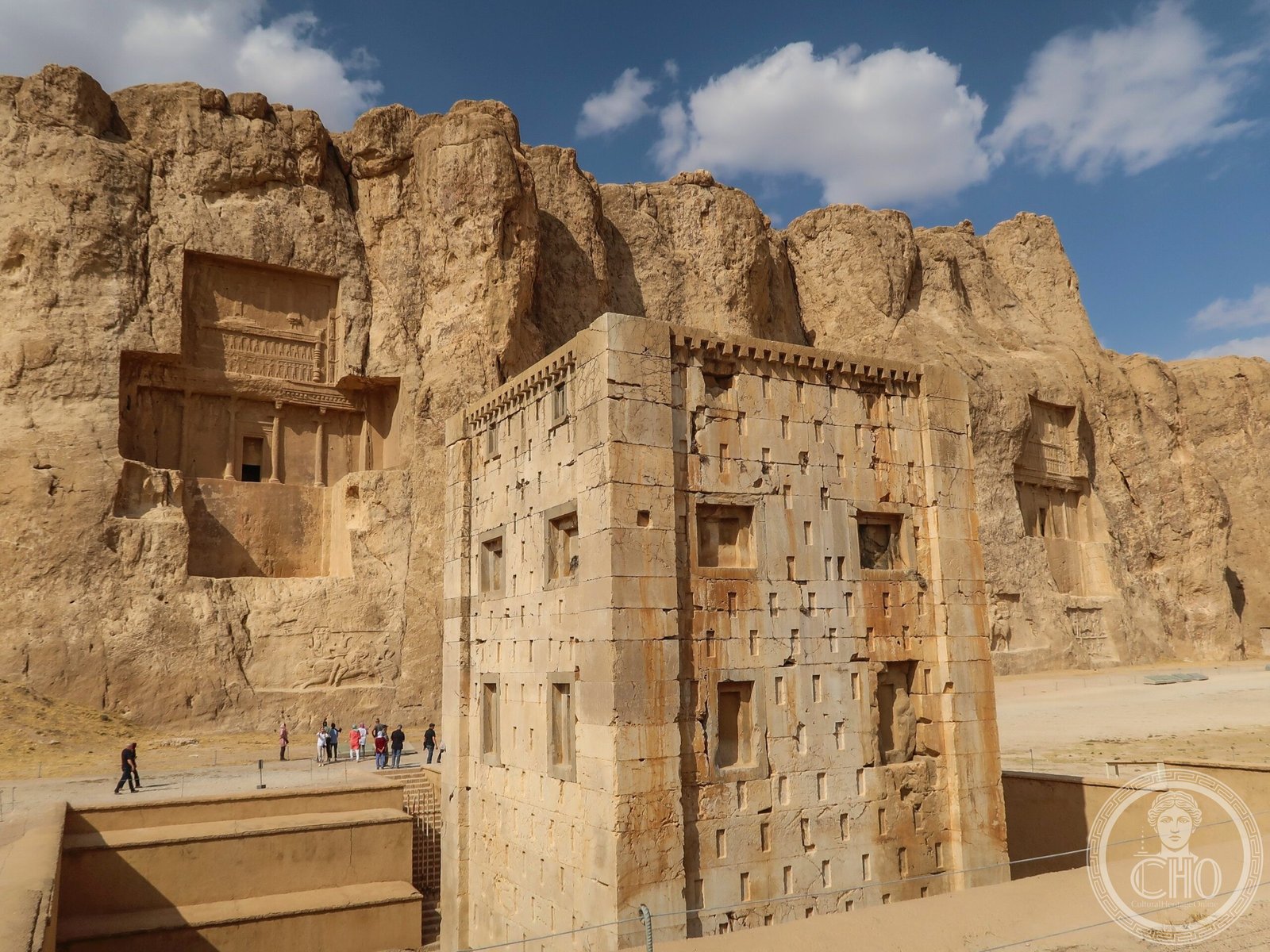
A mountain necropolis where four Achaemenid kings, including Darius the Great, were entombed in monumental rock-cut tombs, and where centuries later the Sasanian dynasty carved reliefs celebrating their power.
At a glance
Naqsh-e Rostam is an ancient archaeological site 13 km northwest of Persepolis combining royal Achaemenid tombs with Sasanian rock reliefs. The site spans more than a millennium of Persian history, from the Elamites through the Achaemenids to the Sasanians, carved into a single mountain face.
History
The site served as the necropolis of the Achaemenid dynasty (c. 550–330 BC), with four monumental tombs cut high into the cliff face belonging to Persian kings including Darius the Great and his son Xerxes. Centuries later, the Sasanian dynasty added their own rock reliefs lower on the mountain, deliberately positioning them to link themselves with Achaemenid glory.
The most celebrated Sasanian relief commemorates the Battle of Edessa in AD 260, depicting King Shapur I on horseback receiving the submission of Roman Emperor Valerian—the only Roman emperor ever captured as a prisoner of war. Philip the Arab holds Shapur’s horse while the slain Emperor Gordian III lies beneath the scene.
What you see
The Achaemenid tombs feature cross-shaped facades with large sculptural panels above their entrances. Each depicts a king being invested by a deity, below which rows of smaller figures—soldiers, officials, and tribute-bearers—demonstrate hierarchical scale. The tomb entrances lead to small burial chambers within the rock.
Below these, Sasanian reliefs showcase larger figures in scenes of divine investiture and martial triumph. The contrast between the two periods reflects distinct artistic and political ambitions carved into the same mountain.
Cultural significance
Naqsh-e Rostam holds profound importance in Iranian cultural memory as a continuous record of imperial power and sacred kingship across multiple Persian dynasties. The Sasanian reliefs, deliberately positioned in visual conversation with the older tombs, assert dynastic legitimacy through architectural dialogue with the past.
Key facts
- Location: 13 km northwest of Persepolis, Marvdasht, Fars province, Iran
- Coordinates: 29.99°N, 52.87°E
- Four Achaemenid royal tombs, c. 550–330 BC
- Sasanian rock reliefs, 3rd–7th century AD
- Located a few hundred meters from Naqsh-e Rajab
Practical information & getting there
The site lies near the city of Marvdasht in Fars province. Access is typically combined with visits to nearby Persepolis and Naqsh-e Rajab. Check local conditions and any travel advisories before planning your visit.
Sources & resources
Find it on the map
See this place and what’s around it →📷 Become a Cultural Heritage Online photographer
Share your photos of places: they stay published under your name as the author. The more they're seen, the more you get noticed — and soon a contest will reward the most appreciated photos.
Log in or sign up free to add a photo