
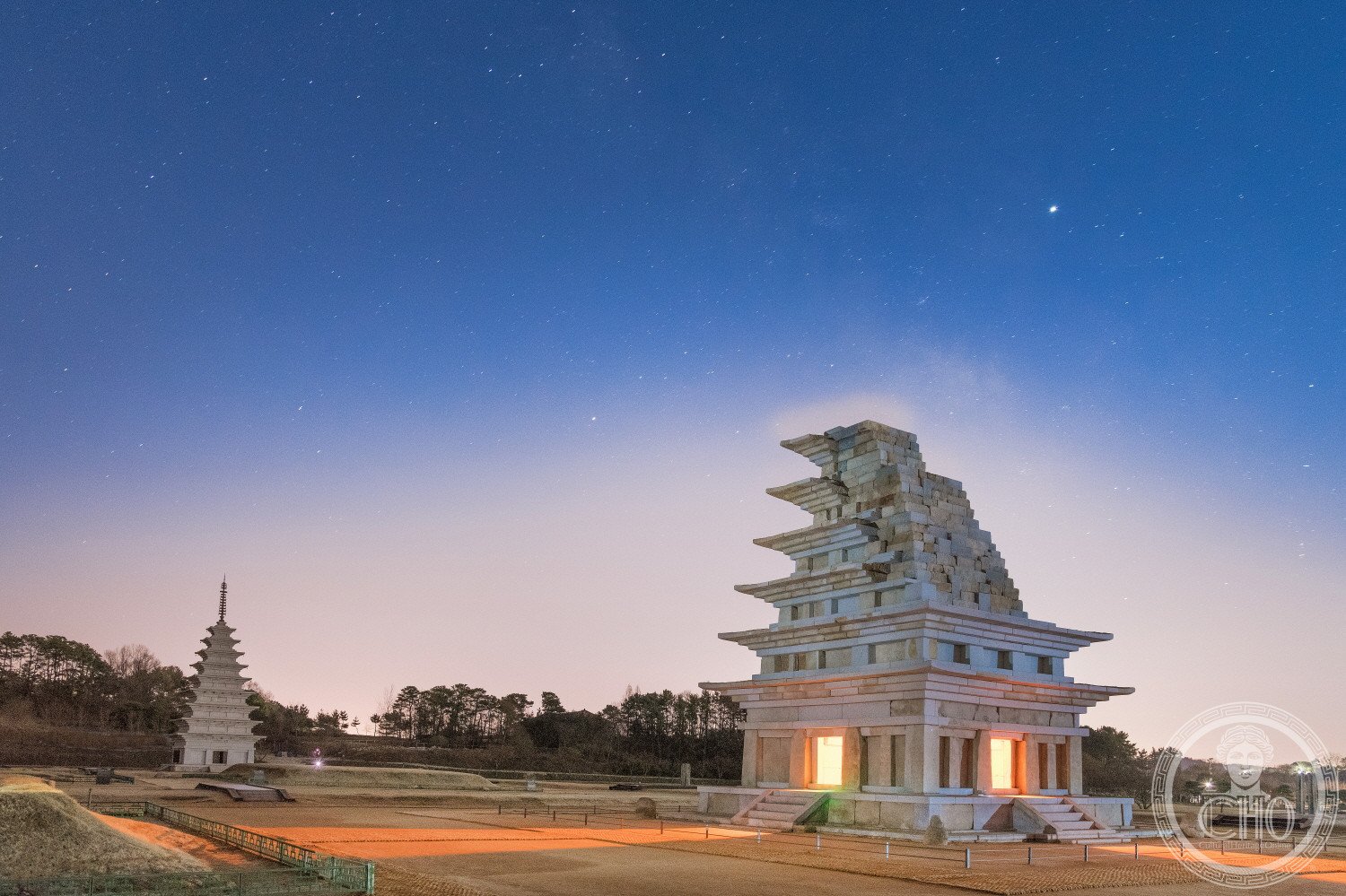
The largest Buddhist temple of ancient Baekje, Mireuksa was founded in 602 by King Mu and remains one of Korea’s most significant archaeological sites.
At a glance
Mireuksa was established as the premier Buddhist temple of the Baekje kingdom in the early seventh century. Excavations beginning in 1980 revealed crucial insights into Baekje architectural practice. The site now stands as South Korean Historic Site No. 150, with a museum and partial restoration.
History
According to the Samguk yusa, King Mu and his queen witnessed a vision of Maitreya at a pond on Yonghwasan. The king ordered the pond drained to make way for the temple complex. The nine-storey wooden pagoda that dominated the center was crafted by the Baekje master Abiji. The temple functioned as the kingdom’s religious center until its decline following Baekje’s fall in 660. Systematic excavation began in 1980, uncovering architectural details previously unknown to scholars. A second restoration of the pagoda was completed on 20 June 2018.
What you see
The Mireuksaji Stone Pagoda survives as one of only two extant Baekje pagodas and remains the largest of its era. Among the oldest of all Korean pagodas, it demonstrates the sophisticated stone-working techniques of seventh-century Baekje craftsmen. The excavated foundations reveal the temple’s original layout and construction methods. A modern museum at the site contextualizes the archaeological findings.
Cultural significance
Mireuksa represents the pinnacle of Baekje Buddhist architecture and royal patronage. The 1980 excavation transformed scholarly understanding of the kingdom’s building practices and religious priorities. The temple exemplifies the cultural flowering of Baekje before its conquest, when Buddhism served as both spiritual practice and political legitimacy for the Korean monarchy.
Key facts
- Country: South Korea
- Location: Iksan, North Jeolla Province
- Coordinates: 36.0121 N, 127.031 E
- Founded: 602 by King Mu
- Designated: South Korean Historic Site No. 150
Practical information & getting there
The site is open to visitors year-round. You can reach Iksan by rail or road from Seoul. The on-site museum provides guided interpretation of the archaeological remains and Baekje history. Local tourism information in Iksan offers additional details about visiting hours and seasonal exhibitions.
Sources & resources
Find it on the map
See this place and what’s around it →📷 Become a Cultural Heritage Online photographer
Share your photos of places: they stay published under your name as the author. The more they're seen, the more you get noticed — and soon a contest will reward the most appreciated photos.
Log in or sign up free to add a photoIs this page about you?
This page is read by travellers and heritage enthusiasts who find it on Google. Tell us how you are connected to this place and we will take it from there.