
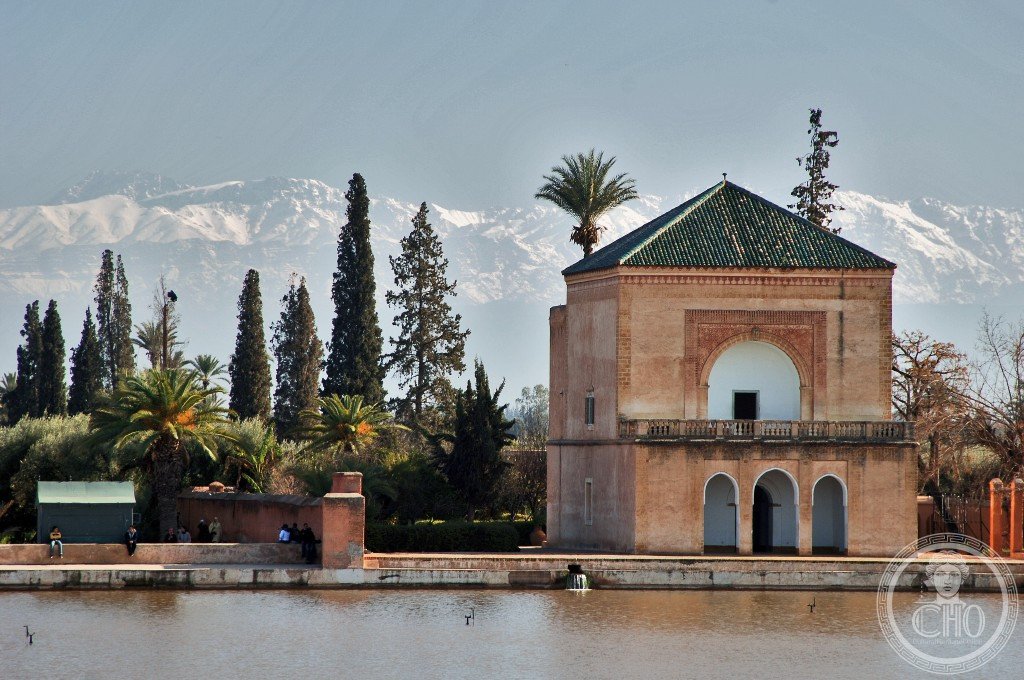
A vast historic garden anchored by a serene water basin and 19th-century pavilion, with the High Atlas Mountains as its dramatic backdrop.
At a glance
The Menara Gardens form one of Marrakesh’s most photographed landscapes—a formal orchard and garden complex centered on a monumental reservoir. The interplay of water, manicured grounds, and mountain vista has made this a symbol of the city itself.
History
Founded around 1157 by Abd al-Mu’min, the Almohad Caliphate ruler, the gardens reflect the sophistication of Islamic garden design. The pleasure pavilion beside the central basin was rebuilt in the 19th century, though the original waterworks and orchard layout trace directly to the 12th-century foundation.
What you see
The gardens are organized around a large rectangular basin and reservoir system—engineered to capture and store water from the Atlas foothills. The 19th-century pavilion, positioned at the water’s edge, offers shade and viewpoints. Olive and citrus trees populate the surrounding grounds, maintaining the historical agricultural character of an Almohad royal orchard.
Cultural significance
The Menara is inseparable from Marrakesh’s visual identity. Its composition—water, cultivated landscape, and mountain line—exemplifies the Islamic garden tradition. Since 1985, it has been recognized as part of Marrakesh’s UNESCO World Heritage designation, alongside the Agdal Gardens and the medina.
Key facts
- Country: Morocco
- City: Marrakesh
- Founded: circa 1157
- Founder: Abd al-Mu’min (Almohad Caliphate)
- Pavilion: rebuilt 19th century
- UNESCO World Heritage Site: 1985 (as part of Marrakesh)
- Coordinates: 31.61°N, 8.02°W
Practical information & getting there
The Menara Gardens are located on Marrakesh’s western outskirts, within easy reach of the medina and Jemaa el-Fnaa square. They are open to the public year-round. The gardens are best visited in early morning or late afternoon to avoid midday heat and crowds, and to capture the strongest light on the Atlas peaks.
Sources & resources
Find it on the map
See this place and what’s around it →📷 Become a Cultural Heritage Online photographer
Share your photos of places: they stay published under your name as the author. The more they're seen, the more you get noticed — and soon a contest will reward the most appreciated photos.
Log in or sign up free to add a photo