
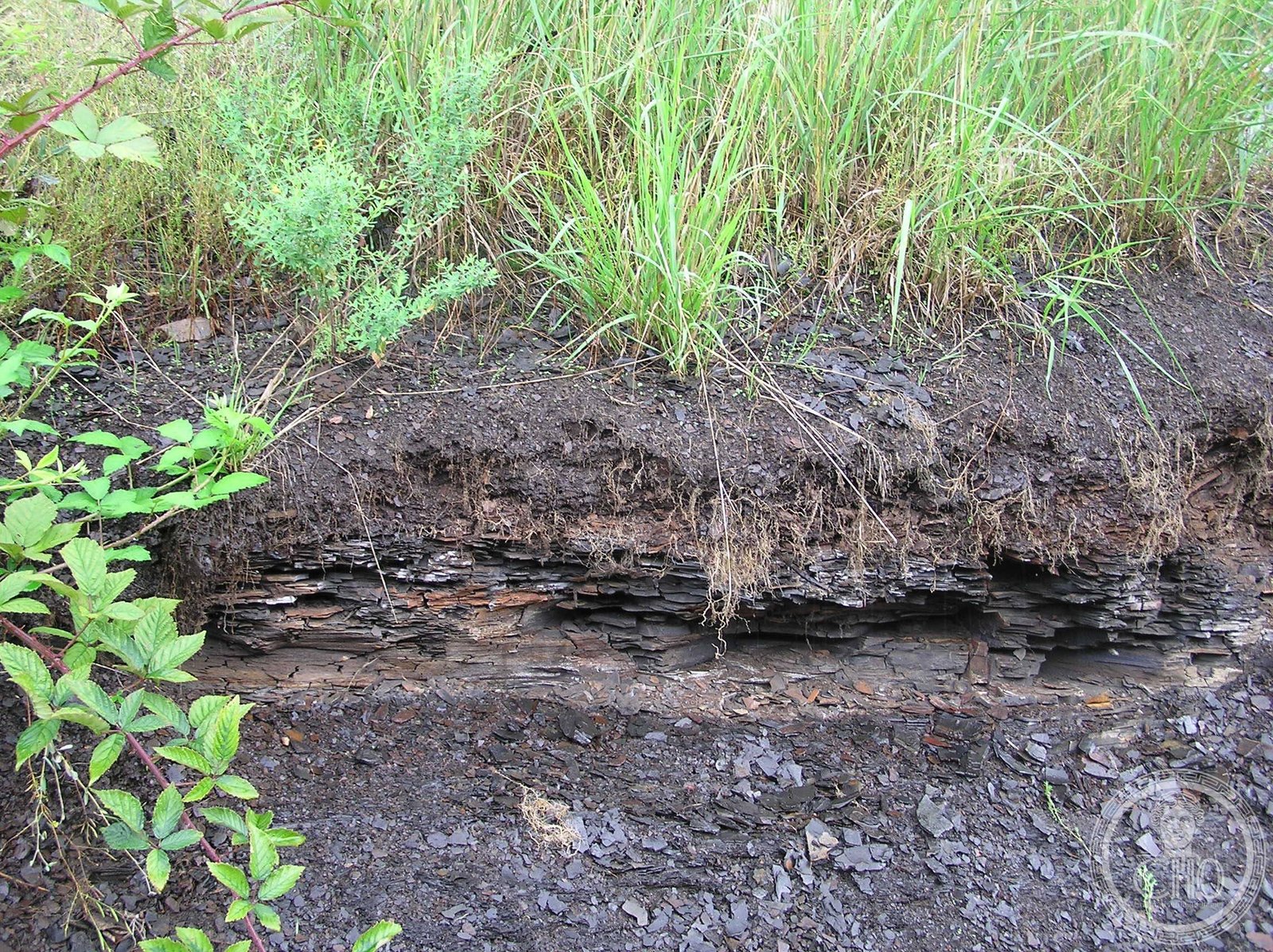
A former oil shale quarry near Frankfurt preserves one of the most extraordinary fossil deposits on Earth: Middle Eocene lake sediments so fine that fossilised animals retain not only their bones but their fur, feathers, skin, stomach contents — and in some cases, their original iridescent colour, unchanged after 47 million years.
At a glance
The Messel Pit Fossil Site, a UNESCO World Heritage Site since 1995, is a former oil shale quarry near the town of Messel in Hesse, Germany, approximately 35 km southeast of Frankfurt. The pit exposes Middle Eocene lake-bed sediments approximately 47 million years old that preserve organic material with exceptional completeness. Animals fossilised in the Messel lake retain soft tissues, stomach contents, and in some cases original pigmentation. The site was nearly converted into a landfill in the 1970s–1980s; a sustained scientific and public campaign saved it. It is now managed as an active scientific excavation site and tourist attraction, with approximately 40,000 specimens on display in German museums.
Key facts
- UNESCO inscription: 1995 (Natural criterion viii)
- Age of fossils: c. 47 million years (Middle Eocene)
- Location: Near Messel, Hesse, Germany, approx. 35 km southeast of Frankfurt am Main
- Formation: Messel oil shale (Ölschiefer); anoxic lake-bottom sediments
- Notable finds: Ida (Darwinius masillae); Messel horses (Propalaeotherium); early bats with gut contents; beetles with original metallic colour
- Species diversity: Over 10,000 animal specimens from more than 1,000 species identified
- Active research: Annual excavation campaigns by the Senckenberg Research Institute and Museum Frankfurt
- Visitor access: Guided tours only; no independent access to excavation areas
History of the site
The Messel Pit was first worked commercially in the 1880s as a source of oil shale (Ölschiefer). Fossil finds were noted from the start, but systematic scientific collection began only in the 1970s. By that time, the quarry was exhausted and plans were made to convert the 60-metre-deep pit into a landfill — a project that would have entombed one of the greatest fossil deposits ever discovered. Scientists, led by palaeontologist Wilhelm Freudenberg and later the Senckenberg Institute, mounted a decades-long campaign against the landfill plan. The state of Hesse purchased the site in 1991, and UNESCO inscription followed in 1995.
The Middle Eocene, approximately 47 million years ago, was a world very different from today: tropical forests covered central Europe, and the mammal groups that would come to dominate the modern world — horses, bats, rodents, primates — were only a few million years old and still in early, experimental forms. The Messel lake preserved this snapshot with astonishing fidelity because its deep, oxygen-free bottom waters prevented decomposition and scavengers from destroying the organisms that sank to the floor.
What you see
The pit itself is approximately 1 km long and 700 m wide, with steep walls descending 60 metres to the floor. The fossil-bearing oil shale is exposed in the quarry walls and floor; active excavations proceed during summer months. The key to Messel’s preservation is the oil shale itself: a laminated, hydrogen-rich sediment deposited in still, anoxic lake-bottom conditions, layer by thin annual layer, trapping and sealing whatever fell to the floor. Animals preserved in this environment retain not merely bones: the Messel horses show skin outlines and hair, the bats carry identifiable insect wing-scales in their intestines, crocodilians have fish inside their ribcages, and beetles retain their original copper, gold, and green metallic structural colouration after 47 million years. The 2009 celebrity fossil Ida — a 95%-complete early primate with preserved skin shadow — was excavated at Messel in 1983 though sold to private collectors; it is now at the Museum of Natural History in Oslo.
Scientific significance
Messel’s uniqueness lies in the breadth and completeness of its preservation across entire ecosystems, not just isolated specimens. Because stomach contents are routinely preserved, it is possible to reconstruct complete food webs of the Eocene: what ate what, at what season, in what proportions. The site has been pivotal in understanding the early evolution of several mammal orders: the Messel horses (Propalaeotherium) showed that early horses were cat-sized browsers with three toes, giving physical substance to the fossil record of equine evolution. Early bats at Messel retain their echolocation anatomy intact, allowing direct study of the origin of that faculty. The site continues to yield new species with every excavation season; it is considered an inexhaustible window into the early Cenozoic world.
Practical information
- Access: Guided tours only — independent access to excavation areas is not permitted
- Tours: Offered by the Messel Pit Fossil Site visitor organisation; advance booking strongly recommended in summer
- Season: Tours available April to October; selected winter tours available
- On-site visitor centre: Messel Pit Visitor Centre with fossil displays, film presentations, and geological models
- Duration: Standard guided tour approximately 1.5 hours
- Footwear: Sturdy walking shoes recommended; the pit floor can be muddy after rain
Getting there
The Messel Pit is located approximately 35 km southeast of Frankfurt am Main, near the town of Messel in the Darmstadt-Dieburg district of Hesse. By car: take the A5 motorway south from Frankfurt, exit at Darmstadt Ost, then follow signs to Messel (approx. 40 minutes from Frankfurt city centre). By public transport: S-Bahn S3 from Frankfurt Hauptbahnhof to Darmstadt, then bus 677 to Messel village (approx. 1 hour total). The nearest international airport is Frankfurt Airport (FRA), 45 km away.
Nearby
- Senckenberg Natural History Museum, Frankfurt — Home to the largest Messel fossil collection open to the public; the closest major museum context for the site’s finds
- Hessisches Landesmuseum Darmstadt — Important Messel collection 12 km from the pit; excellent permanent fossil gallery
- Odenwald — Wooded upland immediately east of Messel; hiking and cycling through historic villages and medieval castles
- Darmstadt Mathildenhöhe — UNESCO-inscribed Art Nouveau artists’ colony 12 km from Messel; a striking contrast of deep time and early 20th-century modernism
Sources
- UNESCO World Heritage Centre — Messel Pit Fossil Site nomination file, 1995
- Franzen, J. L. et al. (2009). “Complete primate skeleton from the Middle Eocene of Messel in Germany.” PLOS ONE
- Schaal, S. & Ziegler, W. (eds.) (1992). Messel: An Insight into the History of Life and of the Earth. Oxford University Press
- Senckenberg Research Institute and Museum Frankfurt — annual Messel excavation reports
- Wikipedia — Messel pit
Find it on the map
See this place and what’s around it →📷 Become a Cultural Heritage Online photographer
Share your photos of places: they stay published under your name as the author. The more they're seen, the more you get noticed — and soon a contest will reward the most appreciated photos.
Log in or sign up free to add a photo