
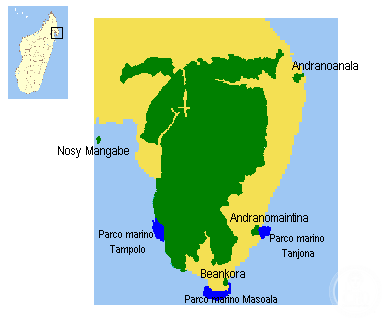
Madagascar’s largest protected area encompasses 2,300 square kilometres of rainforest and 100 square kilometres of marine habitat, protecting one of the world’s most biodiverse ecosystems.
At a glance
Masoala National Park sprawls across the Masoala Peninsula in northeast Madagascar, straddling the Sava Region and Ambatosoa. The park’s vast size and geographic complexity create exceptional biodiversity. Three marine parks within its bounds protect coral reefs and underwater life.
History
Established in 1997, Masoala National Park was created to protect one of Madagascar’s most ecologically significant landscapes. The peninsula’s remoteness and varied terrain had long supported extraordinary concentrations of endemic species found nowhere else on Earth.
What you see
The park is not a built heritage site but a natural landscape. Visitors encounter tropical rainforest, coastal forest, flooded forest, marsh, and mangrove ecosystems. The three marine parks reveal coral reefs and diverse underwater communities when accessed by boat.
Cultural significance
Masoala represents one of the world’s critical biodiversity reserves. The peninsula’s isolation has fostered evolution of species found nowhere else, making it essential for global conservation. The park protects both terrestrial and marine ecosystems of outstanding ecological value.
Key facts
- Location: Northeast Madagascar (Sava Region and Ambatosoa)
- Established: 1997
- Area: 2,300 km² rainforest, 100 km² marine park
- Coordinates: -15.30°S, 50.05°E
- Ecosystems: Tropical rainforest, coastal forest, flooded forest, marsh, mangrove, and coral reefs
Practical information & getting there
Access to Masoala National Park requires planning; the peninsula remains remote and infrastructure is limited. Most visitors arrange trips through organised tour operators based in Madagascar’s larger cities. The rainy season (November to March) can affect accessibility. Advance permission and local guides are essential.
Sources & resources
Find it on the map
See this place and what’s around it →📷 Become a Cultural Heritage Online photographer
Share your photos of places: they stay published under your name as the author. The more they're seen, the more you get noticed — and soon a contest will reward the most appreciated photos.
Log in or sign up free to add a photo