
In the north of the Central African Republic, where the plains of the Chad basin come up against the hills of the Bongos massif, Manovo-Gounda St. Floris National Park is one of the largest wild spaces of central Africa: 17,400 km² of savannah, gallery forest and seasonal wetland. Once the home of the African black rhinoceros (locally extinct through poaching in the 1980s), of the Sahel leopard and of vast herds of elephant, buffalo and antelope, the park was placed on the UNESCO List of World Heritage in Danger in 1997 and has remained there ever since. A site that stands both for the grandeur of the Central African savannah and for the devastation of poaching. A UNESCO World Heritage site since 1988.
At a glance
Manovo-Gounda St. Floris National Park covers approximately 17,400 km² in northern Central African Republic, at the headwaters of the Bamingui and Gounda rivers (tributaries of the Chari). UNESCO inscribed it in 1988 (ref. 475) for its outstanding biodiversity as a representative example of Sudano-Sahelian savanna ecosystem, and immediately placed it on the Danger List in 1997 due to severe poaching, armed conflict and livestock intrusion. It remains on the Danger List today. Despite these threats, it retains significant populations of elephants, lions, leopards, Nile crocodiles and a remarkable diversity of antelope (roan, topi, hartebeest, kob, oribi).
Key facts
- UNESCO: World Heritage since 1988 (Manovo-Gounda St. Floris NP, ref. 475); on Danger List since 1997
- Area: approximately 17,400 km² — one of the largest national parks in Central Africa
- Black rhinoceros: formerly present; hunted to local extinction in the 1980s by Sudanese poachers on horseback
- Mammals: African elephants, lions, leopards, cheetahs, African wild dogs, Nile crocodiles, hippos, roan antelope, topi, hartebeest, kob
- Security: the CAR has been in civil conflict since 2012; access to the park is extremely dangerous
- Rivers: the Bamingui, Gounda, Manovo and Koukourou rivers drain the park into the Chari River and ultimately Lake Chad
History
The Manovo-Gounda region was inhabited by the Sara and Banda peoples and by Fulani pastoralists who moved cattle across the Sahel. French colonial administration created the first reserves in the 1930s; the St. Floris Reserve was established in 1933 and upgraded to a national park in 1979. The region was renowned among big-game hunters in the colonial era for its extraordinary wildlife density.
The black rhinoceros of the CAR was a subspecies confined to this savanna corridor. Between 1984 and 1992, an estimated 80,000 animals were killed in the park — including the last rhinos — by Sudanese horsemen (murahaliin) who moved south with automatic weapons during the dry season. The wildlife collapse coincided with the first Central African civil war (2002–2007). The park has been largely inaccessible to conservation and tourism since the 2012 insurgency. WWF and African Parks are working toward future rehabilitation.
What you see
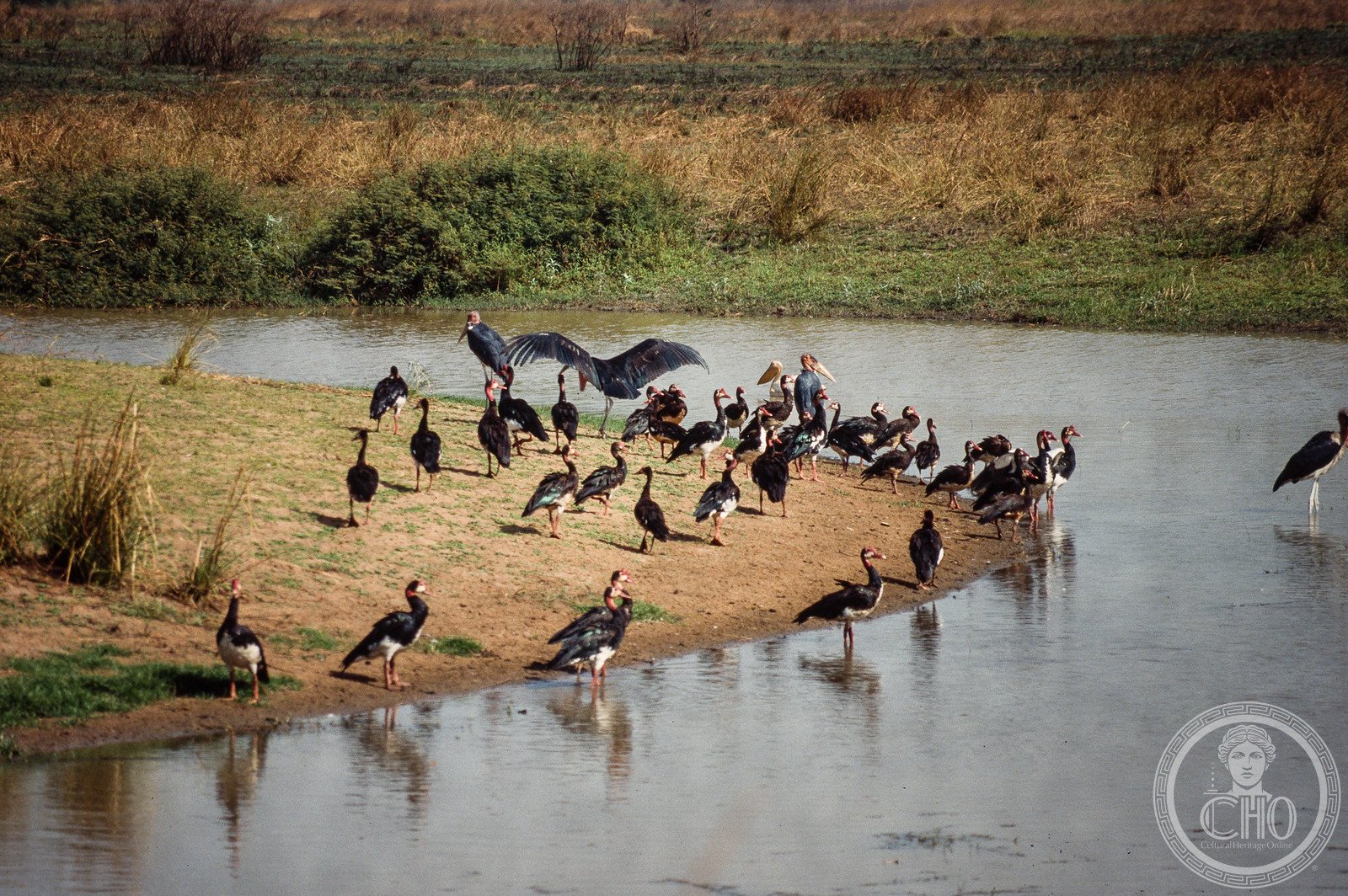
The park landscape is classic Sudanian savanna: rolling plains of tall grasses interspersed with fire-scarred woodland, gallery forest ribbons along the rivers, seasonal floodplains that attract enormous concentrations of waterbirds (saddle-billed storks, wattled cranes, marabous) in the dry season. The rivers hold Nile crocodiles of exceptional size and hippo herds.
The park was once famous for its lion prides, which were among the most studied in Central Africa. A residual population remains. During periods of relative security (primarily 1988–1996), tourism provided significant local economic benefits. The current conflict situation makes any visit impossible.
Practical information
- Currently: the park is inaccessible due to the ongoing Central African Republic civil conflict; do not attempt to visit
- Future: when security conditions improve, Bangui (the CAR capital, 600 km south) will be the gateway; charter flights to Ndélé or Bamingui previously served the park
- Support: WWF and African Parks are working on a rehabilitation plan for post-conflict restoration
Getting there
In normal conditions: fly from Bangui to Ndélé or Bamingui by charter; drive to the park edge. Bangui has international connections with Air France and Ethiopian Airlines. GPS: 8.50° N, 21.50° E.
Nearby
- Bamingui-Bangoran National Park — the adjacent wildlife reserve north of Manovo-Gounda
- Dzanga-Sangha Protected Areas (UNESCO) — the forest and bai elephant reserve in south-western CAR, 800 km south-west
- Bangui — the CAR capital on the Ubangi River; the Musée de Boganda has ethnographic and natural history collections
Sources
- UNESCO World Heritage Centre — “Manovo-Gounda St. Floris National Park” (ref. 475)
- WWF — Central African Republic conservation
- Encyclopaedia Britannica — Central African Republic; black rhinoceros
Find it on the map
See this place and what’s around it →📷 Become a Cultural Heritage Online photographer
Share your photos of places: they stay published under your name as the author. The more they're seen, the more you get noticed — and soon a contest will reward the most appreciated photos.
Log in or sign up free to add a photo