

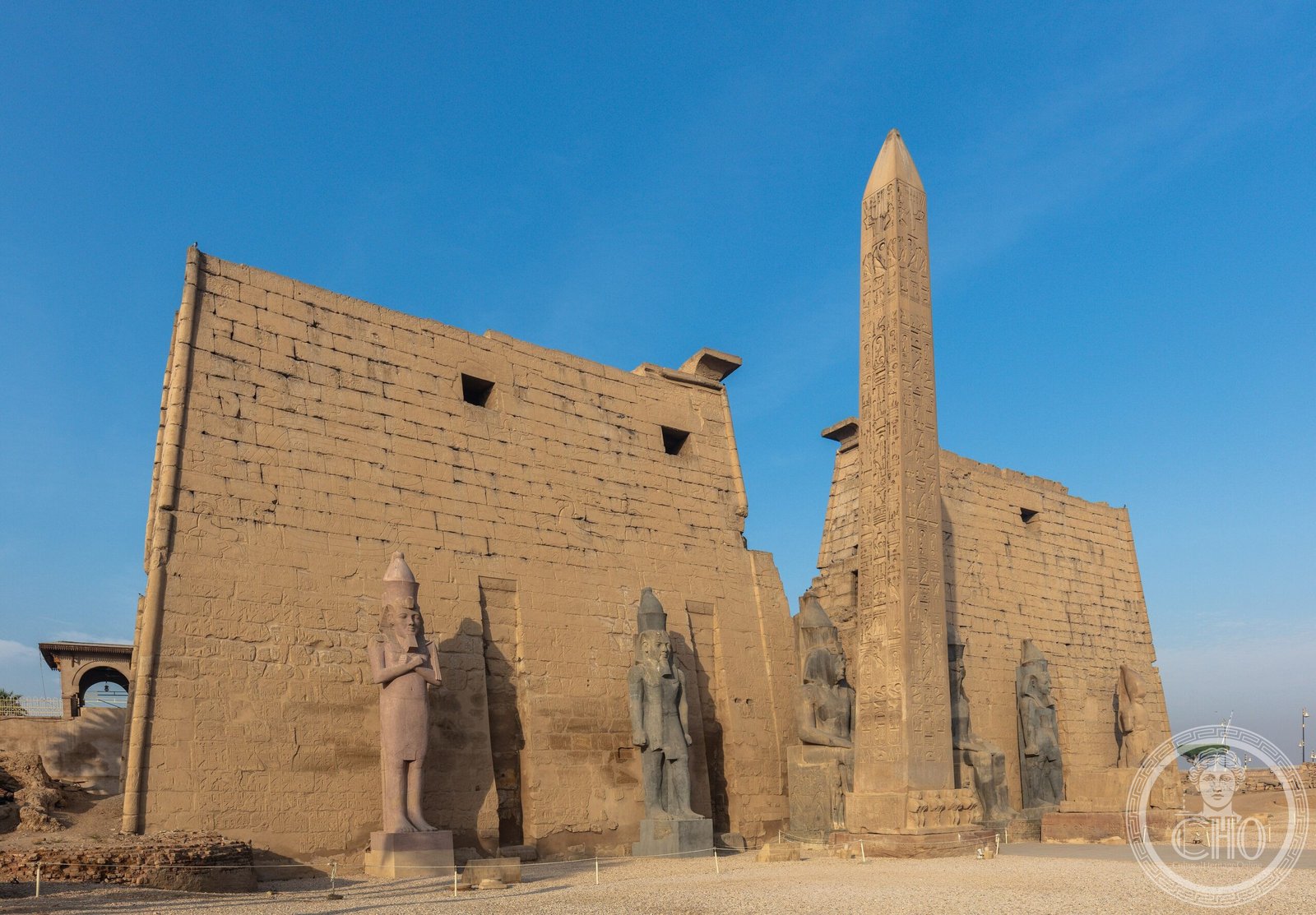
A monumental ancient Egyptian temple on the east bank of the Nile dedicated not to gods but to the renewal of pharaonic power, where kings may have been crowned.
At a glance
Luxor Temple stands as one of the two primary temples of ancient Thebes, distinguished by its unique purpose. Where most Egyptian temples honored deities or immortalized dead rulers, Luxor Temple celebrated the rejuvenation and perpetuation of kingship itself. The temple’s Arabic name, معبد الأقصر, derives from the modern city that grew around it.
History
Construction began around 1400 BCE. Successive dynasties added to the complex: Amenhotep III of the 18th Dynasty and Alexander the Great both contributed chapels to the rear sanctuary. Later pharaohs including Tutankhamun and Ramesses II expanded other sections. Alexander claimed his coronation occurred here, though historical evidence suggests he never traveled south of Memphis.
During the Roman era, the temple transformed into a legionary fortress and administrative center. A chapel originally devoted to the goddess Mut was repurposed first as a Tetrarchy cult chapel, then as a Christian church.
What you see
The temple comprises multiple chambers and courtyards accumulated over centuries. Rear chapels bear the royal cartouches of Amenhotep III and Alexander. Inscriptions and reliefs document the theological concept of royal rejuvenation central to the building’s meaning. Successive architectural phases reflect the layered history of Egypt’s greatest dynasties.
Cultural significance
Luxor Temple represents a singular theological achievement: a monument dedicated to abstract political continuity rather than personal divinity. It illuminates how pharaohs conceived of themselves as channels for eternal kingship, renewed with each reign. The temple’s multi-cultural occupation—Egyptian, Greek, and Roman—mirrors Thebes’ significance as a cosmopolitan center of power across millennia.
Key facts
- Location: East bank of the Nile River, Luxor, Egypt
- Construction: Approximately 1400 BCE
- Coordinates: 25.7°N, 32.6°E
- UNESCO World Heritage inscription: 1979 (as part of Thebes archaeological sites)
- Primary builders: Amenhotep III, Tutankhamun, Ramesses II, Alexander the Great
Practical information & getting there
Luxor Temple is accessible in the modern city of Luxor in Upper Egypt. Public transportation and taxi services connect the temple to hotels and other sites. The temple forms part of the larger Thebes archaeological zone and can be visited in conjunction with Karnak Temple and the Valley of the Kings.
Sources & resources
Find it on the map
See this place and what’s around it →📷 Become a Cultural Heritage Online photographer
Share your photos of places: they stay published under your name as the author. The more they're seen, the more you get noticed — and soon a contest will reward the most appreciated photos.
Log in or sign up free to add a photoIs this page about you?
This page is read by travellers and heritage enthusiasts who find it on Google. Tell us how you are connected to this place and we will take it from there.