
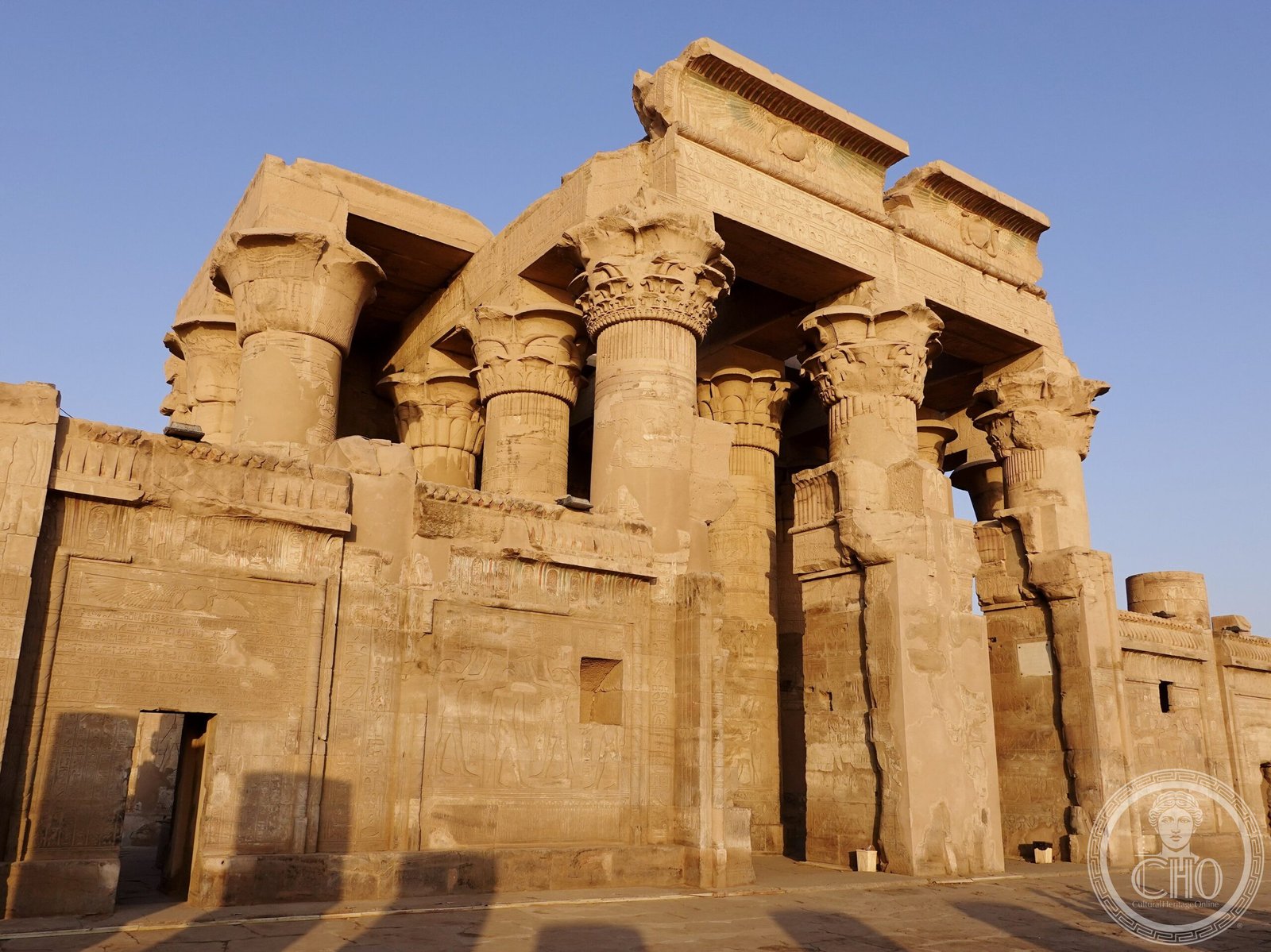
A rare double temple dedicated to two deities, standing on the Nile’s eastern bank in Upper Egypt. Built during the Ptolemaic era, it represents a unique architectural achievement of ancient religious practice.
At a glance
The Temple of Kom Ombo is an unusual dual-purpose sanctuary, built between 180 and 47 BC. Its most distinctive feature is its symmetrical design, accommodating worship of two gods within a single structure. Roman-period renovations and additions enriched the complex over subsequent centuries.
History
Construction began during the Ptolemaic dynasty, a period of Greek rule over Egypt following Alexander the Great’s conquest. The temple was developed across generations, with significant work spanning more than a century. Later, Roman administrators added architectural elements, integrating the temple into their provincial religious framework.
What you see
The temple’s defining characteristic is its bilateral symmetry. Twin sanctuaries, pylons, and courts mirror one another along a central axis. This mirrored arrangement allowed simultaneous ceremonies for two deities. The complex preserves both Ptolemaic carved reliefs and Roman-era stonework.
Cultural significance
Kom Ombo stands apart from typical Egyptian temples by demonstrating how religious practice adapted under Ptolemaic rule. The dual design reflects Hellenistic organizational principles applied to ancient Egyptian sacred tradition. The site provides insight into religious syncretism during late antiquity.
Key facts
- Country: Egypt
- City: Kom Ombo, Aswan Governorate
- Coordinates: 24.45°N, 32.93°E
- Period: Ptolemaic dynasty (180–47 BC); Roman additions
- Type: Double temple
Practical information & getting there
The temple is located in Kom Ombo, accessible via Aswan in Upper Egypt. It stands on the eastern bank of the Nile. Visit the temple’s official information resources or your local Egyptian tourism office for current opening hours and admission details.
Sources & resources
Find it on the map
See this place and what’s around it →📷 Become a Cultural Heritage Online photographer
Share your photos of places: they stay published under your name as the author. The more they're seen, the more you get noticed — and soon a contest will reward the most appreciated photos.
Log in or sign up free to add a photoIs this page about you?
This page is read by travellers and heritage enthusiasts who find it on Google. Tell us how you are connected to this place and we will take it from there.