
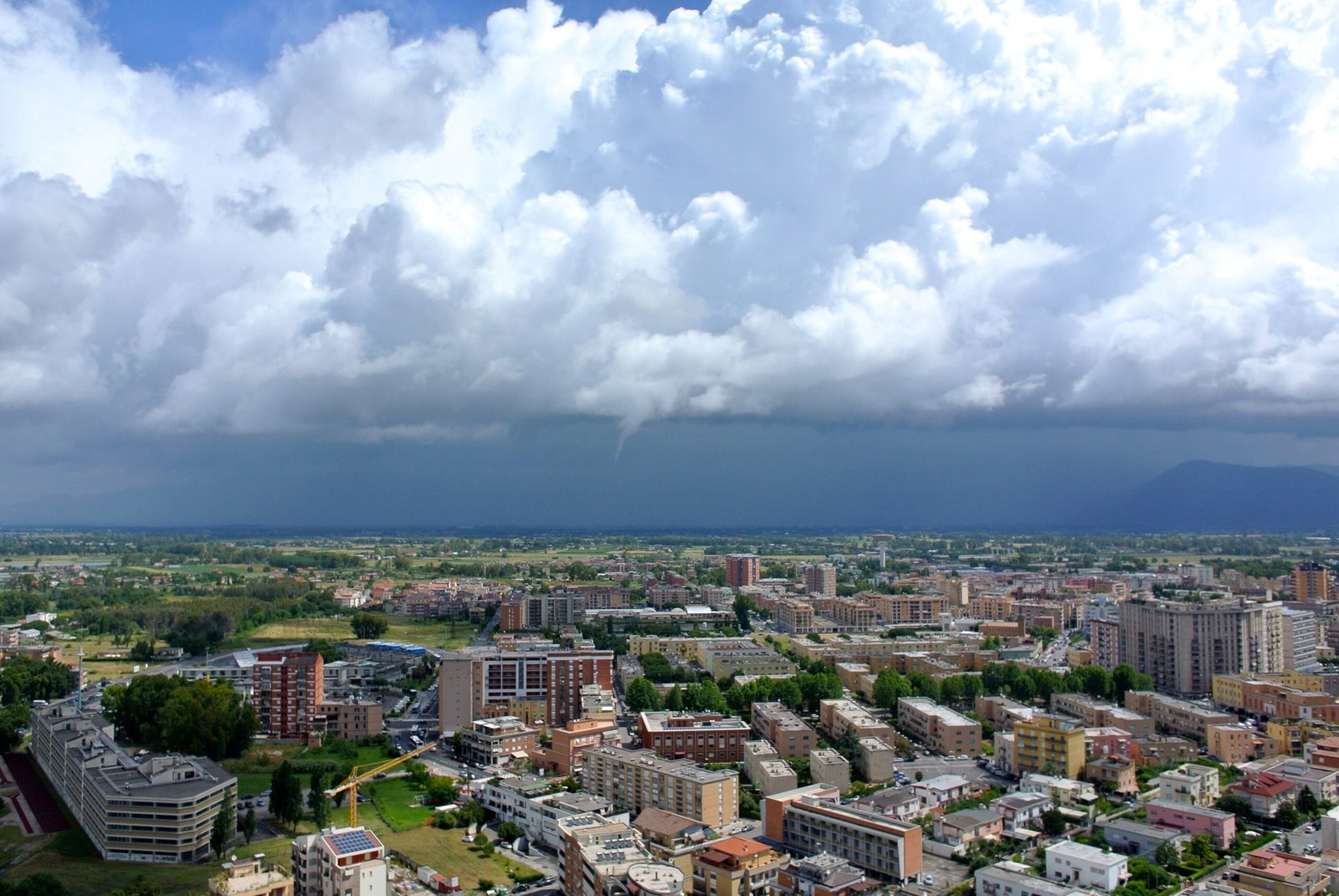
Almost every Italian city can name a Roman or medieval ancestor. Latina cannot: before 1932 there was nothing here but drained marsh, and the town was laid out on paper before a single street existed.
At a glance
Latina sits on the coastal plain of southern Lazio, roughly 62 km south of Rome and a short drive from the Tyrrhenian shore. It was built in 1932 on land reclaimed from the Pontine Marshes, the largest of the so-called “new towns” (città di fondazione) raised across the drained plain in the 1930s. Founded as Littoria and renamed Latina after the war, it is one of Italy’s youngest cities and today its second-largest, after Rome. You come not for ruins but for a complete piece of twentieth-century urban planning: a geometric centre of wide piazzas, civic palaces and a clock tower, set out in a single design.
Key facts
- Region: Lazio · Province: Latina (provincial capital from 1934)
- Founded: 30 June 1932 as Littoria; inaugurated 18 December 1932; renamed Latina in 1945–46
- Built on: the reclaimed Pontine Marshes (bonifica delle Paludi Pontine)
- Population: roughly 127,000 (2024), the second-largest city in Lazio
- Signature setting: a planned Rationalist civic centre radiating from Piazza del Popolo
History
For centuries the Pontine plain south of Rome was malarial marshland, repeatedly surveyed for drainage and never fully reclaimed. A large state programme in the late 1920s and early 1930s finally drained it, and on the cleared land the regime founded a series of entirely new settlements to house the farming colonists brought in to work it.
The largest of these was founded on 30 June 1932 and named Littoria. According to Wikipedia it was inaugurated on 18 December of the same year, after a famously rapid construction, and was raised to provincial capital in 1934. The town was built explicitly as a showpiece of the era, and its origin belongs to the Fascist period; it is read here as urban heritage, not as celebration.
After the fall of the regime the city dropped its founding name. It was renamed Latina in 1945–46, the name it still carries, while the wider plain it anchors continued to grow into the populated agricultural province it is today.
What you see
- Piazza del Popolo — the planned heart of the town (formerly Piazza del Littorio), seat of the town hall and the point from which the street grid radiates.
- Civic tower — the clock tower rising about 32 m over the town hall on Piazza del Popolo, the building most often used as the city’s emblem.
- Palazzo delle Poste — the main post office, attributed to the architect Angiolo Mazzoni, a sharp example of the period’s Rationalist and Futurist-leaning public architecture.
- Piazza della Libertà — a second formal square (formerly Piazza XXIII Marzo) holding the Prefecture, the former Palazzo del Governo.
- Cattedrale di San Marco — the city cathedral, a basilica with a portico, dedicated to the patron saint of the new town.
Practical information
- Time needed: a half-day for the civic centre and its squares.
- What it is: a working provincial city, not a museum town — the interest is the planned layout, best read on foot across the central piazzas.
- When to go: spring and autumn are easiest; the coastal plain is hot and humid in high summer.
Getting there
Latina lies about 62 km south of Rome and is reached by train and road along the Rome–Naples corridor; the station of Latina sits a few kilometres from the centre, with bus links into town. By car it is roughly an hour from Rome on the SS148 Pontina. The nearest major airport is Rome Fiumicino (FCO).
Nearby
- The other Pontine new towns of the 1930s, including Sabaudia and Pontinia, lie across the same reclaimed plain.
- The Tyrrhenian coast and the Circeo headland are a short drive south-west.
Sources
- Wikipedia, Latina, Lazio.
- Wikipedia, Latina (Italian).
Find it on the map
See this place and what’s around it →📷 Become a Cultural Heritage Online photographer
Share your photos of places: they stay published under your name as the author. The more they're seen, the more you get noticed — and soon a contest will reward the most appreciated photos.
Log in or sign up free to add a photo