
Kraków

Kraków Wawel Castle Cathedral Poland UNESCO World Heritage Vistula River
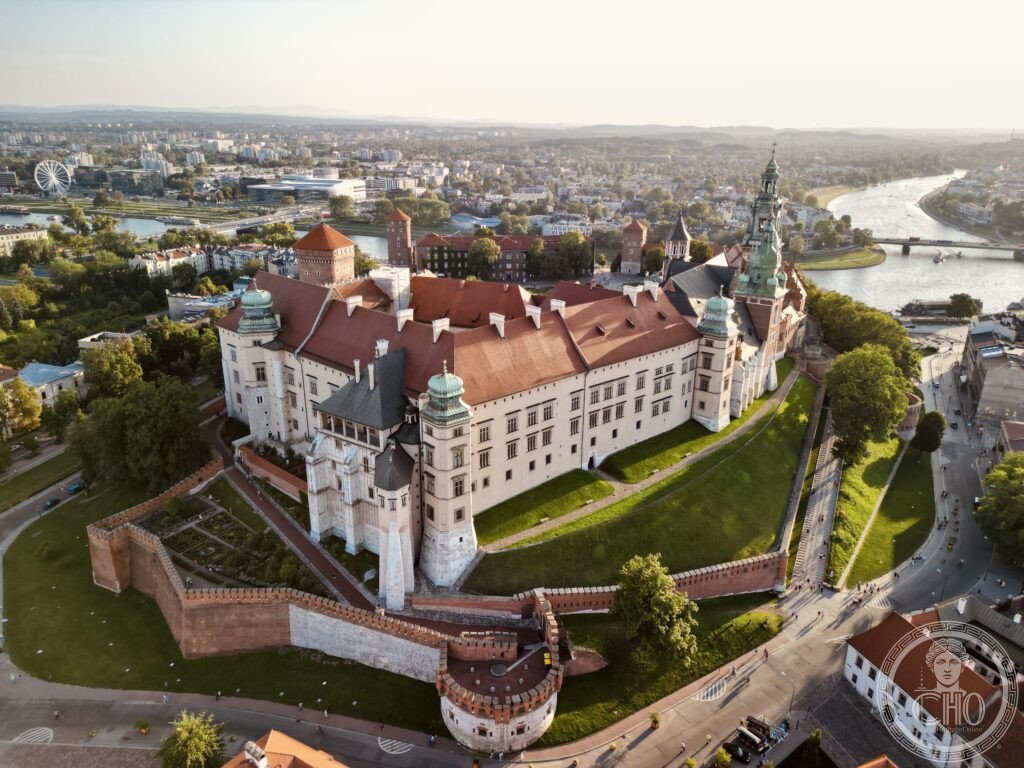
Wawel Castle (Zamek Wawelski) and the Wawel Cathedral (Katedra na Wawelu; the Cathedral of Saints Stanislaus and Wenceslaus) from the northwest, across the Vistula River (Wisła), Kraków, Lesser Poland Voivodeship (Małopolska), Poland (the Wawel Royal Castle complex (10th-17th century CE; the residence of Polish kings from Casimir the Great (1333-1370 CE) to Sigismund III Vasa (1596 CE when the capital moved to Warsaw); the Gothic arcaded courtyard (Dziedziniec arkadowy; the finest Renaissance courtyard in Poland; built by Italian architect Bartolommeo Berrecci for King Sigismund I the Old (1507-1548 CE)); the golden-domed Sigismund Chapel (1519-1533 CE; the finest Renaissance funerary chapel in the world outside Italy, according to Jacob Burckhardt)); the Wawel Cathedral (1320-1364 CE), the coronation and burial church of Polish kings), Kraków, Poland. UNESCO World Heritage Site 1978. Photo via Wikimedia Commons.
Lesser Poland, Poland · Royal capital 1038-1596; Jagiellonian University 1364; Wawel Royal Castle; Leonardo da Vinci Lady with Ermine; UNESCO WHS 1978

Kraków

The former royal capital of Poland for five centuries and the best-preserved medieval city in Central Europe — Kraków (Lesser Poland, Poland; UNESCO WHS 1978) was Poland’s capital from 1038 to 1596 CE and retains its entire Gothic and Renaissance historic centre largely intact, anchored by the Royal Wawel Castle and Cathedral complex and the Rynek Główny (the largest medieval market square in Europe).

At a glance

Kraków (the most precisely KrakówPoland single 1038 1596 CE royal capital Poland 750000 population second largest city Poland Rynek Główny main market square 200m × 200m largest medieval market square Europe Cloth Hall Sukiennice 1300 CE rebuilt 1555 CE Renaissance Sigismund III Vasa 1596 CE moved capital Warsaw Kraków remained royal necropolis coronation burial all Polish kings 1048 CE Casimir I first buried Wawel 1764 CE last buried Wawel 45 kings queens buried Wawel Cathedral Wawel Hill limestone outcrop 25m above Vistula River natural fortification Czarci Kamień Dragon’s Den Wawel Dragon cave beneath Wawel hill legend dragon inhabited cave Krak founded city killed dragon 1364 CE Casimir the Great founded Jagiellonian University Studium Generale 1364 CE oldest university Poland third oldest central Europe Copernicus studied 1491 1495 CE Kazimierz Jewish quarter separate city 1495 CE Jews expelled Kraków settled Kazimierz 1795 CE Austrian Galicia Kraków UNESCO heritage: the Jagiellonian University (the most consequential institution in Polish intellectual history): the Jagiellonian University (Uniwersytet Jagielloński; founded 1364 CE by King Casimir III (the Great) as the Studium Generale; re-established with full university privileges 1400 CE by Queen Jadwiga who donated her jewels to endow it) is the oldest university in Poland and the second oldest in Central Europe (after Prague’s Charles University, 1348 CE); its most famous alumnus: Nicolaus Copernicus (Mikołaj Kopernik; 1473-1543 CE) who studied at the Kraków university from 1491 to 1495 CE; Copernicus developed his heliocentric hypothesis in the years after leaving Kraków; the university was the intellectual centre of the Polish-Lithuanian Commonwealth’s Renaissance “golden century” (16th century CE))) — the most precisely KrakówPoland single 1038 1596 CE royal capital 750000 Rynek Główny 200m × 200m largest medieval market square Europe Cloth Hall Sukiennice 1300 CE 1555 CE Renaissance 1596 CE Warsaw moved royal necropolis 45 kings queens buried Wawel Cathedral Wawel Hill 25m limestone Vistula Czarci Kamień Dragon Cave Krak founded 1364 CE Casimir Great Jagiellonian University third oldest Central Europe Copernicus 1491 1495 CE Kazimierz Jewish quarter 1495 CE expelled Kraków Austrian Galicia 1795 CE UNESCO heritage in any UNESCO world heritage site)).

Key facts

  • The Lady with an Ermine (Leonardo da Vinci; ca. 1489-1490 CE): the most precisely KrakówPoland single Czartoryski Museum Kraków Lady with Ermine Cecilia Gallerani Ludovico Sforza mistress Milan Leonardo da Vinci ca 1489 1490 CE Leonardo painted portrait Milan Sforza court Cecilia Gallerani 15 16 years old Sforza mistress ermine white winter-coat animal Latin Gale = Gallerani name pun ermine Italian armellino galerana ermine = gallerani punning name Leonardo one of only 4 Leonardo paintings outside Italy in world one of only 17 authenticated Leonardo paintings in world Adam Czartoryski bought 1798 CE Venice brought to Poland 1939 CE Nazi confiscated Hans Frank ordered displayed Wawel Castle during occupation 1945 CE Soviet trophy Leningrad returned 1946 CE Poland UNESCO heritage — one of the most extraordinary paintings in the world and the greatest Old Master painting in Eastern Europe: the Lady with an Ermine (Dama con l’ermellino; ca. 1489-1490 CE) is a portrait by Leonardo da Vinci of Cecilia Gallerani (the mistress of Ludovico Sforza, Duke of Milan; approximately 15-16 years old when painted); the painting was bought by Adam Jerzy Czartoryski (1770-1861 CE) in Venice in 1798 CE and brought to the Czartoryski Museum in Kraków; it is one of only 17 authenticated Leonardo paintings in the world (of which 15 are in Italy) and the only Leonardo outside Italy in Central/Eastern Europe; during the Nazi occupation, Hans Frank (the Governor-General of occupied Poland) confiscated it and displayed it at Wawel Castle; it was recovered in 1945 CE; it now hangs in the Czartoryski Museum (recently renovated; permanent display)
  • GPS: 50.0614° N, 19.9372° E

History

From Piast dynasty seat to Jagiellonian golden age to partitions to wartime survival (the most precisely KrakówPoland single 7th century CE Slavic fortified settlement Wawel Hill 1038 CE Casimir I Piast dynasty moved capital Gniezno to Kraków Wawel Hill 1320 CE Władysław I Łokietek first coronation Wawel Cathedral unified Poland after fragmentation 1333 1370 CE Casimir III Great rebuilt Poland stone 70 towns built castles infrastructure Golden Age Polish Renaissance 1386 CE Jadwiga Jagiellonian dynasty Polish-Lithuanian Union personal union 15th 16th century CE Jagiellonian Empire stretched Baltic Sea to Black Sea 1526 CE largest state Europe 1569 CE Union of Lublin Polish-Lithuanian Commonwealth real union parliament Sejm 1596 CE Sigismund III Vasa moved capital Warsaw still retained all royal functions Kraków 1655 CE Swedish Deluge Charles X Gustav occupied sacked Kraków 1772 1795 CE Partitions of Poland Russia Prussia Austria divided Poland disappeared map Kraków Austrian Galicia 1918 CE Poland restored independent 1939 CE September 6 Nazis occupied Poland Kraków made capital of General Government Hans Frank governor Wawel Castle his private residence 1944 CE Soviet liberation January 18 1945 CE Nazis fled quickly no time to destroy Kraków unlike Warsaw unique preservation intact historic centre 1978 CE UNESCO first inscription UNESCO heritage: the survival of Kraków in World War II (the miracle of preservation): unlike Warsaw (which was systematically destroyed — 85% of the city demolished) or Vilnius or other Eastern European capitals, Kraków survived the Nazi occupation and liberation largely intact; the reasons: Hans Frank (the Nazi Governor-General) had made Kraków his capital and his personal seat at Wawel Castle; the city had strategic value as an administrative centre — the Nazis did not destroy their own seat of power; the Soviet liberation (January 18-19, 1945 CE) was so rapid (the advancing Red Army cut off the retreating German forces) that the Wehrmacht could not carry out its demolition orders; the result: Kraków retains the most complete medieval urban fabric of any major city in Central Europe; this unique survival is the primary reason for its 1978 UNESCO inscription)) — the most precisely KrakówPoland single 1038 CE Casimir I Piast Wawel 1320 CE Władysław I Łokietek coronation 1333 1370 CE Casimir III Great rebuilt stone 1386 CE Jadwiga Jagiellonian 1526 CE largest state Europe 1569 CE Polish-Lithuanian Commonwealth 1596 CE Warsaw moved 1655 CE Swedish Deluge 1772 1795 CE Partitions disappeared 1918 CE restored 1939 CE Hans Frank Wawel his residence 1945 CE January 18 Soviet rapid liberation no time destroy unlike Warsaw 85% demolished 1978 CE UNESCO first inscription UNESCO heritage in any UNESCO world heritage site)).

What you see

Rynek Główny, Wawel Castle, and the Kazimierz quarter (the most precisely KrakówPoland single Rynek Główny 200m × 200m largest medieval market Europe Cloth Hall Sukiennice 1300 CE rebuilt 1555 CE arcaded Renaissance ground floor tourist souvenir market upper floor National Museum Polish 19th century paintings Mariacki Church Saint Mary Basilica 14th century CE twin towers 81m 69m asymmetric hejnał St Mary’s bugle call played every hour four directions stop mid-note legend Mongol archer 1241 CE killed bugler mid-note call Wieża Ratuszowa Town Hall Tower 70m 1383 CE only surviving piece demolished town hall 1820 CE Wawel Royal Castle complex Wawel Hill 25m above Vistula 1038 CE founded Italian architects Bartolommeo Berrecci 1507 1548 CE Sigismund I Renaissance courtyard finest Renaissance Poland Sigismund Chapel 1519 1533 CE Jacob Burckhardt finest Renaissance funerary chapel outside Italy golden dome Wawel Cathedral 1320 1364 CE Sigismund Bell Zygmunt 1521 CE largest bell Poland 11 tonnes rung major national holidays national mourning Smolensk 2010 CE plane crash bells Bernaś Bell Jadwiga Bell Casimir Bell all Wawel National State Museum Wawel state rooms tapestries Jagiellonian Arras tapestries 137 Brussels 16th century CE Wawel Crown Treasury Dragon’s Cave beneath Wawel Kazimierz former Jewish city 1495 1939 CE Schindler’s List filming 1993 CE Spielberg Oskar Schindler Enamel Factory museum UNESCO heritage: the Schindler’s Factory Museum and Kazimierz (the WWII historical quarter): the Kazimierz quarter (originally a separate royal city founded by King Casimir the Great in 1335 CE to accommodate the Jewish population expelled from Kraków in 1495 CE) was the heart of Kraków’s Jewish community until the Holocaust (1939-1945 CE); at the start of WWII, approximately 65,000 Jews lived in the Kraków area; by 1945 CE, approximately 2,000-3,000 remained alive; the Schindler’s Factory Museum (the actual Oskar Schindler Deutsche Emailwarenfabrik; Lipowa 4; the factory where Schindler employed 1,200 Jewish workers (Schindlerjuden), saving them from the death camps; the interactive museum covers the German occupation of Kraków and the persecution of the Jewish and Polish populations; the most visited museum in Kraków)) — the most precisely KrakówPoland single Rynek Główny 200m × 200m Cloth Hall Sukiennice 1300 CE 1555 CE Mariacki Church 14th century CE 81m 69m asymmetric hejnał hourly Wawel Castle 1038 CE Berrecci 1507 1548 CE Sigismund I courtyard finest Renaissance Poland Sigismund Chapel 1519 1533 CE Burckhardt finest outside Italy golden dome Wawel Cathedral 1320 1364 CE Sigismund Bell 1521 CE 11 tonnes 137 Brussels tapestries 16th century CE Kazimierz 1495 CE expelled 1495 1939 CE Jewish 65000 Jews 1939 CE 2000 3000 survived Schindler Factory Museum Lipowa 4 1200 Schindlerjuden saved UNESCO heritage in any UNESCO world heritage site)).

Practical information

  • Getting there: fly to Kraków John Paul II International Airport (KRK; direct connections from all major European hubs: London (2h30m), Amsterdam (2h), Frankfurt (1h50m), Dublin (3h), Rome (2h30m)); from the airport: Bus 252 to the city centre (50 min; 6 PLN/€1.40); Flixbus/intercity bus (30 min; 9 PLN/€2); taxi (30 min; approximately 60-80 PLN/€14-18); from Warsaw: PKP Intercity express train 2h20m (€10-25); the Kraków City Card (1 day €22, 2 days €28: includes public transport + free entry to major museums including the Czartoryski Museum and Wawel Armoury; does not include Wawel Royal Apartments (extra ticket)); the Wawel Cathedral and Royal Apartments (€10 combined; timed ticket required; visit early morning to avoid queues; the Sigismund Chapel and the Bell are not always accessible); the Czartoryski Museum (Lady with an Ermine; €12; strongly recommended; book timed slot); the visiting time (minimum 2 days for Old Town + Wawel + Kazimierz; 3 days allows Auschwitz-Birkenau day trip); the best time (May-June and September-October; the summer is busy but manageable; December is magical (the Christmas Market on Rynek Główny is outstanding))

Getting there

KRK airport → Bus 252 50 min (€1.40). From Warsaw: PKP express 2h20m (€10-25). Wawel Apartments €10 (timed ticket). Czartoryski Museum (Lady with Ermine) €12. Best: May-June or September-October. Allow 2-3 days. GPS: 50.0614, 19.9372.

Nearby

  • Auschwitz-Birkenau — 60 km west (UNESCO WHS 1979; the largest Nazi German concentration and extermination camp (1940-1945 CE); 1.1 million people murdered here, of whom approximately 1 million were Jewish; the only UNESCO WHS inscribed as a monument to atrocity and the most visited memorial site in Europe; day trips from Kraków (bus or organised tour, 60-90 min); the visit requires approximately 3-4h; afternoon visits are less crowded than morning; the Auschwitz museum recommends booking entry online in advance (mandatory for guided tours))
  • Wieliczka Salt Mine — 14 km southeast (UNESCO WHS 1978; the oldest salt mine in continuous operation in the world (from the 13th century CE to 1996 CE; partially still active for its therapeutic microclimate); the underground tour (135m deep; 3.5 km; 2h): the Chapel of Saint Kinga (54m long × 18m wide × 12m high; entirely carved from salt rock; the chandeliers are made of salt crystals; the altar reliefs (the Last Supper, the Annunciation) are all carved from the salt rock); the underground lake (the most atmospheric section of the mine))

Sources

  • Wikipedia, Kraków; Wawel Castle; Lady with an Ermine; Jagiellonian University, accessed June 2026
  • UNESCO, Historic Centre of Kraków, WHS reference 29, inscribed 1978

Hero image: Kraków / Wawel Castle, Lesser Poland, Poland, Wikimedia Commons. Editorial text © Cultural Heritage Online, 2026.

📷 Diventa un fotografo di Cultural Heritage Online

Condividi le tue foto dei luoghi: restano pubblicate con la tua firma come autore. Più vengono viste, più ti fai conoscere — e presto un concorso premierà le foto più apprezzate.

Accedi o registrati gratis per aggiungere una foto
📋 Copy & share on social
Scroll to Top